


Key points
- Cognitive decline is the wrong worry. The cost is process boredom: hard work with no whole thought to hold.
- Effectance, the drive to see your own effect on the world, requires a closed loop.
- The pivot window back into non-AI infused work is still open for a bit—don’t wait.
- For humanity to succeed with AI, we need to get a handle on its process.
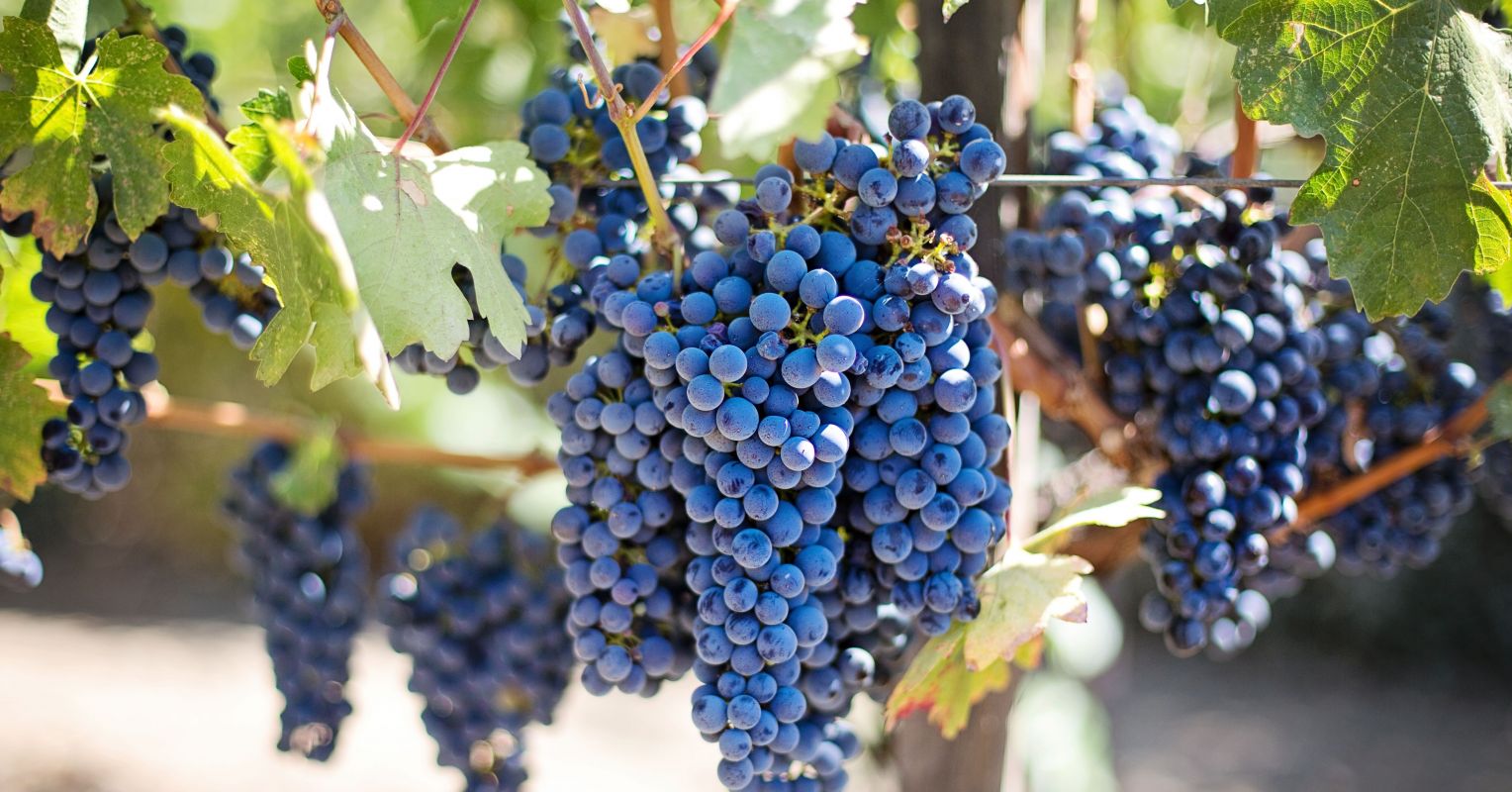
In 1997, Ernest Bates bought into a hillside in Napa. He was one of the first three Black board-certified neurosurgeons in the United States, the first Black student to graduate from Johns Hopkins’s undergraduate college, and the founder of a publicly traded medical-equipment company. By 2000, he had stopped practicing and was making cabernet. Friends thought it was a hobby. They were wrong about the category. It was a pivot
The Current Narrative: Chatbots Are Making Us Stupider
The dominant story about AI and human cognition right now is that chatbots are making us stupider. A recent BBC Future piece marshals MIT researchers Pattie Maes and Nataliya Kosmyna on “cognitive offloading” — the worry that frictionless AI is producing a “stupidogenic” society the way cheap processed food produced an obesogenic one. The evidence is real. The diagnosis is not, I think, the right one. I’ll leave that for another day, but suffice to say that working with AI won’t be easy.
The sharper problem is not that humans are getting cognitively weaker. It is that when machines reason and draft faster and better than the human in front of them, the residual role left for the human collapses to prompting, approving, and pasting. We are retained as quality judges and safety handlers. The thinking is no longer ours to do. It is structurally boring—call it process boredom. The work can stay demanding and still be unfulfilling; difficulty was never where the satisfaction came from. In May, I wrote that boredom was not quite the right word. Process boredom is what was missing.
The mechanism here is old. In 1959, the psychologist Robert White published a paper arguing that humans have an intrinsic motivation he called effectance—the satisfaction of producing a visible effect on the environment and seeing that the effect was, in fact, yours. White’s claim was that this motivation is not reducible to hunger or status, and that it requires a closed loop: the person doing the work has to be the same person who can see whether it succeeded
Prompting a model that drafts the deck that disappears upstream activates none of this. What breaks is not only the loop but the wholeness of the thought. Judging quality is a fragment: you assess what arrived. Safety handling is another: you catch what must not leave. Neither fragment begins anywhere
Effectance belongs to the whole arc, from intention to landed effect. The supervisor holds pieces of it, never the whole. And the part of the work that used to feel like effectance—the building, the structuring, the figuring out—now happens one layer of abstraction away, inside the model
Meanwhile the loaf of bread either rose or it didn’t. The motorcycle hummed again, or not. The cabernet, three years on, either tastes like cabernet, or it doesn’t. The pipe holds pressure, or it doesn’t. These are answerable work: domains where the work answers back to the person who did it, without an intermediary translating the result
AI’s Impact on the Physical vs. Knowledge Work Divide
A skeptic will say this is just the old physical-versus-knowledge divide, and the divide is collapsing. The skeptic is half right. AI is absorbing the cognitive parts of physical work too: operators on the factory floor now get real-time AI support, and the mechanic spends much of the shift running diagnostics and installing parts where robots cannot yet reach
But the convergence runs differently on each side. On the physical side, what remains for the human still closes the loop—the car starts, the vine fruits. On the knowledge side, what remains is the prompt, the quality check, and the paste. The asymmetry, not the divide, is what matters
The benefits of working in domains where the loop closes are not metaphorical. A 2025 systematic review of crafts-based interventions across 19 studies—pottery, woodwork, embroidery, papercraft—found short-term improvements in mood, anxiety, self-efficacy, and life satisfaction. Neither is the toll. NIOSH research finds that construction workers in the United States die from drug overdose and suicide at rates higher than the workforce overall. Vineyard work in August in Napa is hot, repetitive, and it punishes the body. Any honest revaluation has to hold both ends.
If you have been considering this—the workshop, the vineyard, the trade school, the farm—the window is open now. The cognitive premium on knowledge work is compressing fast, and the residual role on the knowledge side is the boring part. The operator side still closes its loop. None of it favors patience
Artificial Intelligence Essential Reads

When AI Makes Employees Hide What They Know

As AI Gets Smarter, Being Human Matters More
Acting on it is harder than seeing it
First, the test is not whether the domain is physical. It is whether the work answers back to you without translation—and whether the thought that produced it was yours throughout. A paragraph judged by a reader is closed-loop. A surgical outcome witnessed by the surgeon is closed-loop. A spreadsheet that disappears into a stakeholder’s slide is not
Knowledge professionals have a second, harder problem: they tend to import their existing status into new domains, which collapses the apprenticeship that closed-loop work requires. Bates did not arrive in Napa as a famous neurosurgeon making famous-neurosurgeon wine. He arrived as a beginner, with sore hands
The third is the one I keep returning to. The new domain has to be allowed to produce the lift, and the lift requires that the body show up—repeatedly, at cost. Showing up once a quarter to admire your own vineyard does not close the loop. The loop requires presence, repetition, and the willingness to let small visible competences accumulate against time, comfort, status, and sleep. Working with AI should hurt. Pushing yourself. Challenging the AI. Long nights. Frustration. Failures
Bates died in March 2024, at 87, still a partner in the winery. The wine went on answering back. The hands hurt the whole way. When did your hands last hurt? And was it for the right reason?
Alexander, D. (2024, March 26). Ernie Bates, renowned neurosurgeon and barrier-breaking Johns Hopkins alum, dies at 87. The Hub, Johns Hopkins University. https://hub.jhu.edu/2024/03/26/ernest-bates-obit/
Bukhave, E. B., Creek, J., Kirketerp, A., & Frandsen, T. F. (2025). The effects of crafts-based interventions on mental health and well-being: A systematic review. Australian Occupational Therapy Journal, 72(1), Article e70001. https://doi.org/10.1111/1440-1630.70001
Centers for Disease Control and Prevention. (2022). QuickStats: Age-adjusted drug overdose death rates among workers aged 16–64 years in usual occupation groups with the highest drug overdose death rates — National Vital Statistics System, United States, 2020. Morbidity and Mortality Weekly Report, 71(29), 948. https://stacks.cdc.gov/view/cdc/119953
Hogenboom, M. (2026, April 17). AI chatbots could be making you stupider. BBC Future. https://www.bbc.com/future/article/20260417-ai-chatbots-could-be-making-you-stupider
National Institute for Occupational Safety and Health. (n.d.). Construction. Centers for Disease Control and Prevention. https://www.cdc.gov/niosh/construction/about/index.html
Undheim, T. A. (2026, May 18). The word I don’t have for what AI has done to my work. Psychology Today. https://www.psychologytoday.com/us/blog/the-adaptive-mind/202605/the-word-i-dont-have-for-what-ai-has-done-to-my-work
White, R. W. (1959). Motivation reconsidered: The concept of competence. Psychological Review, 66(5), 297-333. https://doi.org/10.1037/h0040934
