


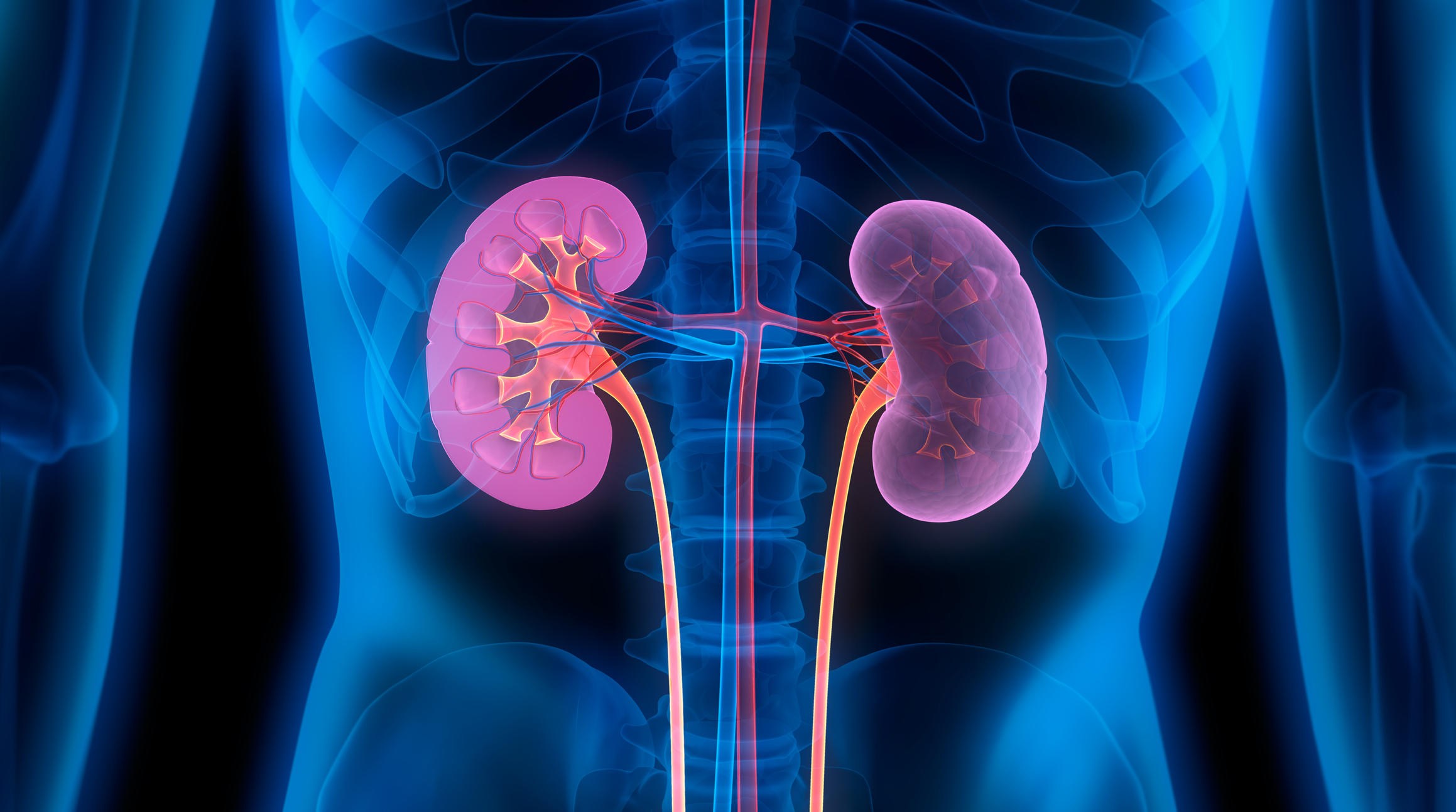
Those living with type 1 diabetes not only face the challenges of living with a chronic illness, but they also contend with the potential of developing secondary conditions, including kidney disease. Nearly a third of patients with type 1 diabetes develop kidney disease, resulting in diabetes as the leading cause of kidney disease worldwide. With such a broad impact, and few approved therapies, research into therapeutic strategies to help patients prevent or recover from diabetes-induced chronic kidney disease is much needed.
Research on type 2 diabetes suggests that inhibitors against the SGLT2 protein improve function and reduce damage to kidneys. Thought the mechanism behind this protective effect remains unclear, an SGLT2 inhibitor, dapagliflozin, has shown success in clinical trials led by Petter Bjornstad, MD, physician-scientist and executive director of the University of Washington Medicine Diabetes Institute
Bjornstad & colleagues have developed their clinical trial to assess the effects of dapagliflozin in adolescents. Their new paper published in Science TranslationalMedicine shows the results of a section of their phase III data from the Adolescent Type 1 Diabetes <a href="https://healthylife7.com/inspire-health-launches-valley-fever-care-program-to-expand-treatment/” title=”Inspire Health launches Valley Fever Care Program to expand treatment”>Treatment With SGLT2i for hyperglycEMia & hyPerfilTration (ATTEMPT) trial
The authors described this analysis of the broader trial as “a multimodal view of how the kidney of a person with T1D responds to SGLT2 inhibition.”
Data from 98 children aged 12 to 21, was analyzed to detail the effects of dapagliflozin in combination with insulin therapy on kidney function and physiology. Participants in both a placebo-control group and the treatment group were treated for 16 weeks, then underwent “sequential kidney biopsies, multiparametric kidney MRI, and plasma/urine proteomics,” though biopsies were only carried out in patients over 18 years of age
Molecular profiles of the serialized biopsies showed a reversal of molecular hallmarks including transcriptional shifts using single-cell RNA seq, downregulation of glycolysis, gluconeogenesis, and oxidative stress markers, and reduced inflammatory gene expression
“These molecular changes paralleled clinical improvements, including attenuation of hyperfiltration, improved glycemic control, and normalization of medullary oxygenation,” the authors wrote
Analysis of proteomics in urine samples showed similar results. The tissue changes included decreased injury markers and increased numbers of protective proteins, suggesting that dapagliflozin has a reversing effect on diabetes-induced kidney damage
“Cross-cohort comparison against healthy controls showed that over 55% of dapagliflozin-responsive genes shifted toward healthy control expression patterns,” indicated the authors
Not only were kidney markers improved in treated patients, but these patients also showed overall improvement including improved blood sugar control and more normal kidney function
“Because adjunctive SGLT2 inhibition is considered for people with T1D in the future, our results offer mechanistic reassurance that the drug engages kidney-protective pathways similar to those in type 2 diabetes,” they wrote
In addition to determining the mechanistic impacts of dapagliflozin in kidney disease using a subset of data from a clinical trial, the authors point out that this work has a broader impact for other clinical trials with multiple data streams
“Our study showcases the power of deep phenotyping in clinical trials to elucidate drug mechanisms in vivo,” they point out
“Ultimately, combining rigorous clinical trials with translational science approaches will accelerate the development of therapies to reduce the burden of DKD in T1D,” concluded the authors
News & FeaturesBiopsyDiabetesKidney diseasesMagnetic resonance imagingPhase III clinical trials (Clinical trial)PhenotypeProteomicsSingle-cell RNA sequencingdapagliflozin
