


UMB Celebrates America at 250: Transforming Addiction Treatment Through Research, Innovation, and Access
July 07, 2026UMB Office of Communications and Public Affairs
The School of Medicine has helped flip the script on addiction by viewing it as a medical rather than moral issue and working to ground treatment in science, compassion, and comprehensive care
This story is one in a series about the University of Maryland, Baltimore’s (UMB) contributions to U.S. history as the nation celebrates its 250th birthday this year. The stories will be featured on The Elm website and in The Elm Weekly newsletter in the coming months. The series is available to read at theUMB Celebrates America at 250 website.
The University of Maryland School of Medicine’s (UMSOM) discoveries, innovations, and public service efforts have improved lives across the United States for more than two centuries — from pioneering clinical bedside teaching, to opening the first U.S. public teaching hospital in 1823, to establishing the nation’s first comprehensive shock trauma center, and so much more
Over the past two decades, in particular, the school has transformed addiction treatment with pioneering efforts in research and evidence-based clinical care while expanding access for underserved communities throughout Maryland and beyond
For much of American history, substance use disorders were poorly understood and often treated as moral failings rather than medical conditions. UMSOM has helped change that narrative in the 21st century, advancing addiction medicine as a field grounded in science, compassion, and comprehensive patient care
Central to that effort is UMSOM’s nationally recognized Division of Addiction Research and Treatment (DART), which has conducted groundbreaking research, trained health professionals, and delivered treatment to individuals affected by opioid and other substance use disorders. DART has helped establish and validate many of the evidence-based approaches that are now considered standards of care in addiction medicine.
When the opioid epidemic emerged as one of the nation’s most pressing public health crises in the mid-2010s, UMSOM researchers and clinicians were at the forefront of efforts to better understand addiction, improve treatment outcomes, and expand access to care. Their work helped establish evidence-based approaches that are widely used throughout the United States
The school’s leadership in medication treatment for opioid use disorder (MOUD) is particularly influential. Researchers have helped build the scientific evidence to support the use of medications such as methadone and buprenorphine, which have been shown to reduce opioid use, improve recovery outcomes, and significantly lower the risk of overdose death. These findings have contributed to a national shift in the way addiction is treated and reinforced the understanding that substance use disorders are chronic medical conditions requiring ongoing care and support.
Integration and Impact
UMSOM has pioneered efforts to integrate addiction treatment into mainstream health care settings. Faculty members developed and evaluated models that bring addiction screening, treatment, and recovery services directly into emergency departments, hospitals, primary care practices, and community clinics. These approaches have helped reduce barriers to care and ensured that treatment is available when and where patients need it most
At the same time, UMSOM researchers continue to advance knowledge about overdose prevention, treatment retention, behavioral interventions, and the complex relationship between addiction and mental health. Their findings have informed clinical guidelines, public policy decisions, and health system practices across Maryland and the nation
A landmark moment in this work came with the establishment of the Kahlert Institute for Addiction Medicine, made possible through a transformational philanthropic investment from the Kahlert Foundation. Created to accelerate basic science research, education, and clinical care, the institute represents one of the foremost commitments to addiction medicine in the University’s history
The Kahlert Institute has elevated UMB’s role as a national leader in addressing substance use disorders, bringing together researchers, clinicians, educators, and community partners to advance comprehensive solutions to addiction. By fostering collaboration across disciplines and translating research into real-world practice, the institute is helping shape the future of addiction medicine while reinforcing Maryland’s position at the forefront of the field
UMSOM’s work in addiction medicine also provides a powerful example of how philanthropy can help address society’s most pressing challenges. Like the great philanthropic investments that helped build America’s hospitals, universities, and research institutions for more than 200 years, the Kahlert Foundation’s gift demonstrates how private generosity can fuel public good
The foundation’s support has enabled new discoveries, expanded educational opportunities, strengthened community partnerships, and accelerated efforts to bring effective treatment to more people. This investment stands as a modern example of the enduring partnership among philanthropy, education, and public service that has helped advance the nation.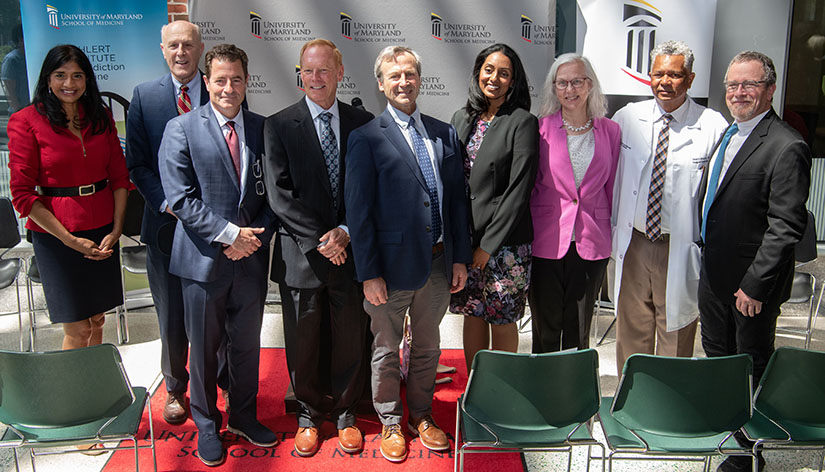
From left, Maryland Lt. Gov. Aruna Miller, UMB President Bruce Jarrell, Kahlert Foundation President Greg Kahlert, School of Medicine professors Gary Weintraub and Sarah Kattakuzhy, addiction medication expert Yngvild Olsen, and School of Medicine professor Asaf Keller.
Expanding Access to Care
One of UMSOM’s most far-reaching achievements is its commitment to expanding access to care in communities that have historically faced significant barriers to treatment. Across Maryland, especially in rural areas, many residents struggle to access addiction specialists and recovery services. Geographic isolation, transportation challenges, workforce shortages, and limited health care infrastructure often delayed treatment or prevented individuals from receiving care altogether
To address these challenges, UMSOM has embraced telemedicine and other innovative care models that connect patients and providers across long distances. Through partnerships with hospitals, clinics, federally qualified health centers, and local health departments, addiction specialists provide consultations, treatment, and continued support to patients in communities that previously had limited access to specialty care
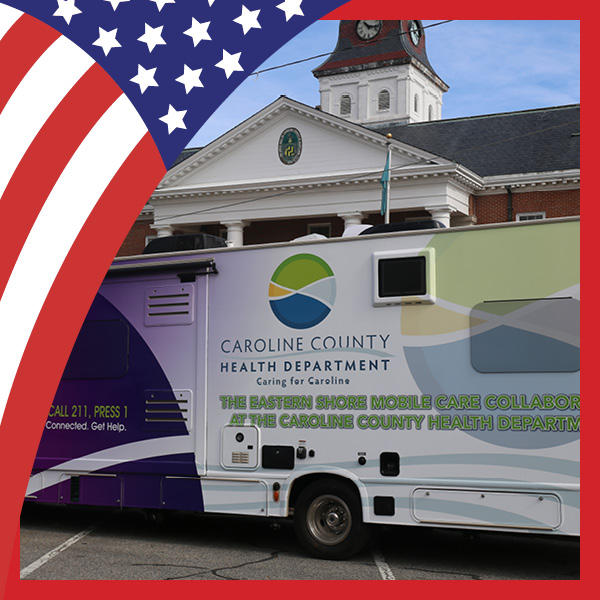
These efforts are particularly important on Maryland’s Eastern Shore and in other rural regions of the state, where provider shortages often leave residents with few treatment options. By bringing expert care directly to patients and local providers, telemedicine helps close gaps in access and improve continuity of care. The success of these programs demonstrates that high-quality addiction treatment can be delivered effectively outside traditional academic medical centers
The impact of this work extends well beyond addiction medicine. The telehealth infrastructure, clinical protocols, and provider training models developed through addiction treatment programs demonstrate that high-quality care can be delivered remotely. Thes lessons help inform telehealth expansion across numerous medical disciplines, including behavioral health, primary care, specialty medicine, and chronic disease management. When telehealth use accelerated nationwide during the COVID-19 pandemic, many health systems relied on approaches that had already proved successful in addiction care.
UMSOM’s leadership in expanding access to care extends to one of the most vulnerable and underserved populations in the nation: individuals who are incarcerated
For decades, people with substance use disorders who entered correctional facilities often received little or no evidence-based treatment despite facing an extraordinarily high risk of overdose after release. UMSOM researchers have helped change that reality
Working closely with Maryland’s correctional system, DART investigators have helped establish and evaluate programs that provide medications for opioid use disorder to incarcerated individuals and ensure continuity of care upon reentry into the community. Their research demonstrates that individuals who receive treatment while incarcerated are significantly more likely to engage in care after release and less likely to return to opioid use or experience a fatal overdose
The Maryland prison treatment model is one of the nation’s most closely watched examples of how correctional health care can address addiction as a medical condition rather than solely a criminal justice issue. Findings from this work has influenced correctional health policies across the country and contributed to a growing national movement to expand evidence-based addiction treatment within jails and prisons
This represents a fundamental shift in how the nation approaches substance use disorders among justice-involved populations, replacing punitive approaches with treatment models rooted in science, recovery, and public health
Committed to Education and Service
Education is another cornerstone of this work, as UMSOM is training future physicians and health professionals to recognize and treat addiction using evidence-based approaches, helping ensure that the next generation of providers is prepared to meet the evolving needs of patients and communities
The school’s transformative efforts are rooted in its commitment to serving communities across Maryland. Faculty and clinicians work alongside local governments, health departments, hospitals, and community organizations to ensure that treatment reaches individuals who might otherwise be left behind, including rural residents, people experiencing homelessness, justice-involved populations, and communities disproportionately affected by substance use disorders and health inequities
The impact can be measured not only in research discoveries and clinical innovations, but also in lives saved, families strengthened, and communities supported throughout Maryland. From Baltimore City to the Eastern Shore, from hospitals and community clinics to correctional facilities and recovery programs, UMSOM continues to demonstrate the power of evidence-based care to improve health and transform lives
Medicine
HappeningsCore ValuesHealth
Students, faculty, and staff, let your voice be heard!Submit Your Story.
