


Close Menu
healthylife7.comhealthylife7.com

    Subscribe to Updates

    Get the latest creative news from FooBar about art, design and business.

    What's Hot

    Gant Launches Self-Service Platform

    August 7, 2026

    National health observances like Wellness Month are no silver bullet, but they can help boost men’s health

    August 7, 2026

    The psychology of overconfidence: why excessive self-belief is often a successful strategy in life

    August 7, 2026
    Facebook X (Twitter) Instagram
    Trending
    • Gant Launches Self-Service Platform
    • National health observances like Wellness Month are no silver bullet, but they can help boost men’s health
    • The psychology of overconfidence: why excessive self-belief is often a successful strategy in life
    • Eli Lilly Surpasses Wall Street Estimates on Injectable GLP-1 Drugs
    • Jalen Williams making progress in offseason workouts with NBA trainer
    • SlimFast in £5m push into functional nutrition
    • WHO and Tsinghua University launch collaboration to strengthen global health emergency preparedness
    • Healthy Lifestyle Habits Can Support Brain Health Throughout the Aging Process
    Facebook X (Twitter) Instagram
    healthylife7.comhealthylife7.com
    • Home
    • Fitness
    • Health
    • Nutrition
    • Lifestyle
    • Conditions
    • Mental Health
    • Weight Loss
    • Wellness Tips
    Friday, August 7
    healthylife7.comhealthylife7.com
    Home»Conditions»University of Miami Researchers Study Genetic Change Linked to Alzheimer’s Risk in Men
    Conditions

    University of Miami Researchers Study Genetic Change Linked to Alzheimer’s Risk in Men

    healthylife7By healthylife7August 7, 2026No Comments5 Mins Read
    Facebook Twitter Pinterest LinkedIn Tumblr Reddit WhatsApp Email
    University of Miami Researchers Study Genetic Change Linked to Alzheimer’s Risk in Men
    Share
    Facebook Twitter LinkedIn Pinterest WhatsApp Email

    Research and Innovation

    University of Miami Researchers Study Genetic Change Linked to Alzheimer’s Risk in Men

    By: Andrea Leiseca | August 06, 2026 | 7 min. read | 

    A Florida Department of Health award will support Miller School researchers studying whether loss of the Y chromosome could help identify men at increased risk for Alzheimer’s disease before symptoms appear

    A naturally occurring genetic change in aging men may help researchers better understand who is at greater risk for Alzheimer’s disease

    With support from a new award from the Florida Department of Health’s Ed and Ethel Moore Alzheimer’s Disease Research Program, scientists at the University of Miami Miller School of Medicine are investigating whether loss of the Y chromosome, or LOY, may help explain why some men face a greater risk of developing Alzheimer’s disease

    Loss of the Y chromosome occurs when some cells in aging men lose the Y chromosome over time. The change becomes increasingly common with age and has been linked in previous research to increased Alzheimer’s disease risk and earlier cognitive decline. Scientists do not yet know whether LOY contributes directly to the disease or reflects other biological changes associated with aging

    The study is led by Anthony Griswold, Ph.D., associate professor in the Miller School’s Dr. John T. Macdonald Foundation Department of Human Genetics, and Holly Cukier, Ph.D., research associate professor in the Dr. John T. Macdonald Foundation Department of Human Genetics

    Investigating a Common Genetic Change in Aging Men

    “Loss of the Y chromosome is one of the most common genetic changes associated with aging in men. While this has been linked to Alzheimer’s disease, we don’t fully understand its role,” said Dr. Griswold. “This project gives us the opportunity to investigate whether LOY plays a direct role in Alzheimer’s disease or is a biological marker for a fundamental process that occurs leading to disease. Ultimately, we hope that understanding these processes will lead to better ways to identify individuals at risk and open new avenues for prevention and treatment.”

    Dr. Anthony Griswold, in white clinic coat
    Dr. Anthony Griswold is studying how the loss of the Y chromosome may help explain why some men face a greater risk of developing Alzheimer’s disease.

    Alzheimer’s disease is the leading cause of dementia, gradually affecting memory, thinking and independence. Florida, home to one of the nation’s largest and fastest-growing older adult populations, faces a disproportionate share of the disease’s growing impact, making research aimed at improving early detection and prevention especially important

    Using Genomics and Stem Cell Models to Study Alzheimer’s Risk

    To investigate the relationship between LOY and Alzheimer’s disease, the researchers will combine large-scale genomic analyses with advanced laboratory studies. They will analyze genetic data from more than 26,000 men participating in the Alzheimer’s Disease Sequencing Project, one of the world’s largest Alzheimer’s genetics resources, to determine whether LOY is associated with earlier symptom onset, faster cognitive decline and changes in other biological markers linked to Alzheimer’s disease.

    At the same time, the team will use induced pluripotent stem cell, or iPSC, models to study how loss of the Y chromosome affects neurons and other brain cells that help protect the brain and regulate inflammation. Comparing cells with and without the Y chromosome may reveal biological changes that help explain why LOY has been associated with increased Alzheimer’s disease risk

    Studio portrait of Dr. Holly Cukier wearing a white lab coat, standing against a gray background and facing the camera.
    Dr. Holly Cukier is using stem cell models to mimic early brain cell growth.

    “Our goal is to understand the connection between this genetic change and an increased risk of developing Alzheimer’s disease,” said Dr. Cukier. “Stem cell models allow us the opportunity to mimic early brain cell growth and development, and potentially reveal an initial event that may be connected to Alzheimer’s disease, as well as downstream molecular and cellular consequences.”

    Searching for Earlier Clues to Alzheimer’s Disease

    One of the study’s primary goals is to determine whether LOY could serve as a presymptomatic biomarker, a quantifiable indicator that helps identify individuals at increased risk for developing Alzheimer’s disease before the disorder manifests. If future studies confirm its clinical value, LOY could eventually become part of strategies to recognize people who may benefit from closer monitoring, earlier interventions or participation in clinical trials

    The researchers also hope to determine whether LOY identifies a distinct subtype of Alzheimer’s disease associated with genomic instability. Such findings could deepen scientists’ understanding of why Alzheimer’s disease develops differently among individuals and point to new directions for future research

    Advancing Alzheimer’s Research for Florida’s Aging Population

    Beyond its scientific significance, the project has important implications for Florida’s public health. Alzheimer’s disease places an enormous emotional, physical and financial burden on patients, families, caregivers and health care systems throughout the state. By improving understanding of the biological changes associated with aging and Alzheimer’s disease, this research could help lay the foundation for better risk assessment, earlier detection and more personalized approaches to care.

    Dr. James Galvin in a white clinical coat sits at a desk reviewing colorful brain imaging scans displayed on a large computer monitor in an office setting.

    University of Miami Researchers Showcase Advances in Dementia Detection, Treatment and Brain Health at AAIC 2026

    Researchers from the University of Miami Comprehensive Center for Brain Health shared 16 studies at AAIC 2026, highlighting advances in dementia treatment, blood-based biomarkers and early cognitive screening

    Read more

    AI-generated Illustration depicting the gut-brain connection in Alzheimer's disease, featuring a translucent digestive tract on the left and a neural network–like brain on the right. A magnified cross-section of the intestinal lining in the center highlights gut barrier cells, microbes, and inflammatory particles, suggesting interactions between the gut microbiome, intestinal health, and brain function.

    Could the Gut Hold Early Clues to Alzheimer’s Disease?

    Miller School researchers found early Alzheimer’s-related damage in lab-grown intestinal tissue, revealing new clues about the gut-brain connection

    Read more
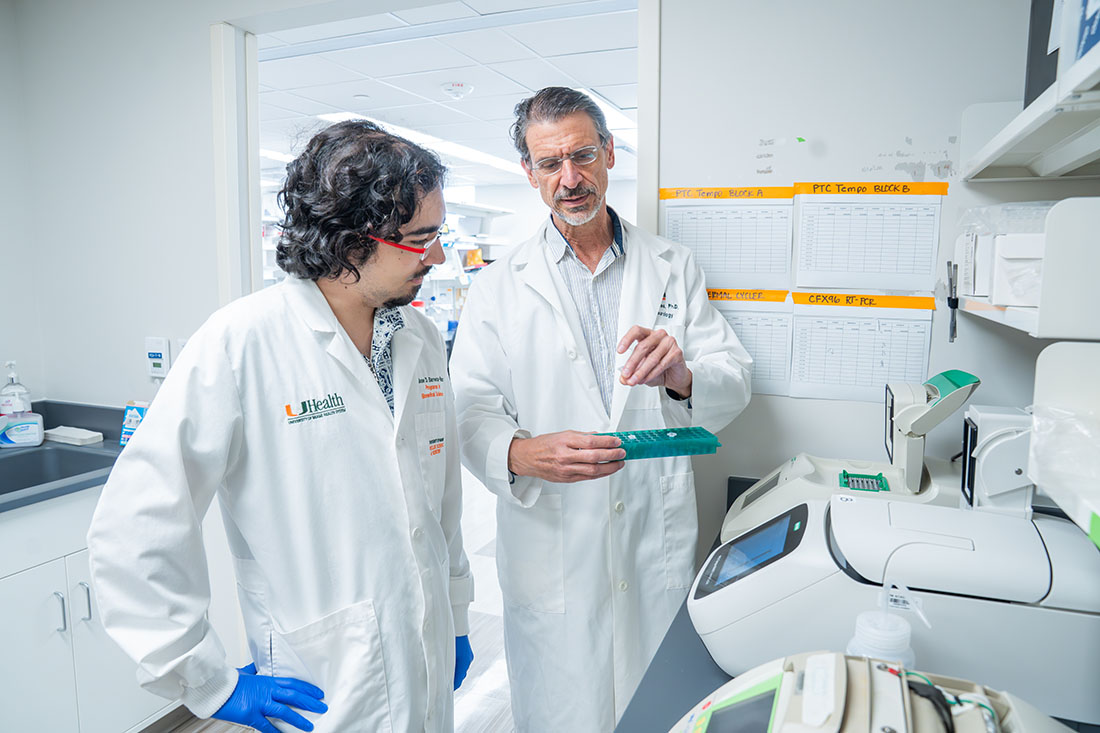
    Dr. Jose Barrera-Paez and Dr. Carlos Moraes working in the lab

    Why Some Brain Cells May Be More Vulnerable to Parkinson’s Disease

    Study shows mitochondrial DNA damage can continue accumulating in vulnerable neurons, offering new insight into Parkinson’s disease

    Read more
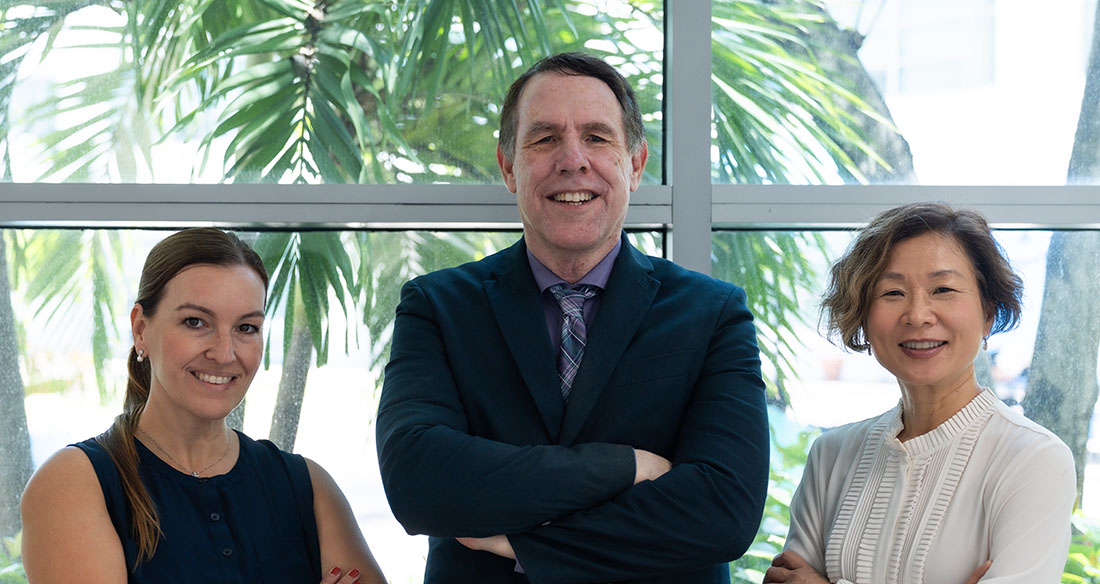
    Dr. Rosie Curiel Cid, Dr. David Loewenstein, and Dr. Diane Zheng pose together indoors in front of large windows with palm trees visible outside.

    Blood Biomarkers and Cognitive Testing Improve Prediction of Early Alzheimer’s Decline

    Combining blood biomarkers with cognitive testing improves prediction of functional decline in people at risk for Alzheimer’s disease

    Read more

    Genetic Miami researchers Study University
    healthylife7
    • Website

    Related Posts

    National health observances like Wellness Month are no silver bullet, but they can help boost men’s health

    August 7, 2026

    WHO and Tsinghua University launch collaboration to strengthen global health emergency preparedness

    August 7, 2026

    Ashwagandha: Benefits, side effects, and safety concerns

    August 7, 2026
    Leave A Reply Cancel Reply

    Health
    Lifestyle

    Gant Launches Self-Service Platform

    By healthylife7August 7, 20260

    Gant Travel Management, a TMC, announced the launch of its new Gant Self-Service Platform, bringing together, according to the company, all the reey in one connected experience

    National health observances like Wellness Month are no silver bullet, but they can help boost men’s health

    August 7, 2026

    The psychology of overconfidence: why excessive self-belief is often a successful strategy in life

    August 7, 2026

    Eli Lilly Surpasses Wall Street Estimates on Injectable GLP-1 Drugs

    August 7, 2026
    Stay In Touch
    • Facebook
    • Twitter
    • Pinterest
    • Instagram
    • YouTube
    • Vimeo
    Fitness

    Opinion: The FDA must put biotech at its center or continue to cede early research to China

    July 6, 2026

    Inside Elevance’s digital chronic disease management strategy

    July 6, 2026

    Best, Worst States For Well

    July 6, 2026

    What do the Middle Ages tell us about mental health then and now? VCU historian Leigh Ann Craig has answers

    July 6, 2026

    Subscribe to Updates

    Get the latest creative news from SmartMag about art & design.

    About Us

    Welcome to HealthyLife7.com, your trusted source for reliable health, wellness, fitness, and lifestyle information. Our mission is to help people make informed decisions about their health by providing clear, practical, and easy-to-understand content.

    At HealthyLife7.com, we believe that good health starts with the right knowledge. Whether you're looking for healthy eating tips, fitness advice, mental wellness strategies, weight management guidance, or information about common health conditions, our goal is to deliver valuable content that supports a healthier lifestyle.

    Fitness

    Gant Launches Self-Service Platform

    August 7, 2026

    National health observances like Wellness Month are no silver bullet, but they can help boost men’s health

    August 7, 2026

    The psychology of overconfidence: why excessive self-belief is often a successful strategy in life

    August 7, 2026
    Health

    Opinion: The FDA must put biotech at its center or continue to cede early research to China

    July 6, 2026

    Inside Elevance’s digital chronic disease management strategy

    July 6, 2026

    Best, Worst States For Well

    July 6, 2026
    Facebook X (Twitter) Instagram Pinterest
    • About Us
    • Contact us
    • Disclaimer
    • Privacy Policy
    • Terms and Conditions
    © 2026 healthylife7.com. Designed by Pro.

    Type above and press Enter to search. Press Esc to cancel.