


DVIDS – News – Walter Reed promotes importance of immunizations
<img src="https://healthylife7.com/wp-content/uploads/2026/08/dvids_logo_main-61.png” alt=”Digital Visual Information Distribution System Logo”>
Walter Reed promotes importance of immunizations
BETHESDA, MARYLAND, UNITED STATES
08.13.2026
Story by Christopher Smith
Walter Reed National Military Medical Center
Walter Reed promotes importance of immunizations
Your browser does not support the audio element.
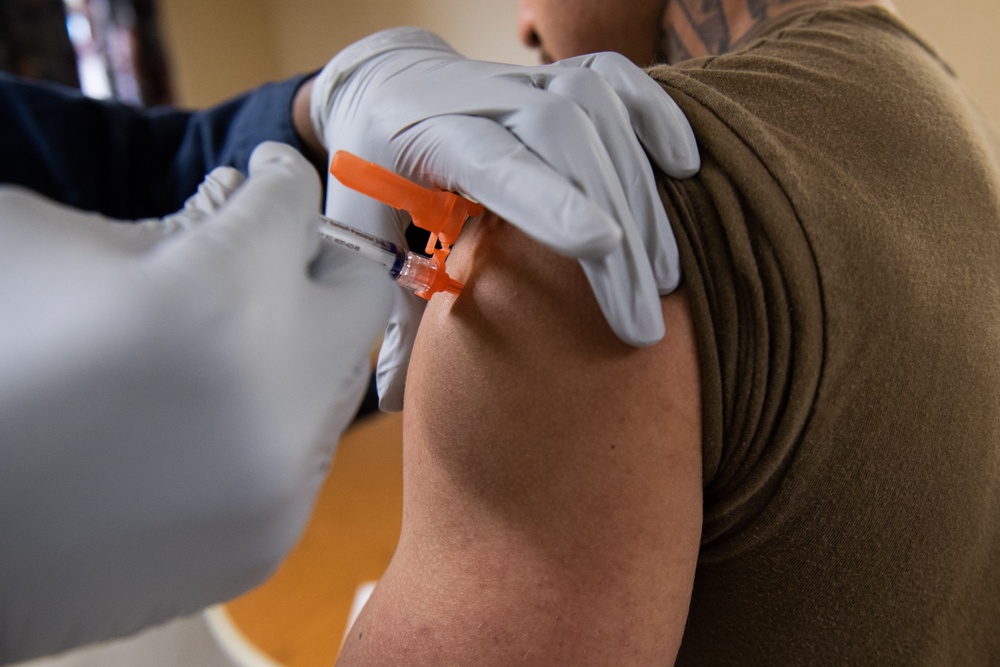
While August is recognized as National Immunization Awareness Month, staff at Walter Reed National Military Medical Center’s Allergy, Immunology and Immunization Clinic encourage patients to make year-round consideration of their immunization status a priority. Staying on top of immunizations not only keeps families and communities safe from disease but also helps ensure our service members are healthy and fit to stand on the front lines in defense of the nation
“Immunization Awareness Month is really a reminder for people to take a few minutes out of their busy day to check whether they are up to date on their immunizations,” said U.S. Army Maj. (Dr.) Jeremy McMurray, Walter Reed’s Allergy, Immunology, and Immunizations Clinic service chief. “Many people think about vaccines as something you get during childhood, but there are important immunizations and booster doses that are recommended throughout adulthood as well. It’s also a great opportunity to have a conversation with your healthcare provider if you have questions.”
The practice of immunizations dates back as far as the 1700s, when physicians used “crude” methods to inoculate patients against smallpox. It wasn’t until the late 1800s that Louis Pasteur established a laboratory system to create vaccines against diseases like chicken cholera and rabies. Throughout the early 20th century, doctors and researchers worked to advance broader vaccination capabilities, striving against common ailments like diphtheria, tetanus and pertussis, which were combined into one vaccine to fight all three. In 1955, Dr. Jonas Salk introduced his vaccine against polio, a virulent disease estimated to be responsible for hundreds of thousands of annual deaths prior to the introduction of Salk’s inoculation.
Vaccines work by safely exposing the body to key parts of a virus or bacteria without causing the illness itself. This causes the body’s immune system to recognize and fight off the effects of the invading viruses or bacteria, strengthening it to resist future attacks from the actual disease. The more people who receive vaccinations against these diseases, the stronger and more protected the surrounding community becomes when attacked by those same ailments. This idea is referred to as “herd immunity” and is vital for infants, the elderly and members of those communities dealing with compromised immune systems.
Keeping immunizations current is an important part of routine preventive healthcare, as protection from some vaccines can decrease over time, which is why booster doses may be recommended. While many common vaccinations are received during childhood, circumstances might require updated doses. Vaccine recommendations can also change over time as new vaccines become available. Some vaccinations are recommended for adults based on advancing age, new or worsening medical conditions, or travel and other risk factors.
“One thing I really appreciate about Walter Reed is that we’re able to provide a wide range of vaccines while also caring for patients with more complex concerns,” said U.S. Army Maj. (Dr.) Brandon Schornack, medical director of immunizations at Walter Reed. “Because allergy, immunology, and immunizations are all part of the same service, we can evaluate patients who have had a previous reaction or are worried about a possible vaccine allergy and help determine the best way forward.”
Walter Reed’s Allergy, Immunology and Immunization Clinic provides a wide array of clinical options for the nation’s service members, retirees and their beneficiaries. The clinic’s allergy and immunology area evaluates and treats conditions including allergies, asthma, and immune system disorders. The clinic also provides testing to determine patient tolerances for food, drugs and exercise
The immunization services the clinic provides cover standard and pediatric vaccines intended to keep military families current with their immunizations. The clinic also offers shots for service members requiring immunizations for overseas deployments or travel. Lastly, the staff undertakes seasonal public health campaigns to emphasize the importance of keeping up with vaccinations
“I’m incredibly proud of our team,” McMurray said. “They take the time to answer questions, address concerns, and make sure every patient understands what’s recommended for them. That’s something that really stands out about the care we provide.”
To learn more, visit the Walter Reed Allergy, Immunology and Immunization Clinic’s web page
| Date Taken: | 08.13.2026 |
| Date Posted: | 08.13.2026 13:33 |
| Story ID: | 572310 |
| Location: | BETHESDA, MARYLAND, US |
| Web Views: | 4 |
| Downloads: | 0 |
PUBLIC DOMAIN


This work, Walter Reed promotes importance of immunizations, by Christopher Smith, identified by DVIDS, must comply with the restrictions shown on https://www.dvidshub.net/about/copyright
CONNECTED MEDIA
MORE LIKE THIS
CONTROLLED VOCABULARY KEYWORDS
No keywords found
Immunization Awareness Month
Allergy and Immunology Clinic
Walter Reed Naitonal Military Medical Center
OPTIONS
Register/Login to Download
Validate Your Account to Download
Connect My Placements
Add to My Albums
Connect to Placements
to Playlist
Distribute Story
Schedule Social Post
Edit Story
Add News & Images to Playlist
Printable Version
Request Audio Version
