


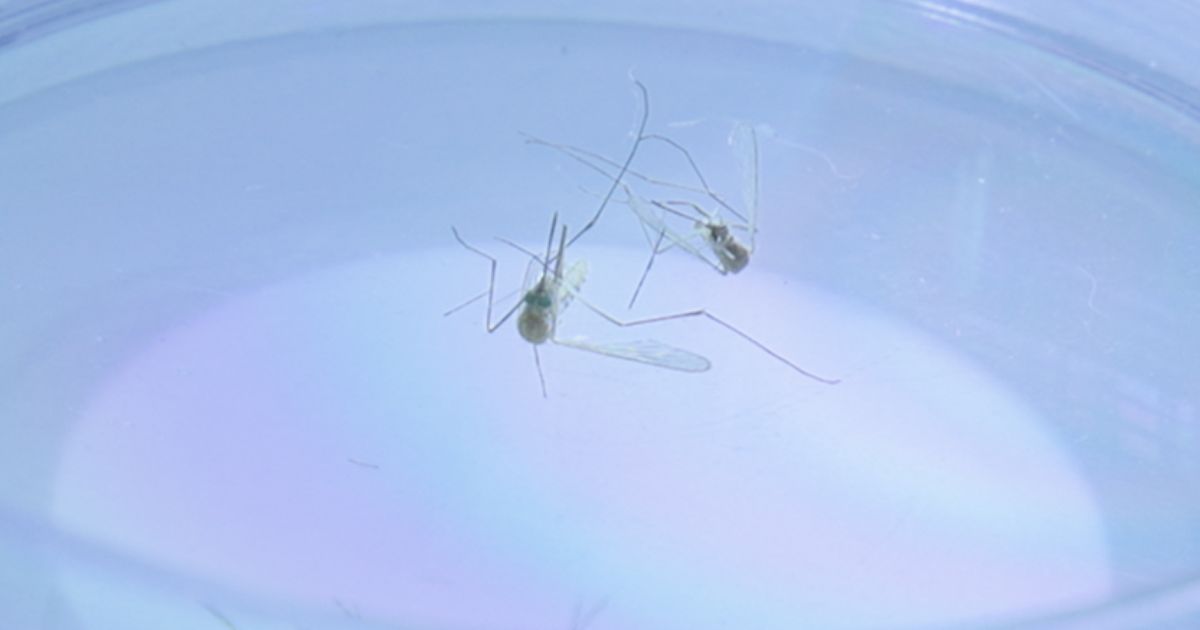
Warmer weather and monsoon season are back again. Unfortunately, that means mosquitoes are back too, and experts at The University of New Mexico say sometimes a bite can be more than just an inconvenience.
The New Mexico Department of Health recently announced that mosquitoes in Bernalillo County tested positive for West Nile virus, which can cause West Nile disease. That testing was done at the UNM Center for Global Health
DJ Perkins, PhD, is the founder and director of the UNM Center for Global Health and a UNM School of Medicine distinguished professor. He said he wants to inform, rather than alarm, the community about West Nile virus to help prevent human cases
“West Nile virus is not just a problem this year; it is something we face every mosquito season,” Perkins said
Last year, there were 52 cases of West Nile disease and 11 deaths, according to data from the New Mexico Department of Health
West Nile virus is not just a problem this year; it is something we face every mosquito season
– DJ Perkins, PhD, Founder & Director, UNM Center for Global Health, UNM School of Medicine Distinguished Professor
What is West Nile Virus?
West Nile disease is a mosquito-borne illness caused by West Nile virus that spreads through the bite of an infected Culex mosquito. Perkins said mosquitoes typically contract the virus by feeding on infected birds
“West Nile virus is the leading cause of mosquito-borne disease in New Mexico,” Perkins said
Perkins also said humans cannot spread it to other humans
Signs and Symptoms of West Nile Virus
Symptoms of West Nile virus can appear like the flu:
- Fever
- Headache
- Fatigue
- Body aches
- Rash (occasionally)
Severe cases of West Nile can impact the central nervous system, sometimes leading to hospitalization or even death, Perkins said
Symptoms of severeWest Nile:
- Confusion
- Stiff neck
- Weakness
- Seizures
- Paralysis
Disease severity can vary from person to person, Perkins said
“About 80% of infected people develop no symptoms at all and are thus asymptomatic,” Perkins said. “The reported cases are largely the tip of the iceberg because the more severe illnesses are the ones that come to medical attention.”
Most mild cases are rarely diagnosed and, as a result, the true number of infections is likely higher than the number of confirmed reported cases, Perkins said
West Nile Virus Treatment
Currently, there are no antiviral medicines to treat West Nile infection, no vaccines to prevent it, and because it’s a viral infection, it cannot be treated with antibiotics
“Medical care focuses on treating the symptoms and supporting the patient while their immune system fights off the infection,” Perkins said
If a person develops a mild West Nile infection, symptoms can usually be managed with over-the-counter medications such as acetaminophen (Tylenol) for fever, pain, and headaches. Staying hydrated and resting may also help support recovery.
If a case is more severe, the patient may need to be hospitalized. Perkins said age is one of the biggest risk factors. “Adults over 60 and people with weakened immune systems are much more likely to develop serious neurological disease from West Nile infection.”
Preventing West Nile Virus
Perkins said the best way to prevent infection by West Nile virus is not being bitten by an infected mosquito. But that’s not always possible, so Perkins recommends remembering the four D’s
- DEET: Use DEET or EPA-approved repellents
- Dress in long sleeves and pants outdoors when practical
- Drain any standing water around your home
- Dusk and Dawn: Those are times when Culexmosquitoes are most active
Getting Ahead of West Nile Cases at UNM
The UNM Center for Global Health works closely with the New Mexico Department of Health and local mosquito control programs to test mosquito populations from across the state
“This is the first statewide molecular mosquito surveillance program New Mexico has had in many years,” Perkins said
Ivy Hurwitz, PhD, is a research professor of medicine in the UNM School of Medicine and another leading investigator on the UNM mosquito surveillance work. She said, historically, infected mosquitoes are detected before the community starts seeing human cases, making mosquito surveillance one of the most effective tools for protecting public health
“This is a more preventative way to react to the virus and be proactive instead of reactive to an infectious disease,” Hurwitz said
Surveillance traps are set weekly in selected locations on the UNM campus by the Center for Global Health team, and around other areas in Albuquerque by the City Division of Urban Biology. Following identification, mosquitoes are then tested for West Nile virus using molecular techniques at the Center. Mosquitoes from around New Mexico are shipped to the Center for Global Health labs for testing
Overall, continued research, community partnerships, general public awareness, and caution lead to fewer West Nile virus cases and the prevention of severe disease
“Public health works best when everyone contributes,” Hurwitz said
To learn more about the UNM Center for Global Health click here
Categories:Research,
Education,
Community,
School of Medicine,
News You Can Use,
Community Engagement
