


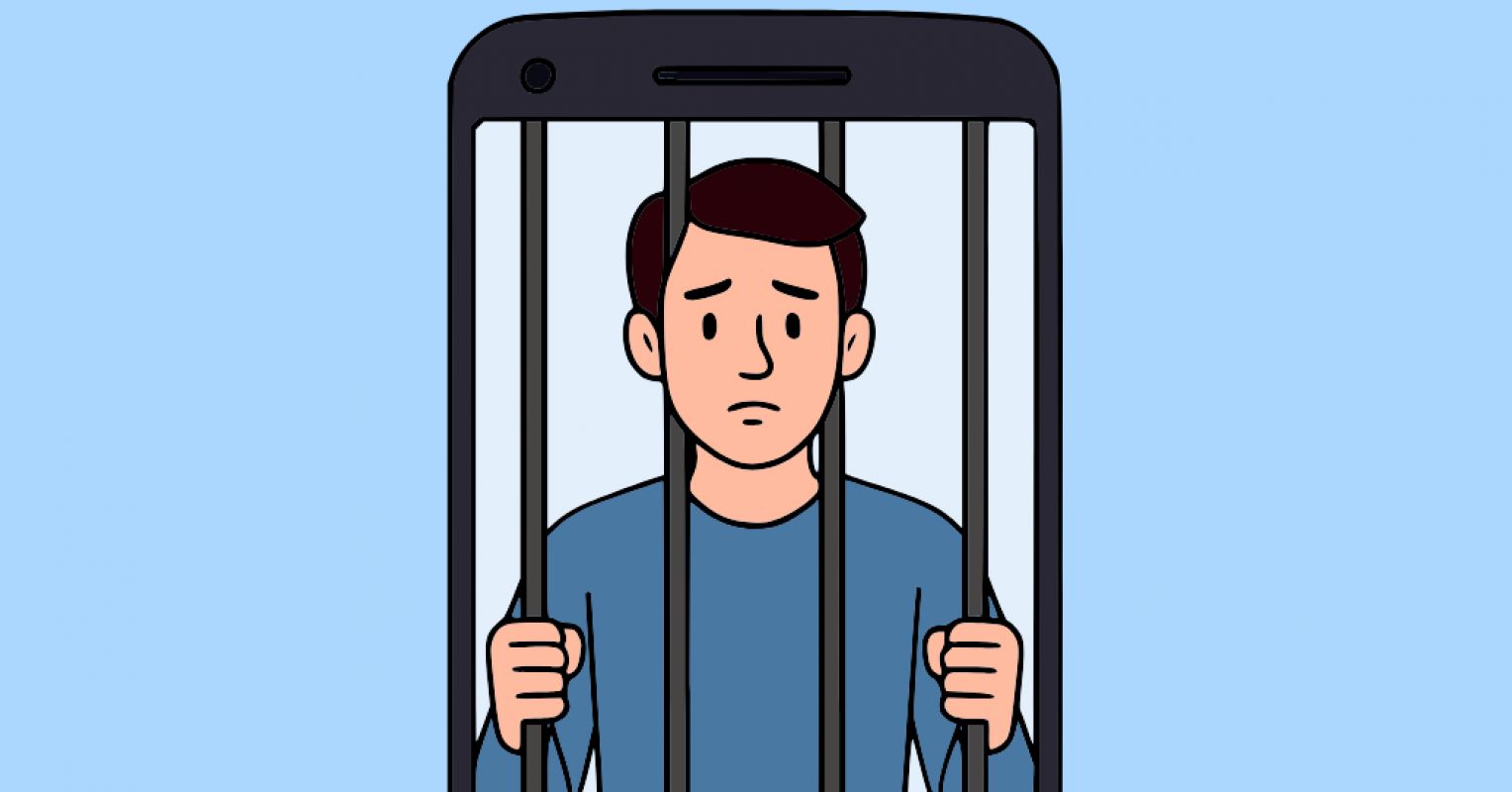
Key points
- Social media addiction is not yet recognized by the DSM-5-TR as a true behavioral addiction.
- The endless feed that social media platforms create causes a psychological response similar to gambling.
- Dopamine’s role in social media use is unclear but many studies are examining the relationship.
- Social media rewards our excessive use in multiple ways.
Regrettably, it’s everywhere–at the stoplight, on the train, across the dinner table, on your own couch. It’s a phenomenon that transcends cultures, geographical divides, and generations. Doomscrolling
Doomscrolling–a colloquial term for mindlessly swiping through your social media feed–has become a ritualistic part of many individuals’ daily lives. Specifically, short-form media such as TikToks, Instagram Reels, YouTube Shorts, and others have taken over the screens of our smartphones and, consequently, much of our lives
Why do we doomscroll and what keeps us coming back? Researchers are trying to figure that out, but the answer may be more complex than we realize
1. The Social Media Slot Machine
Although the DSM-5-TR does not officially recognize social media addiction as a true behavioral addiction, many researchers have been attempting to address the infatuation that we have with our phones regardless of the lack of an officially recognized diagnosis. Currently, the only recognized behavioral addiction is gambling, yet the two share much in common. In fact, much of the current research on social media obsession springs from prior research on gambling
One of the addictive features of gambling is the intermittent nature of the reward: winning only occasionally is exactly what keeps people coming back to the slot machine. Similarly, studies have examined how the variability of our feeds contributes to our urge to engage with the so-called “infinite scroll,” a phenomenon termed the <a href="https://www.sciencedirect.com/science/article/pii/S0378720626000169″ rel=”nofollow noopener” target=”_blank”>partial reinforcement system. Not every video is going to provide you with content you want to see, which not only makes a good or funny video that much better, but also creates sustained reward expectancy, which refers to the anticipation you may feel as you scroll to the next video to see what awaits you. The variability is precisely what keeps us going, just as the tantalizing uncertainty satiates a slot machine player.
2. Dopamine’s Role in the Rush
Dopamine, one of the neurotransmitters that plays a major role in our biological response to reward, has been intensely studied for its role in addiction. When it comes to social media and our consumption of never-ending short-form videos, the role of dopamine is not well understood
One study surprisingly found that dopamine synthesiswas indirectly correlated with high social media screen time; that is, the more time individuals spent on social media platforms, the less dopamine was produced during PET scans measuring putamen activity. While not suggesting any level of causation, this correlation goes against the common assumption that impulsive activities produce a burst of dopamine that explains addiction
Another study, however, found that increased social media usage showed no correlation with higher signal intensityseen on neuromelanin-sensitive MRI, a marker that serves as a proxy for measuring dopamine synthesis. Both of these studies show that social media use, though extremely similar to other forms of behavioral addiction, may have a more complex relationship with dopaminergic pathways than we initially suspected
3. Reward Comes in Many Forms
When we are scrolling social media, the return is not as straightforward as a dollar amount on a casino voucher. The satisfaction of the scroll is multifaceted: the reward comes in the form of novelty, comedy, information, social knowledge, anticipation, boredom cessation—you name it. It is no wonder that studies struggle to quantify our newest societal addiction, considering it serves so many unquantifiable purposes in our subconscious. However, perhaps identifying what it is we find individually enjoyable about our social media interactions is the key to breaking up with our doomscroll.
Wang C, Weng R, Zhou R. Why we cannot stop repetitive scrolling on short-form video apps: The roles of content types and recommendation systems. Information & Management. 2026;63(3):104316. doi:10.1016/j.im.2026.104316
Clark, L., & Zack, M. (2023). Engineered highs: Reward variability and frequency as potential prerequisites of behavioural addiction. Addictive Behaviors, 147, 107626. https://doi.org/10.1016/j.addbeh.2023.107626
Westbrook, A., Ghosh, A., van den Bosch, R., Määttä, J. I., Hofmans, L., & Cools, R. (2021). Striatal dopamine synthesis capacity reflects smartphone social activity. iScience, 24(5), 102497. https://doi.org/10.1016/j.isci.2021.102497
Shannon, H., Montgomery, M., Cassidy, C., Lemieux, M., Yee, J. A., Brunier, L.-S., Hellemans, K. G. C., & Guimond, S. (2026). Testing dopaminergic markers of problematic social media use using neuromelanin-sensitive MRI. Psychiatry Research: Neuroimaging, 357, 112144. https://doi.org/10.1016/j.pscychresns.2026.112144
