


There’s a moment, just after you slip into the water, when you feel completely, unexpectedly free. For Randi H., that feeling is one she has known her whole life. She grew up by the ocean, learned to swim as a small child, and spent a decade going to 7 a.m. aqua aerobics classes before life pulled her away. When she finally came back to the pool after retiring in 2025, she had one thought: “It felt like coming home.”
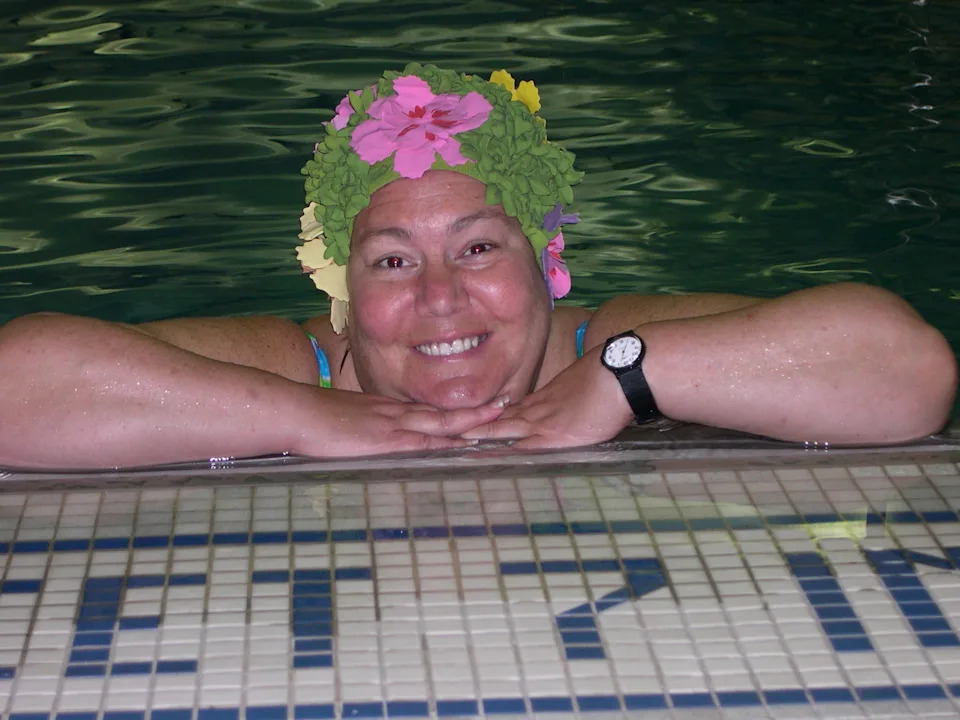
Randi H., who asked to be identified by her first name and last initial, is a New Yorker with a career that has taken her from the world of advertising to the legendary Apollo Theater and, most recently, the nonprofit sector. Now that she has the freedom to plan her schedule any way she’d like, Randi is in the water five mornings a week for 90 minutes to two hours. She swims, water jogs, and works with weights while listening to music on a mini MP3 player. On a good day, you just might catch her dancing in the shallow end to “Dancing Queen” by ABBA. “I can completely disappear into my own little world, even with others around,” she shares. “It’s incredibly freeing to do something just for myself.”
“In the water, I feel free, weightless, calm and at the same time, exhilarated,” she declares. “I feel like I can do anything.”
About Our Experts:Nneoma Oparaji, MD, DipABLM, DABOM, is a physician triple board-certified in internal medicine, obesity medicine, and lifestyle medicine. Simran Malhotra, MD, DipABLM, FALM, CHWC, is a physician triple board-certified in internal medicine, hospice & palliative care, and lifestyle medicine
The surprising science that makes aqua aerobics so effective
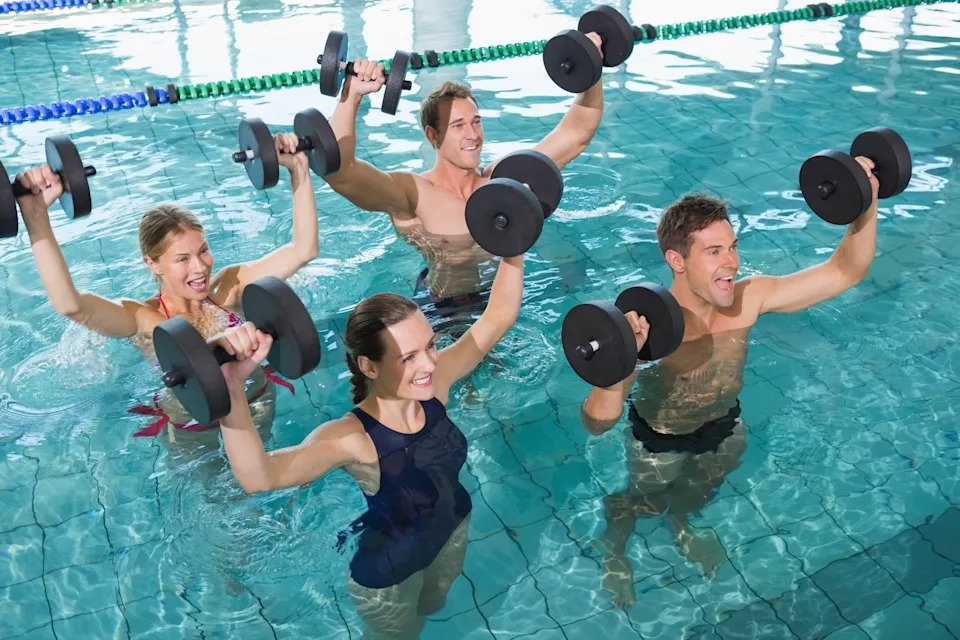
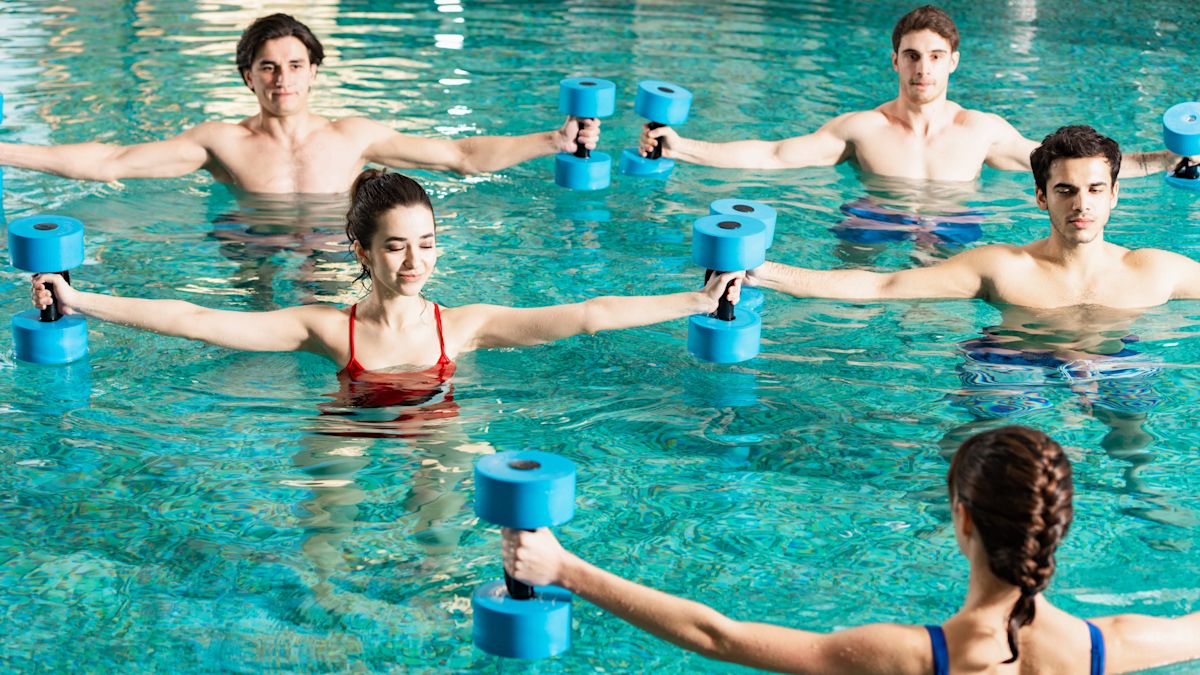
Aqua aerobics has an unfair reputation as only a “gentle” or low-intensity exercise. It’s been dismissed as something only for older adults or people easing back from injury. However, the science reveals that working out in the water can be good for nearly anyone
Advertisement
“Water exercise is surprisingly beneficial at a physiological level even though it looks ‘gentle,'” emphasizes Nneoma Oparaji, MD, DipABLM, DABOM, based in Houston, Texas. “Water turns every movement into resistance training which helps to build muscle strength and endurance without the wear and tear on the joints. It also improves our cardiovascular health because the heart is working harder to distribute blood against pressure, thus boosting fitness.”
Simran Malhotra, MD, DipABLM, FALM, CHWC, based in Bethesda, MD, describes aqua aerobics as getting a “bigger bang for your buck.” Research, she explains, shows that water-based exercise can be just as effective as land-based exercise for managing several markers of health. A 2023 meta-analysis in Diabetes Research and Clinical Practice reported that aquatic training improved blood sugar control and blood pressure on par with land-based programs, and a randomized controlled trial published in Frontiers in Cardiovascular Medicine found water- and land-based training comparably improved blood vessel flexibility in patients recovering from a cardiac event. The way your body responds to movement in water is fundamentally different from what happens on land. “In water, your muscles also get more blood flow and more oxygen during your workout than they would doing the same exercise on land,” she explains.
Perhaps most surprisingly, Dr. Malhotra points to studies measuring muscle activity: as a systematic review of underwater muscle studies in BMC Sports Science, Medicine and Rehabilitation concluded, leg muscles tend to work less hard in water than on land even when the workout feels just as challenging. That’s because water supports your body weight, reducing the overall force needed. Researchers estimate that immersion to chest or shoulder level offloads roughly 69 to 85 percent of it. At the same time, water creates resistance in all directions, forcing you to engage multiple muscle groups simultaneously. The result is a workout that is both more efficient and easier on the body.
Because of all this, Dr. Malhotra notes that heart rate targets need to be rethought for water-based training, since studies consistently show heart rate runs lower in the water than on land for the same exercise. “For water-based workouts, people may need to adjust training targets because the heart rate is naturally lower in the water. In water it is better to gauge your effort based on how hard the exercise feels rather than using the same heart rate targets you would use on land. If you aim for the same heart rate targets as land-based exercises, you might overwork yourself.”
Advertisement
For Randi, all of that science plays out in a very real, felt experience. “As a plus-size woman, I had so much more strength and energy in the water than on land. The classes made me feel powerful.”
Why doctors say it’s for almost everyone, including people in pain
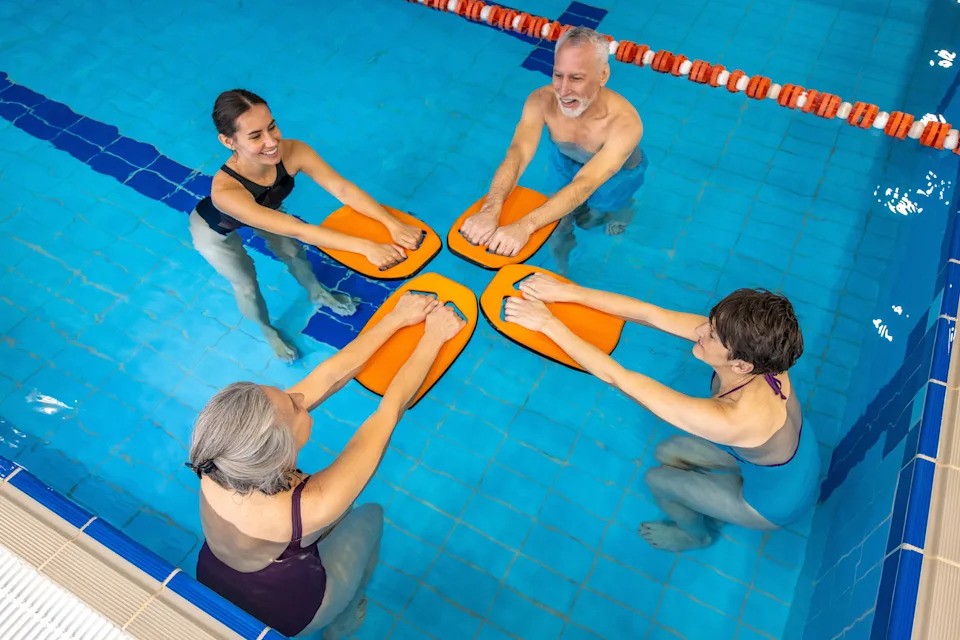
One of the most striking things about aqua aerobics is that it’s for nearly everyone
“Water aerobics is the great equalizer for people of all sizes, ages, and abilities,” Randi states. “In the water, we can all do so much more.”
Dr. Oparaji sees this play out in her clinical practice every day. For patients with osteoarthritis, she points out, “aqua exercises reduce joint load and pain in addition to improving strength and function compared to land-based exercises.” That’s a benefit borne out by a 2016 Cochrane review, which found aquatic exercise eased pain and disability, and by a later meta-analysis comparing water- and land-based programs. She often explains it to patients this way: “The swimming pool decreases pressure on painful joints, so people can move more and hurt less.”
Advertisement
Dr. Malhotra adds that water-based exercise has proven effective for people managing a range of chronic conditions. Studies have reported benefits for people with diabetes and heart disease, and a systematic review found that aquatic exercise improved balance and reduced fear of falling in people with Parkinson’s disease. It does this “all while causing less joint stress and exercise-related discomfort,” she says
The benefits extend even to athletic performance. A review of studies on athletes found that water-based jumping exercises improved power, agility, and speed about as much as land-based training. Also, researchers measuring landing forces have shown that water sharply reduces the impact on the body and the risk of injury. “Water exercise allows athletes to maintain fitness and muscle strength during recovery without bearing full weight on injured joints,” Dr. Malhotra notes
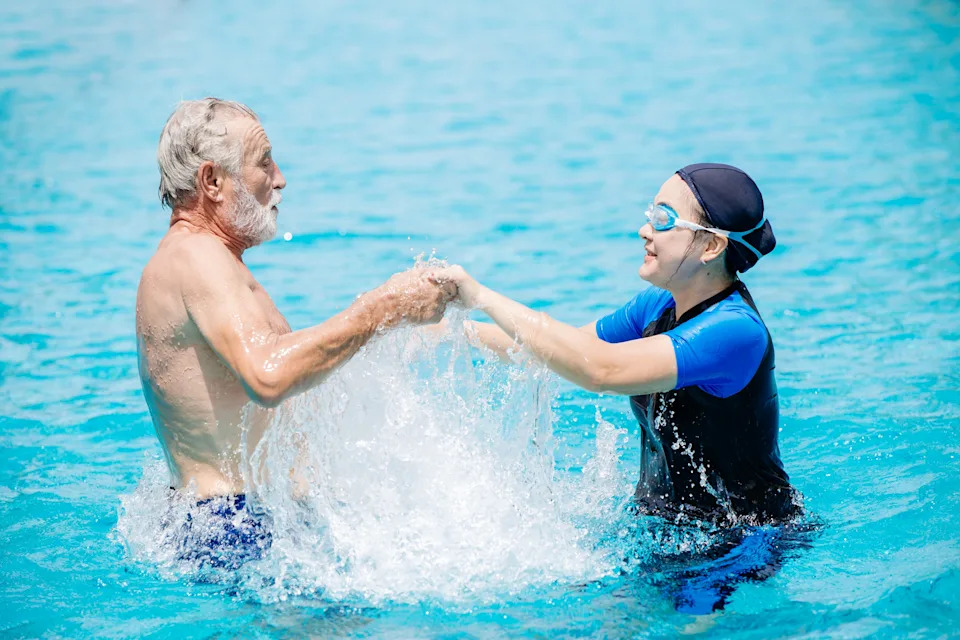
For patients with osteoporosis, both doctors strike a nuanced note. Dr. Oparaji explains that while aqua exercises improve balance, mobility, and fall prevention, bones respond best to weight-bearing and strength training. She advises patients not to rely solely on water exercise if bone density is a concern, and to incorporate weight-bearing movement where possible. Above all, she says, “I typically recommend that patients start with the exercise they are most likely to stick to because sustainability is important.”
Randi has felt the benefits firsthand. Since returning to the pool, she reports “much less joint pain and a lot more energy.” But the transformation has gone far beyond the physical. “It’s completely transformed how I see my body,” she tells me. “Before, I felt sluggish and too aware of how others might judge my size. In the water, I remembered how capable I am — graceful, strong, with real stamina. That confidence came rushing back. Now I don’t think about my size. Instead I think about how I’m taking care of myself in a way that brings me joy.”
More than exercise: the mental health and community side of aqua aerobics

What sets aqua aerobics apart for many people is simply the way it feels. Randi goes five mornings a week and feels the ritual itself has become inseparable from the joy. “I love the movement, but I also love the ritual — packing my bag, putting on my suit and cap, choosing my weights and noodles. As a retired person, that routine gives my days structure in a really satisfying way.”
Advertisement
The community she’s found has been another unexpected gift. Some of her pool regulars are in their 80s and 90s, and others are managing multiple sclerosis or Parkinson’s disease. “Watching them show up and stay engaged is so motivating,” she reflects. “We’ve built real friendships. We even meet outside the pool for lunches and happy hours.”
The mental health benefits of aqua aerobics are well documented. “Afterward I feel calm and centered. The little things that used to annoy me just don’t matter as much anymore,” Randi observes. “This is the first time I’ve truly carved out space just for myself. Five mornings a week are officially my time.” She’s been doing it for nine months and calls it a dream come true. “It’s made me a more joyful person and someone who wants to share that joy with others. Everyone deserves to find their happy place.”
Aqua aerobics safety: what to know before you start
Both doctors emphasize that aqua aerobics is generally safe, but you should always speak to your doctor before starting any new exercise plan. Dr. Oparaji recommends that anyone with uncontrolled heart disease or severe respiratory conditions always seek medical clearance before starting. She also flags a practical but often overlooked safety note: older adults should take care around wet pool surfaces, where slipping is a real risk
For people with osteoporosis specifically, Dr. Oparaji advises pairing water exercise with some weight-bearing activity for optimal bone health, rather than relying on aqua aerobics alone
Advertisement
For anyone on the fence? Randi’s advice is straightforward. “Keep looking until you find something that makes your heart sing. And when you do, jump in. You won’t be sorry!”
After nine months back in the water, she is living proof that sometimes the best workout is the one that doesn’t feel like work at all. “My time in the water is sacred,” she tells me. “It truly feels like a gift I give myself every day.”
Thanks for reading. I invite you to follow me on Yahoo for more health and wellness stories
Please note: Robin Raven is a journalist who covers health and wellness. This article is for general informational and educational purposes and isn’t a substitute for professional medical advice, diagnosis, or treatment. Always consult your physician or a qualified health provider before starting a new exercise program, especially if you have an existing health condition
Advertisement
Expert insight for this article was provided through interviews with Nneoma Oparaji, MD, and Simran Malhotra, MD, and is supported by the peer-reviewed research cited throughout
Robin Raven Creator
Robin Raven is a journalist who covers travel, entertainment, health, wellness and more. You can often find her writing songs, flying somewhere she’s never been, reading and listening to Taylor Swift.
Creators are not employed by Yahoo. Views expressed by creators do not reflect the opinions and position of Yahoo.Learn how to become a creator.
