


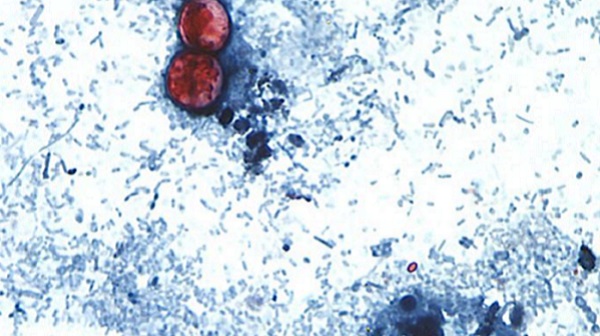
As cyclosporiasis cases continue to climb across the U.S., federal health officials say this year’s outbreak is far larger than what they typically see during a cyclosporiasis season.
Since May 1, the Centers for Disease Control and Prevention has received reports of at least 4,173 cyclosporiasis cases across 41 states. More than 7,400 additional cases are also under investigation, according to the CDC’s website
The CDC has linked one cyclospora outbreak to Taylor Farms iceberg lettuce in at least nine states, including Michigan and Ohio. Texas is not among the nine states linked to the Taylor Farms outbreak, and the outbreak
Article continues below this ad
U.S. health officials are also investigating a new outbreak of cyclosporiasis, but as of July 24, a potential
How does this year’s cyclosporiasis outbreak compare to previous years?
Federal public health officials said during a July 14 news teleconference this year’s outbreak has an unusually high number of cyclosporiasis cases in comparison to previous outbreaks.
During the teleconference, Gwen Biggerstaff — deputy director of the CDC’s division of foodborne, waterborne and environmental diseases — said states are reporting more cases in this year’s outbreak compared to what the CDC sees in a typical cyclosporiasis outbreak.
Article continues below this ad
Michigan is reporting 8,176 cases as of July 24, while other states affected by the midwest outbreak like Ohio are reporting at least 2,650 cases, according to their respective state health departments.
“The true number of infections is almost certainly higher than what’s reflected in these numbers, because many people with mild illness recover without seeking medical care and are never tested,” Biggerstaff said
While Texas is seeing an increase in cyclosporiasis cases, the state’s total case counts are not unusual compared to previous outbreaks at this time of year press officer at the Texas Department of State Health Services.
Related: Dallas County’s health director answers common questions about cyclospora
Why is this year’s outbreak worse than previous years?
Dr. Glenn Morris, a professor of infectious diseases at the University of Florida College of Medicine, said several factors may be contributing to the challenges investigators are facing in this year’s cyclosporiasis outbreak.
Article continues below this ad
Morris, who has more than 40 years of experience in public health and pathogen-related fields, pointed to the reductions in foodborne disease surveillance programs, staffing losses across federal health agencies and a fragmented food safety system.
The Foodborne Diseases Active Surveillance Network, or FoodNet, is a CDC surveillance tool for foodborne diseases and pathogens, established in 1995. Morris played an integral role in the program’s creation during his time at the CDC.
Historically, this collaborative effort between the CDC, U.S. Department of Agriculture, Food and Drug Administration and 10 state health departments was used to track different pathogens, including cyclospora. But last July, FoodNet was scaled back to only include data for Salmonella and Shiga toxin-producing E. coli, according to the CDC’s website. Reporting FoodNet-specific data for cyclospora and the other foodborne pathogens is now optional
Morris said scaling back FoodNet reduced onenderstand trends in foodborne illnesses like cyclospora. However, Biggerstaff said during the July 14 news conference that the changes to the FoodNet system do not affect the CDC’s ability to track this year’s cyclosporiasis outbreak
“FoodNet is a robust program where the goal of the program is really to look at trends over time,” Biggerstaff said. “There are only 10 participating FoodNet [states], so it doesn’t really give us the same kind of data we have from national surveillance.”
Article continues below this ad
Yet, Morris said by suspending collecting cyclospora data through FoodNet, health officials lose “critical tools” to assess what’s going on with a pathogen at a national level
“You’ve got weaknesses throughout the entire system, and they sort of get compounded when you get a major outbreak such as this,” Morris said. “They’ve cut back the funding, they’ve cut back the baseline underlying information that was coming in through active surveillance systems, such as FoodNet, so it’s quite a disadvantage when we do get an outbreak.”
Morris also highlighted the complicated nature of the public health system. Foodborne diseases are not tracked and handled by a single agency. Responsibilities are split between the CDC, FDA and USDA
“Even though these different groups talk to each other, it’s not like there’s one guy in charge,” Morris said. “Instead, we’ve got a three-headed monster here.”
The Trump administration also laid off many key health officials and scientists in April 2025, including thousands at the FDA and CDC.
Article continues below this ad
“There is already an underlying weakness within our food safety system because of the lack of a single, unified food safety agency,” Morris said. “Combine that with loss of jobs, and people who’ve been there for 40 years leaving, you have a set up where there is not the same capacity to deal with major outbreaks.”
Morris’s concerns are shared by Sen. Amy Klobuchar and Sen. Jon Ossoff, who both expressed similar sentiments in letters they wrote earlier this month, urging the restoration of several defunded food safety programs in light of the recent cyclospora outbreak
“As a currently uncontrolled large foodborne outbreak across the country continues, cuts to these programs are impacting our nation’s ability to prevent, detect and contain foodborne illnesses and protect public health,” wrote Klobuchar in a July 14 letter addressed to the CDC and FDA
Biggerstaff said during the July 14 news conference that public health officials expect to see cyclosporiasis cases increase potentially through the end of August
“Cyclosporiasis investigations generally take longer to link cases to each other and to identify a potential cause,” Biggerstaff said. “In some cases, a specific
Article continues below this ad
Related: More cases and hospitalizations from diarrhea-causing parasite reported in Texas
How can I protect myself from cyclosporiasis?
Cyclosporiasis is spread through contaminated food or water and cannot be spread through person-to-person contact. To reduce the risk of food-borne infection, the CDC recommends washing your hands and fresh produce thoroughly before eating and cooking.
Cyclospora can be killed when heated to 158 degrees Fahrenheit, so cooked fresh fruits or vegetables are considered safe to eat.
The FDA is encouraging people to not eat recalled foods, including the Taylor Farms recalled iceberg lettuce.
Texas public health experts are still encouraging individuals to be cautious with products linked to previous cyclosporiasis outbreaks like lettuce, raspberries and cilantro. Fresh produce that can be peeled, such as bananas and oranges, are typically considered safer.
Related: What to do if you think you have cyclosporiasis
Niamh Ordner is a science reporting fellow at The Dallas Morning News. Her fellowship is supported by the University of Texas at Dallas. The News makes all editorial decisions.
