


 Isabel Lopez
Mon, August 17, 2026 at 12:30 PM UTC
Key Takeaways
Mixing up lunch options helps kids explore new foods and build healthy eating habits
Including a variety of food groups ensures kids get the nutrients they need to stay energized
Involving kids in lunch planning makes them more likely to eat and enjoy their meals
Sandwiches have been a lunchtime staple for generations—and for good reason. They are convenient and easy to pack for school lunches and can be made in enough varieties to please even the pickiest eaters
That said, sandwich fatigue is real. Even those picky eaters may want something else from time to time. That’s why Parents spoke with registered dietitians for sandwich-free ideas that can spice up your kids’ lunch rotation while keeping it healthy and nutritious
Variety in Diet Matters
When packing your child’s lunch, the U.S. Department of Agriculture (USDA) recommends including foods from a variety of food groups to create a balanced meal: whole grains, proteins, vegetables, fruits, and milk. This variety does more than broaden the vitamins and nutrients kids eat; it also helps them build healthier eating habits over time
“When children are offered a <a href="https://www.parents.com/recipes/nutrition/kids/what-to-feed-kids-every-day/” rel=”nofollow noopener” target=”_blank”>variety of foods in their lunch, it allows them to enjoy different flavor profiles, different textures, and even different temperatures of food,” explains Nicholle Francis,MPH, RD, CDN, CLC, a registered dietitian and certified dietitian nutritionist. “Variety also increases the likelihood that the child will consume the macronutrients, vitamins, and minerals that will refuel them for the next few hours of their school day.”
“Having a variety of lunches helps create a flexible mindset around food and eating,” shares Stephanie Van’t Zelfden, RDN, a registered dietitian at Nutrition Hungry LLC. “Flexibility means that you can ‘make do’ and nourish your body, even when you’re not in total control of the food situation. We can help children start to develop that flexible mindset by providing different kinds of foods for lunch, rather than the same food on repeat. We do this in a considerate way by thinking about their preferences, including at least one item we know they’ll like, and getting their feedback.”
15 Non-Sandwich Lunch Ideas
Here are some ideas to bring some variety to your child’s lunchbox
Keep it simple
Turkey, cheese, and lettuce pinwheels in a whole wheat wrap, accompanied by sliced cucumbers and a fruit of choice
Chicken nuggets (some brands have cauliflower breading, for picky eaters who don’t like to taste the veggies), sweet potato fries, and apple or orange slices
Snack bento box with edamame, cheese stick, whole grain crackers, sliced carrots, and grapes
Make-your-own tacos using shredded leftover or rotisserie chicken or black beans, corn tortillas, shredded cheese, chopped lettuce, and a favorite fruit in a bento box
Custom DIY picnic: choose your favorite cracker, sliced cheese or deli meat, and any fresh fruits and veggies. Add fun sides like trail mix, pretzels, or chocolate for a tasty meal
Pasta salad with cubed cheese and crunchy veggies, such as cucumbers and peppers. Brownie points since this one doubles as a grown-up lunch, too
Leveraging leftovers
Here’s a parenting hack: use those leftovers for your kiddos’ lunches the next day
Pair leftover pasta with sliced cucumbers, strawberries, and some extra cheese to sprinkle on top
A homemade “egg roll in a bowl” (ground chicken, turkey, or pork cooked with cabbage, carrots, and seasonings), served with whole-wheat noodles and fruit
Rotisserie chicken with brown rice or quinoa, sautéed veggies, and fruit on the side
Black bean and cheese quesadillas on corn tortillas or whole wheat flour tortillas, served with sliced cherry tomatoes and fruit
Chickpea salad, curried chicken salad, falafel, or turkey meatballs with whole wheat pita bread or pita chips, chopped raw veggies with a light vinaigrette, and fruit
Meatballs with protein or whole wheat spaghetti with peas, and sliced apples on the side
Create a kid-friendly quinoa bowl using quinoa as the base, vegetables of choice (such as bell peppers, sweet potatoes, or corn), protein of choice (such as beans, hard-boiled eggs, chicken, or turkey), and a sauce or dressing packed on the side
Quinoa with leftover chili (made from lean or grass-fed beef or turkey, bell peppers, corn, and beans) and a favorite fruit
Cold tortellini or ravioli with marinara sauce, broccoli, and blueberries. You can even heat it up in the morning and send it warm in a thermos
Packing Lunch for Picky Eaters
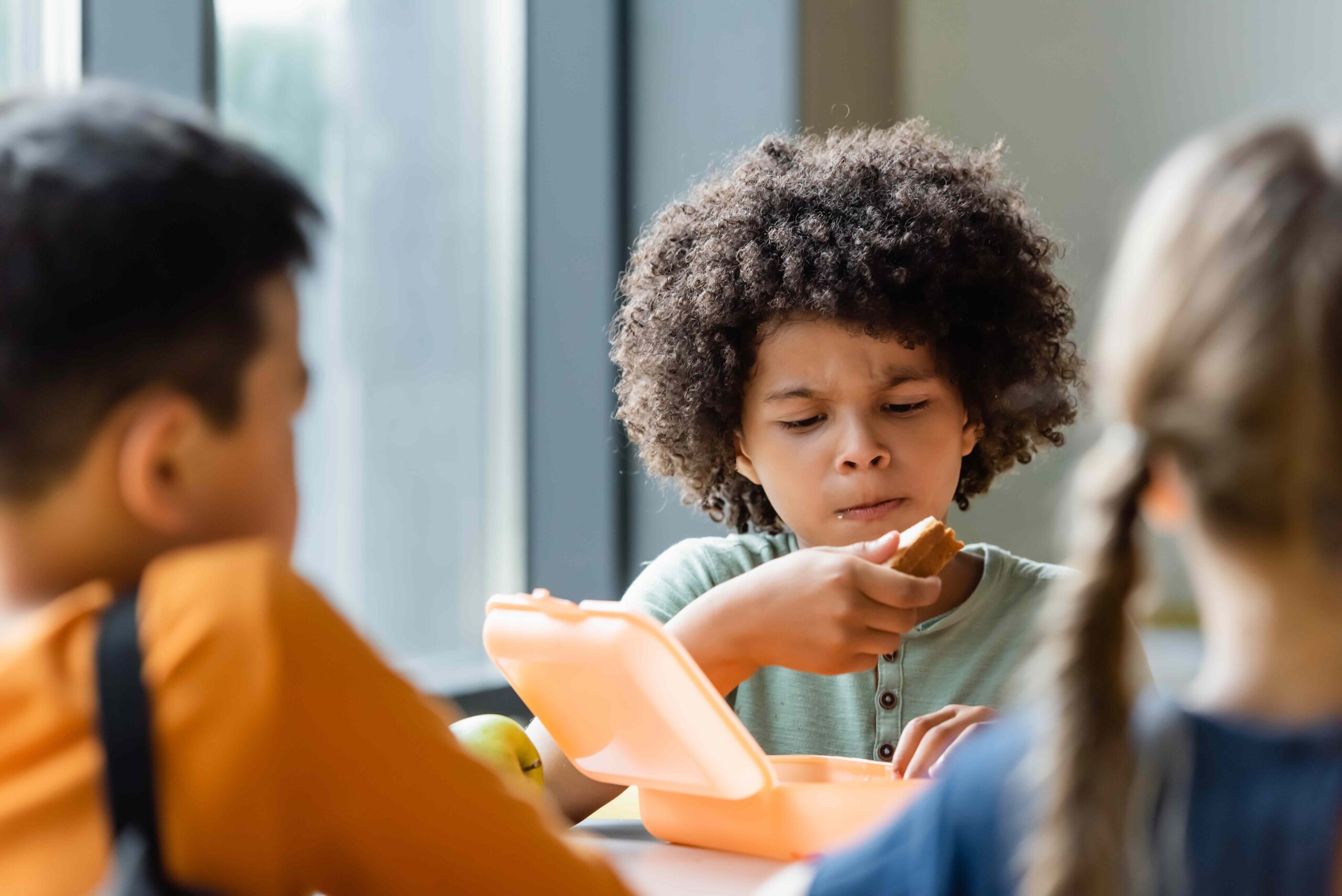
Whether your child has allergies orfood sensitivities, or prefers to stick to familiar foods, experts offer guidance to make lunchtime planning a little easier
“For a child who is nervous around new foods, avoid overwhelming them by serving new foods in small portions and on the side of a meal, rather than as the main part of the meal,” recommends Van’t Zelfden. “This gives them a chance to get familiar with a new food at their pace and without the pressure of it being their whole meal. And if they don’t eat it the first time, that’s OK; you can still serve it again. Many children develop curiosity about food over time.”
Food Safety Practices
To keep cold lunches safe, the USDA recommends packing them in a soft-sided insulated lunch bag with at least two cold pack and a frozen water bottle. For hot lunches, use a preheated insulated food container, such as a thermos, to help keep food at a safe temperature until lunchtime
Lunchbox Tips From Our Experts
Don’t overpack snacks. Too many snack foods can leave kids with little appetite for their main lunch
Discuss what’s in their lunchbox. Let your child know what’s packed so there are no surprises at lunchtime
Make lunch a team effort. Involve your child in planning and packing their lunch to increase the chances they’ll eat it
Offer age-appropriate choices. For younger kids, give simple options (such as apples or grapes). Older children can help choose and pack their own fruits, vegetables, and other lunch items
Watch forchoking hazards. Avoid foods like popcorn, hard candy, whole grapes, dried fruit, and other round or hard foods for younger children. Cut foods into small, bite-sized pieces (about 1/2 inch) and avoid round shapes whenever possible
Parents should keep in mind that lunch periods are often short, and kids like to spend that time talking with their friends. They should not worry if their child does not finish their lunch
“Many children eat only enough to no longer feel hungry,” reflects Van’t Zelfden. “Instead, focus on building flexibility with different kinds of lunches and learning the skills of planning and packing lunches.”
Read the original article on Parents
