




A handful of simple daily movements are strongly correlated to longevity
They help you live with better purpose and prevent injuries. One may help prevent vision decline. Here are four options you can begin using today
1. Standing on one leg
Most people know that balance is important as we age, but fail to actually do anything about it
Maintaining balance helps prevent falls which are common with age and which can have long-lasting consequences
Advertisement
Advertisement
Per a 2012 study at Kio University in Japan, our balance staysstrong into our late 30s, but tends to decline after that
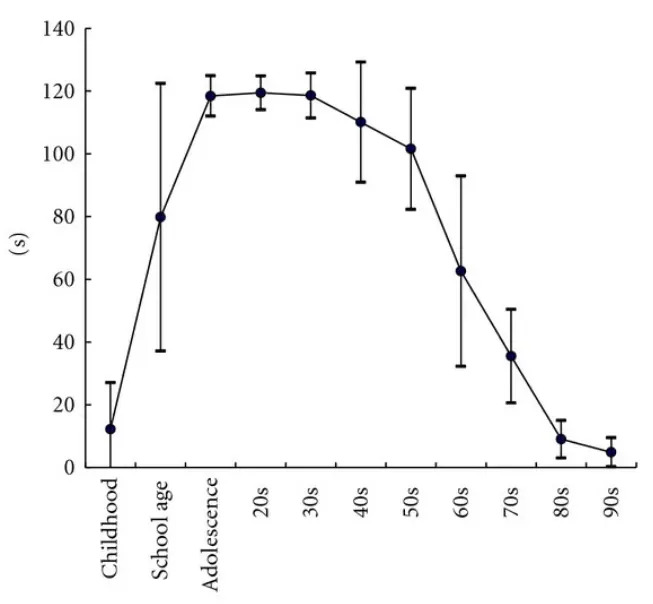
Another study showed that being unable to stand on one leg for 10 consecutive seconds is tied to higher rates of all cause mortality. They surveyed 1702 people aged 51-75 and then followed up with the group seven years later
Among those who could do the one legged stand, 4.6% had died. Among those who couldn’t, 17.5% had passed away. This correlation is consistent across age, gender, race, BMI, and other demographic markers
2. Dead hangs so you don’t die
One of the often ignored aspects of fitness is your overall grip strength. A seminal study done on 140,000 adults across 17 countries found that a 5 kg drop in grip strength is associated with a 16% increase in all cause mortality, and a 17% increase in cardiovascular mortality
Advertisement
A dead hang is a fantastic exercise because it can be done easily in most gyms, and has a low risk of injury. The key is to do the hang on a bar that you can reach without jumping to it (this helps prevent fall injuries)
As you hang, lift your feet up, bending your knees so that you are simply holding that spot. This exercise also stretches and strengthens your back muscles
If a dead hang is too difficult, you can start with a lat pulldown bar. With a set amount of weight, pull it down, and then just let it hang in your arms
Another great exercise for grip strength is the farmers carry. Take two kettlebells and then walk down and back on a flat stretch of ground for as many reps as you can. Do this for three cycles and work to increase your strength over time
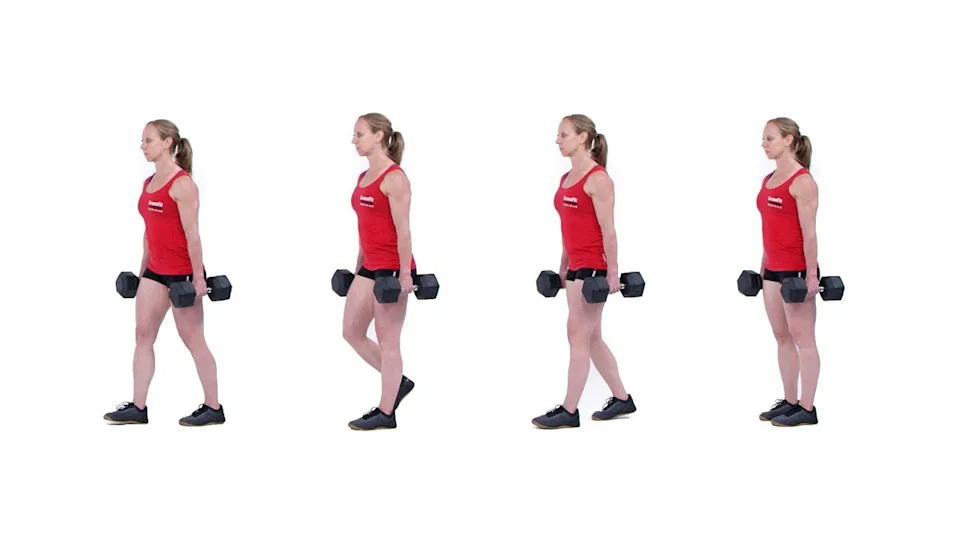
The good news is that this exercise burns quite a few calories as well. Your calves and arms will feel the burn, and your heart will thank you for it
Advertisement
Eye exercises that will help you age
3. Sitting and standing on floor with no hands
This is another test that’s been done and which shows substantial correlations to longer life if done correctly: sit on the ground and stand up without using your arms
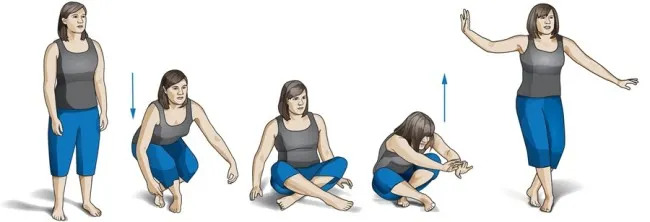
Now, I’ll warn you this is hard. I can do it. I’m 43 and quite fit, but I know this would have been challenging 20 years ago too
Researchers tracked 4300 people ages 46-75 who did this test and followed up 12 years later. Those who scored the lowest (between 0 and 4 out of 10), were four times as likely to have died from any cause, and six times more likely to have died of cardiovascular issues
How scoring works
You start with 10 points total
Advertisement
Subtract 1 point each time you need the following for support:
A hand
A forearm
A knee
The side of your leg
A hand on the knee/thigh (using a hand pressed on your leg to push up)
Subtract 0.5 points for:
Loss of balance / wobbling, or the movement becoming visibly unsteady at any point
As you can see, there is plenty of room for error here. This exercise comes down to flexibility, core, leg strength, and balance. Any individual exercises that help you develop those, will help you perform better on this test
You can also try training this exercise in reps. If you can’t do it, try using one hand to help you initially, and work to a point where you need less and less
Advertisement
If you have more vulnerable health, consider doing this on carpeting, or keeping a few pillows nearby to help if you lose your balance
4. Eye exercises that can help
Over time, our eye loses its elasticity and ability to change shape and adapt for objects near and far away. Consequently, we develop symptoms of presbyopia, where your ability to see nearby objects gets worse
There was a fascinating study at Keio University School of Medicine, where researchers had 23 volunteers shift their gaze between near and distant points 20 times per set, four times a day. They did this for four months straight
The exercise strengthened miosis, the pupil’s constriction when focusing up close. Consequently, they reported higher satisfaction and lower discomfort with their vision. They also reported seeing things slightly more clearly when up close. Moreover, this didn’t reverse the age-related decline to their vision, but it did seem to alleoing follow up studies on this very idea
Here’s how to do this
Take an object in your hand, holding it up about 1.5 to 2 feet from your face. Find another object that is on the other side of the room. Now quickly focus on the object in front of you, and a point in the distance, switching between the two quickly, after getting the focus
Advertisement
If you want to mirror the study, try doing it 20 times and for several repetitions each day
The takeaway
These exercises can help reverse many forms of age-related decline and ensure your health well into your twilight years
All you need to do is set aside a few minutes each day (literally 3-5 minutes with any of these will make a difference). Invest that time now so that you don’t pay the price later
Sean Kernan Creator
Writing from sunny Tampa, Florida. My goal is to provide non-fiction story-driven content to help us live better and maximize our potential. My content is all 100% human, written by me, without AI.
Creators are not employed by Yahoo. Views expressed by creators do not reflect the opinions and position of Yahoo.Learn how to become a creator.
