


Getting your Trinity Audio player ready…
The Washington Post
To eat healthy, I follow some simple rules
I eat a lot of fruits, vegetables, beans and fiber-rich plants. I eat lean proteins like fish, tofu and poultry, along with fermented foods such as yogurt, kefir and sauerkraut. And I try to avoid sugary drinks, candy, potato chips and other ultra-processed foods
But after two decades of reporting on nutrition, I realized I’d overlooked one part of healthy eating — the plastic products that come into contact with my food. A growing number of studies suggest that even nutritious foods can be contaminated with microplastics, plasticizers and other potentially toxic synthetic chemicals
Microplastics are tiny particles that can accumulate in your body, potentially increasing your risk of heart disease and other health problems. They also act as carriers of man-made chemicals that have been linked to serious health issues, including high blood pressure, infertility, metabolic disease and even some cancers. These chemicals that microplastics carry into your body include phthalates, BPA, and perfluoroalkyl and polyfluoroalkyl substances, also known as PFAS or “forever chemicals.”
Because plastic products are everywhere, microplastics are, too — in the air inside our homes, in our water, in our clothes and in many cosmetic products. One particularly common way that microplastics get into our bodies is through the food we eat. Researchers have found that plastic particles can seep into your food from plastic products that we use on a daily basis
“These chemicals come into our bodies and can be immediately metabolized,” said Shanna Swan, an epidemiologist at the Icahn School of Medicine in New York who studies how plastics and other chemicals impact health and fertility. “They enter our urine and can be excreted, but they still do their damage — and some of them stay behind.”
Swan and other experts say there are things you can do to lessen your exposure
Earlier this year, a randomized controlled trial published in Nature Medicine found that people dramatically reduced the amount of plastic-associated chemicals in their urine in one week by avoiding packaged goods such as plastic food containers, canned foods and beverages, and personal care products sold in plastic containers
Some of the experts I interviewed said you shouldn’t feel you have to avoid all plastic products — that could be both overwhelming and, for many people, nearly impossible
But you can take simple steps to protect yourself, said Courtney Carignan, an associate professor in the department of food science and human nutrition at Michigan State University who studies the health effects of exposures to plastic chemicals
“You can’t make yourself crazy about it,” she said. “But it’s good to change some of your habits to reduce your exposure.”
Here are six things my family and I recently swapped in our kitchen to lessen our exposure:
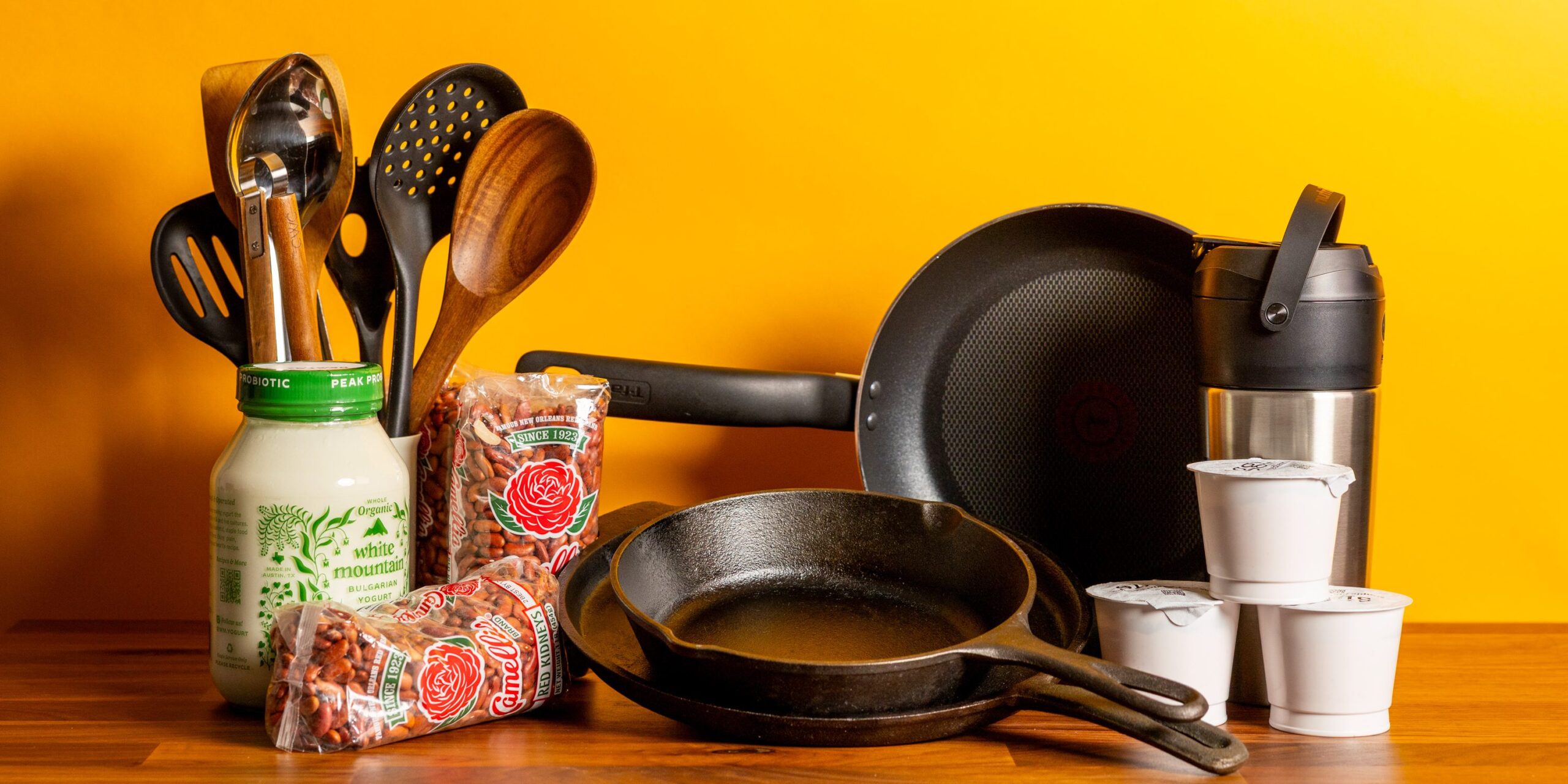
Wooden instead of plastic cookware
We got rid of our plastic spatulas, plastic cooking spoons, plastic cutting boards and other plastic cookware. A 2024 study found that plastic cookware can release significant microplastics and smaller particles into your food. This happens, for example, when you stick a plastic cooking spoon into a pot of boiling water to stir pasta, or when you slice and dice your food on a plastic cutting board
This change was fairly easy and inexpensive. We replaced the plastics with a metal spatula as well as cooking spoons and cutting boards made from wood and bamboo
Cast iron and stainless steel instead of nonstick pots and pans
The 2024 study found that nonstick pans coated with polytetrafluoroethylene — also known as Teflon — can shed chemicals into your food. So, we got rid of our nonstick pan and replaced it with a 10-inch cast-iron skillet, which you can find online for as little as $30. We also started using stainless steel pots and pans
Admittedly, it took a little time to get used to cooking some foods in a cast-iron skillet. The first few omelets I made stuck to it. But I did some research and discovered that each time I used the skillet, I needed to warm it on low heat for a few minutes before adding cooking oil. Doing this helps prevent eggs and other foods from sticking to the skillet
Glass instead of plastic food containers
All the experts I spoke to said to never microwave food or liquids in plastic containers. A 2023 study found that storing water, sauces and other liquid foods in plastic containers for months at a time could release millions of plastic particles, even when those liquids are refrigerated or kept at room temperature. But microwaving “caused the highest release of microplastics and nanoplastics into food compared to other usage scenarios,” the authors wrote
This was an easy change to make. We still have a few plastic food containers in our house. But we never put them in the microwave. Instead, we purchased a set of glass food containers that we use to microwave and refrigerate sauces, leftovers and other foods. You can find a set of glass food containers for as little as $20 at Walmart and other grocery chains
Stainless steel instead of plastic blender cups
For years, my family and I used a small blender with plastic blender cups to make smoothies. But a 2023 study by scientists at the University of Newcastle in Australia found that high-speed plastic blenders can release microplastics and nanoplastics into your food. According to the researchers, when you blend food, the “intense spiral motion” inside the blender creates significant shear force on the inner walls of the blender cup. This friction can release plastic particles into your food
After learning this, I stopped using our plastic blender and purchased one with a stainless-steel blender cup. It ranges in price from about $50 to $75. But given how often we use it, it was a worthy investment. And for less expensive options, glass blenders can be found online for less than $30
Stainless steel instead of plastic water bottles
Single-use plastic water bottles are bad for the environment, and they can shed microplastics. A 2024 study by researchers at Columbia University analyzed three popular brands of bottled water and found that a liter of water from plastic bottles contained an average of about 240,000 tiny pieces of plastic. The water contained seven types of plastic particles, including polyethylene terephthalate, which is commonly used to make plastic bottles for water, soda and other beverages
In some cases, drinking water from a plastic bottle may be the best option: for example, if you live in or are traveling to a place with unsafe drinking water
But if you’re lucky enough to have access to clean tap water or filtered drinking water, then cutting back on single-use plastics can reduce your exposure to microplastics. “I try to minimize the amount of bottled water I drink,” Carignan said. “But if I’m out and about and I’m thirsty, I’m going to drink what’s available.”
When we leave the house, my family and I carry stainless steel tumblers, which you can buy online for less than $10 each. I fill mine up with tap water throughout the day as needed
I also use mine when I buy hot coffee or tea at coffee shops. Most paper cups are lined with a thin layer of plastic to keep them from leaking. Studies have found that microplastics can leach from the lining of these disposable cups into hot beverages. So I ask the baristas to pour my drink into my metal tumbler instead of a disposable coffee cup
Dried instead of canned foods
The inside of food and beverage cans is typically lined with a thin layer of plastic to prevent corrosion. But studies have found that chemicals from these linings can seep into food and beverages
Beans and chickpeas are among my favorite foods: They’re nutritious, inexpensive, and my kids love them. But because we eat them multiple times a week, I’ve stopped buying canned beans and chickpeas and started making my own, which I found surprisingly easy. I buy dried beans and chickpeas in bulk, and once a week, I soak a batch overnight. The next morning, I cook them in a pot of boiling water with a pinch of salt and fresh garlic. Then I store the beans and chickpeas in a glass container in my fridge and use them throughout the week in different meals.
I don’t shun all canned foods, which can be very convenient and affordable. But I’ve realized that I can easily make some canned foods from scratch — and the end result usually costs less and tastes better
