


<img src="https://healthylife7.com/wp-content/uploads/2026/07/ReSXiaU-white-logo-41-xYfzfok.avif” alt=”PBS News Hour”>
Some Medicare beneficiaries get weight loss drug discount
Clip: 7/9/2026 | 7m 13sVideo has Closed Captions
Some Medicare beneficiaries eligible for weight loss drug discounts
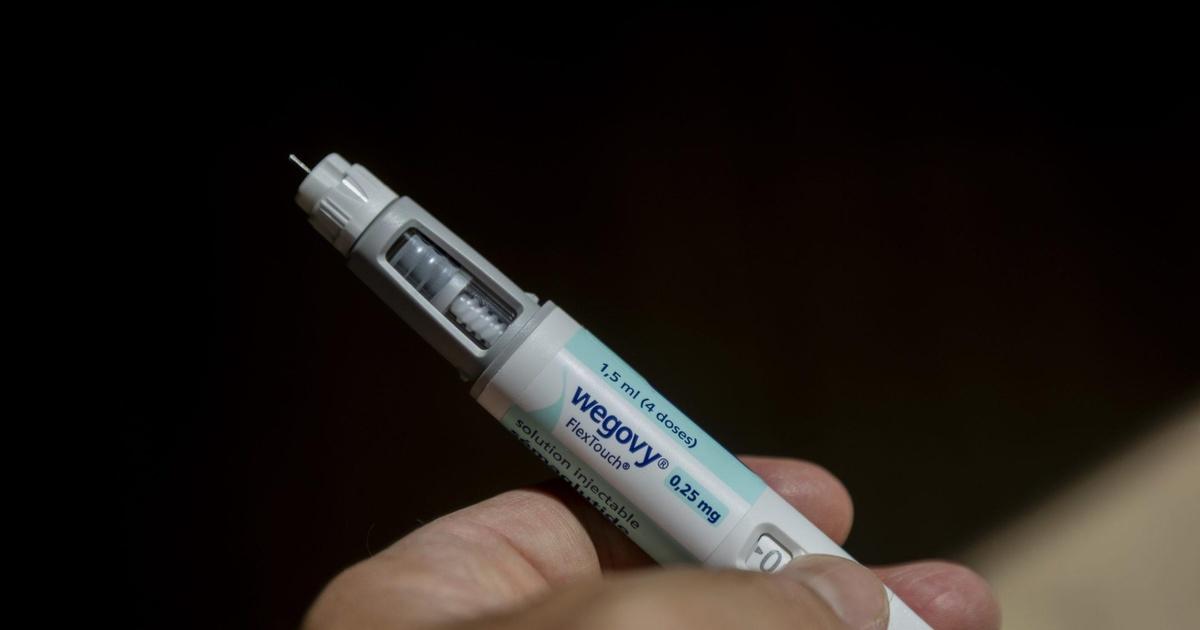
The number of Americans taking a GLP-1 drug for weight loss is on the rise. A new Gallup poll shows 11% of adults say they are currently using one, a dramatic increase from just two years ago when just 3% said they were using them. That number could climb even higher as Medicare has cleared the way for some patients to access the drugs. William Brangham discussed more with Juliette Cubanski
Problems playing video? | Closed Captioning Feedback
Problems playing video? | Closed Captioning Feedback
Major corporate funding for the PBS News Hour is provided by BDO, BNSF, Consumer Cellular, American Cruise Lines, and Raymond James. Funding for the PBS NewsHour Weekend is provided by
Some Medicare beneficiaries get weight loss drug discount
Clip: 7/9/2026 | 7m 13sVideo has Closed Captions
The number of Americans taking a GLP-1 drug for weight loss is on the rise. A new Gallup poll shows 11% of adults say they are currently using one, a dramatic increase from just two years ago when just 3% said they were using them. That number could climb even higher as Medicare has cleared the way for some patients to access the drugs. William Brangham discussed more with Juliette Cubanski
07/09/2026
Problems playing video? | Closed Captioning Feedback
Genre
- News and Public Affairs
Follow Us
Where to Watch PBS News Hour
PBS News Hour is available to stream on pbs.org and the PBS app
- Download the PBS app
- Check Your Local Broadcast Schedule
Providing Support for PBS.org
Learn Moreabout PBS online sponsorship
Open in new tab
GEOFF BENNETT: The number of Americans taking GLP-1 drugs for weight loss is rising sharply
A new Gallup poll finds 11 percent of adults say they’re currently using one of the medications, up from just 3 percent two years ago
And that number could climb even higher now that Medicare has cleared the way for some patients to access these drugs, which can help reduce obesity substantially and the risk of other health problems
Our William Brangham has the details
WILLIAM BRANGHAM: That’s right, Geoff
Starting this month, some Medicare beneficiaries can buy these popular weight loss drugs for only $50 a month
That is a steep discount from retail prices
It’s part of a new temporary pilot program to give millions of Americans access to the drugs that many have been unable to afford
The program is scheduled to run through the end of 2027
To help us fill in the picture of what people need to know, we are joined by Juliette Cubanski
She’s vice president and director of the Program on Medicare Policy at KFF
Juliette, thank you so much for being here
Who on Medicare will be eligible for this discounted access to these drugs?
JULIETTE CUBANSKI, Program on Medicare Policy, KFF: Millions of people are now eligible for this new program
The program is designed to reach people on Medicare who haven’t been able to access coverage of GLP-1s for weight loss specifically through their Part D plans
That’s because the law prohibits Medicare from covering drugs used for weight loss
This temporary program is targeting people with a BMI over 35 or a BMI over 27, along with other… WILLIAM BRANGHAM: That’s their body mass index
JULIETTE CUBANSKI: Yes, body mass index
Thank you
So if your BMI is 25 and above, plus other conditions like prediabetes or hypertension, you might be eligible for these drugs
But, importantly, you can’t have type 2 diabetes or sleep apnea or fatty liver disease
If you have one of those conditions, you can qualify for GLP-1 coverage now under your Part D plan
The Bridge Program is really designed for people with obesity or overweight who don’t have other conditions for which their Part D plan would cover a medication
Our analysis shows that about four million Medicare beneficiaries meet all of the clinical and eligibility criteria for the Bridge Program
That’s a lot of people who currently are unable to access these medications under the Medicare program
WILLIAM BRANGHAM: I want to ask you a question about costs, because, as we know, these medications are very expensive
Now, the government’s going to be shouldering some of that burden
But, as you’re describing, these — the benefits of these medications are enormous
So might the cost that the government is paying to pay for these drugs be offset by some of the health benefits that accrue to all of those millions of people taking the medications?
JULIETTE CUBANSKI: That’s certainly the thinking and the hope, I think, over a longer term
In the shorter term, the federal government will be subsidizing the cost of these medications over the 18-month period of this program, at a cost of about $3,500 over that 18 month period
We’re certainly not likely to see $3,500 in cost savings for the individuals who participate in this program in the short term
The program will, I think, over a longer term produce some cost savings as people who take these medications lose weight and as their health improves
If in the future they don’t develop type 2 diabetes or their cardiovascular conditions improve, that certainly could help to generate cost savings in the future
But we don’t really know exactly whether the level of cost savings that we achieve over a longer term will equal the additional spending that the federal government will be paying for these medications in the short term
And also over the longer term, people really need to keep taking these drugs in order to maintain the benefits
So that will entail continuing to pay for these medications over a longer term
Right now, that’s uncertain
But what we know is that there will be additional costs in the short term, with a hope for savings over a longer term
WILLIAM BRANGHAM: As with all drugs, it’s worth remembering that, while these drugs have huge benefits, there are also potential downsides
One of my colleagues earlier today talked with Kathryn Porter Starr
She’s at the Duke University School of Medicine, and she had raised a couple of concerns about elderly people taking these medications
Here’s what she said
KATHRYN PORTER STARR, Duke University School of Medicine: The concerns that we have, I think, center really around that loss of muscle mass
Older adults already lose muscle mass with aging
And then when we add in the GLP-1s, what we are going to possibly see is weight loss in that range of 25 to 45 percent from fat-free mass
That excessive weight loss in our older adults may lead to that significant loss of muscle mass and bone mineral density
And they really do recommend that we are focusing on that adequate protein intake and resistance training to mitigate that risk
WILLIAM BRANGHAM: On top of those concerns, this program, as we mentioned, is only for one year
So, what are the implications if someone is taking these medications for a year, but then has to stop because they suddenly have to pay full retail price for them?
JULIETTE CUBANSKI: Right
So this program is only temporary
The Centers for Medicare and Medicaid Services, the agency that runs the Medicare program, doesn’t have the authority to change the law on its own
That would require Congress to permanently authorize Medicare coverage of drugs used for weight loss
So this Bridge Program, which started on July 1, is running through the end of 2027
I mean, we certainly do know that, in order to sustain the benefits of GLP-1s for weight loss, people need to keep taking them
You know, there are those other direct-to-consumer programs, but the $50 co-pay that beneficiaries will enjoy under the Bridge Program is considerably lower than the cost that we’re seeing other patients paying through those other direct-to-consumer programs
So, at this point, we’re really not sure what will happen at the end of 2027
WILLIAM BRANGHAM: All right, that is Juliette Cubanski at KFF
Thank you so much for your insights
JULIETTE CUBANSKI: Thank you
 New
New
Dems search for new Senate candidate after Platner drops out
Video has Closed Captions
Democrats search for Maine Senate candidate after allegations force Platner out (5m 33s)
 New
New
Families worry Americans imprisoned by Iran are forgotten
Video has Closed Captions
As diplomacy stalls, families worry Americans imprisoned by Iran are forgotten (6m 49s)
 New
New
Hermanos Gutiérrez perform ‘Los Ojos del Cóndor’
Video has Closed Captions
Hermanos Gutiérrez perform ‘Los Ojos del Cóndor’ and reveal inspiration for new album (7m 3s)
 New
New
News Wrap: Olympian pleads not guilty on pool damage charges
Video has Closed Captions
News Wrap: Olympian pleads not guilty on Reflecting Pool damage charges (6m 16s)
 New
New
Rahm Emanuel on calling for new approach to U.S.-Israel ties
Video has Closed Captions
Rahm Emanuel on criticizing Netanyahu, calling for new approach to U.S.-Israel ties (9m 26s)
 New
New
Renewed U.S.-Iran fighting threatens hopes of ending war
Video has Closed Captions
Renewed U.S.-Iran fighting threatens shipping and hopes of ending war (4m 42s)
 New
New
What political satire can reveal about the strength of a democracy
Video has Closed Captions
What political satire can reveal about the strength of a democracy (5m)
Providing Support for PBS.org
Learn Moreabout PBS online sponsorship
Support for PBS provided by:
Major corporate funding for the PBS News Hour is provided by BDO, BNSF, Consumer Cellular, American Cruise Lines, and Raymond James. Funding for the PBS NewsHour Weekend is provided by
