


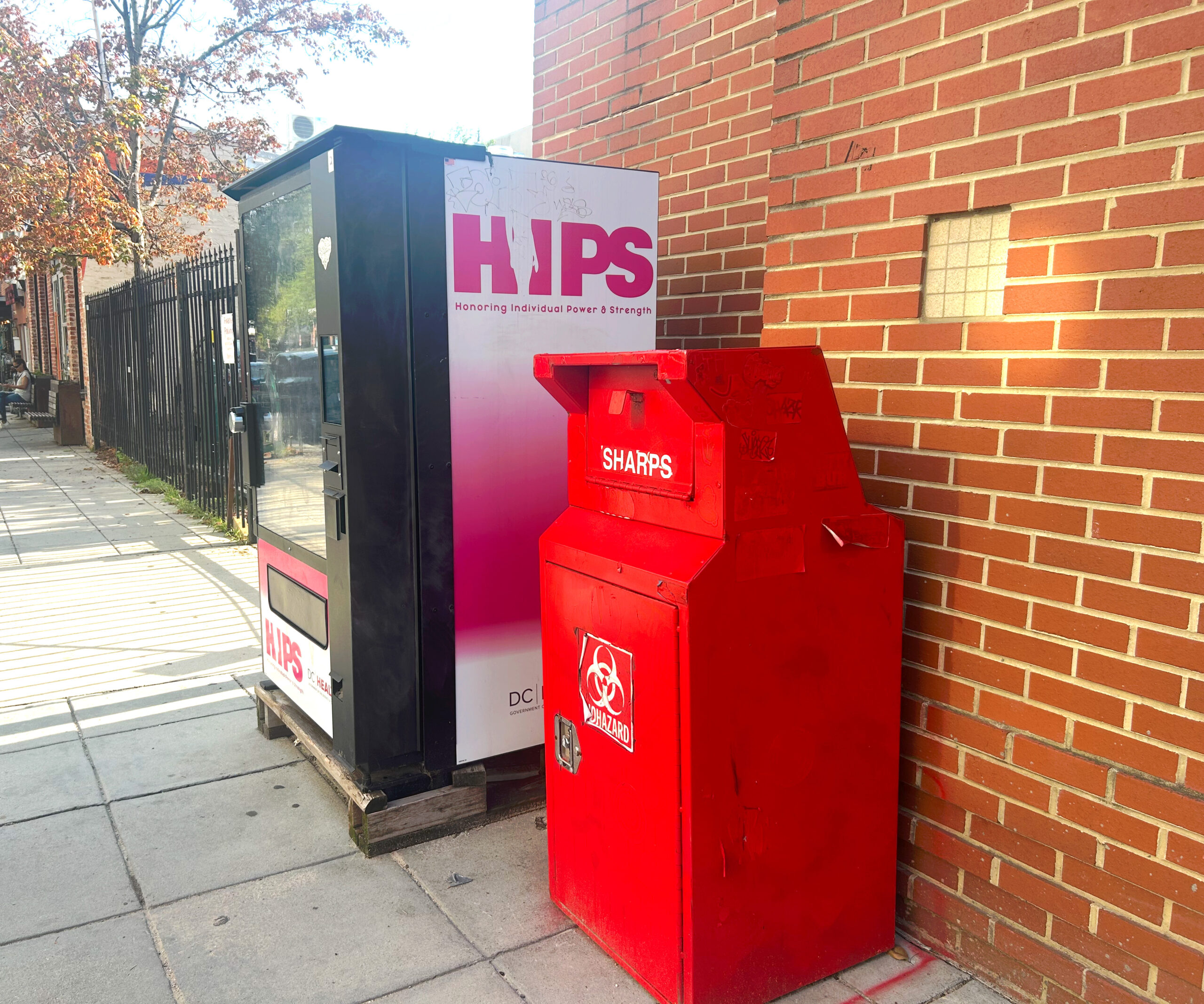
D.C.’s overdose prevention machines, which have operated since 2023, have recently come under scrutiny after an Advisory Neighborhood Commission (ANC) meeting where commissioners worried a machine was leading to public health concerns for the neighborhood
At the same time, DC Health is seeking approval from the D.C. Public Space Committee (PSC) to continue operating 14 of the machines. At a June 25 hearing, the PSC tabled DC Health’s applications and asked the agency to submit new plans, noting some of the applications involved machines that would not require a permit. PSC hearings look over, approve, and make comments on fixtures on land affecting the public right of way, including sidewalks, streets, and alleyways
If the application is denied, the vending machines would have to be removed from their current locations
DC Health rolled out the vending machines in 2023, with community partners Family and Medical Counseling Services (FMCS) and Honoring Individual Power and Strength (HIPS) operating the machines. The vending machines offer free wellness supplies and life-saving tools, including Naloxone (Narcan), condoms, and hygiene products, to anyone who enrolls with FMCS or HIPS
While the machines have been operating for several years, DC Health filed the permit application to PSC in 2026 after determining the vending machines required approval, the agency wrote in an email to Street Sense
“The permitting requirement was not identified at the time these machines were installed,” DC Health wrote
Overdose prevention, or harm reduction, vending machines provide low-barrier, stigma-free “life-saving” supplies to address the District’s high rates of substance use and overdose, Angela Wood, a staff member at FMCS, said at the hearing. In 2024, D.C.’s overdose death rate was 1.87 times higher than the national rate
“Vending machines extend what is already known about the extensive evidence-based practices of syringe service and overdose prevention and naloxone distribution programs, but it puts them in different community contexts that reduce barriers to the most marginalized communities,” Andrea Lopez, a professor at the Center for Substance Use Addiction & Health Research at the University of Maryland (UMD), said at the hearing
UMD has worked with HIPS since 2021 to evaluate the vending machines’ impact on D.C., Lopez said at the hearing. While the research is still ongoing, Lopez said the interventions these vending machines provide, such as syringe services and naloxone distribution, are proven effective
“There’s extensive research that shows that these interventions do not increase crime or drug use, but that they are cost-saving and play especially vital roles in reducing transmission of HIV and hepatitis C,” Lopez said
The most contentious vending machine is at 1525 7th St., located next to Bread for the City’s Shaw branch in the ANC 2G neighborhood. The machine is operated by HIPS. As of May 2026, the vending machine no longer provides syringes, fentanyl test strips, snorting kits, and rectal drug administration kits due to “efforts to align with current federal administration requirements,” DC Health said at the hearing. HIPS machines are co-located with industrial Sharps boxes, where people can discard used syringes and needles, which can reduce the transmission of bloodborne infections like HIV and viral hepatitis through needle sharing.
Community members said the vending machine has led to discarded needles on sidewalks and an increased presence of intoxicated individuals in the neighborhood
“This vending machine has also served as a magnet to bring folks into the community and is not serving folks from the community,” ANC 2G Commissioner Nicole Shea said at the hearing
Shea argued the machine provides duplicative services to next-door Bread for the City, which houses a medical clinic providing harm reduction services. Bread for the City operates only during standard weekday hours, and new patients must call to make an appointment. The vending machines operate 24/7 and do not require speaking with a physician
Many of the community members who raised worries said their concern was with an unattended machine dispensing drug paraphernalia, rather than with harm reduction services in general. Community member Daniel Bernier said these views reflected “not in my backyard” attitudes
“We know we have a problem. We know we have health concerns. We just don’t wanna have to deal with it in our location,” Bernier said. “These machines provide critical services to people in our community.”
Community members also brought up concerns about the location of the 1525 7th St. machine. Under D.C. code, all areas within 1,000 feet of a public playground must be designated a drug-free zone, meaning any person who distributes or possesses with the intent to distribute a controlled substance will receive increased fines and punishments
ANC Commissioner Rachelle Nigro alleged the 1525 7th St. vending machine could violate this, since it is approximately 370 feet away from the Kennedy Recreation Center. The vending machine does not provide controlled substances
“Installing a machine that generates biohazard waste and distributes drug use paraphernalia is inappropriate in this area,” Nigro said
At the end of the hearing, Public Space Committee Chairman Erkin Ozberk motioned to table the applications. Ozberk said DC Health should resubmit them and clarify the roles community partners and DC Health have in owning and maintaining the machines. The motion passed 4-0
DC Health confirmed it is compiling the requested materials to revise the application and resubmit. The PSC has allowed the vending machines to remain operational while the application is under review
