



Stories That Strengthen Communities: Indigi-Con 2026
The Indigenous Futures Institute’s 2026 Indigi-Con is helping create spaces where storytelling, cultural knowledge, public health and leadership development come together
Story by:
- Tyler DeLong
–
ttdelong@ucsd.edu
Published Date
July 16, 2026
Story by:
- Tyler DeLong
–
ttdelong@ucsd.edu
Article Content
For years, partnerships between the Herbert Wertheim School of Public Health and Human Longevity Science at University of California San Diego and local Native communities have helped create new pathways for cultural expression, public health education and community leadership. On July 23, those collaborations will come together at thesecond annual Indigi-Con at UC San Diego Park & Marketin downtown San Diego
This event will feature local artists and creators, panel discussions, cultural demonstrations and a traditional bird-singing welcome. It will offer a unique opportunity to connect with Indigenous communities in Southern California – made possible through the strong and growing partnerships between theIndigenous Futures Instituteand local Native communities
Community Partnerships with the Kumeyaay Nation
First established at UC San Diego in 2020 with support from the Social Science Research Council, the Indigenous Futures Institute is a community-based interdisciplinary initiative committed to uplifting Indigenous experience, cultural practice and stewardship by amplifying the work and voices of community knowledge-keepers. In 2025, Chancellor Pradeep Khosla further strengthened the institute through a dedicated funding investment for increased programming, which is helping expand the institute’s capacity to partner and work with Native communities, tribal governments and tribal health organizations.
Currently led byChag Lowry, MEd, executive director, the institute is now housed within the Herbert Wertheim School of Public Health, where it has continued to deepen its engagement with Tribal communities and plant seeds of change in communities across the region
These efforts have taken root by delving deeply into the region’s history, turmoil and often-overlooked truths, cultivating relationships grounded in trust, healing and shared understanding.
“Every generation has the right to contribute to the community,” said Lowry. “Our Native communication systems continue to evolve, and it’s important to create spaces where those connections can happen today, just as they did 500 years ago, when people gathered in a prairie or under an oak tree to share ideas and support the well-being of youth and future generations.”
That commitment took an important step forward in 2023, when members of the school were invited to the San Pasqual Band of Kumeyaay Nation Tribal Hall for a meet-and-greet, an early opportunity from school leadership to build relationships, listen and learn directly from community members. This served as an excellent starting point for the relationship with the San Pasqual Band and further developed into partnered action
“Every generation has the right to contribute to the community.”
The San Pasqual Band was one of the first Native tribes to sign a letter of support and partner with the Herbert Wertheim School of Public Health’s Transportation Research and Education for Driving Safety (TREDS) Center. Led byLinda Hill, MD, MPH,Distinguished Professor, with the support of TREDS staff memberAlexxa Casanova, a member of the San Pasqual Band of Kumeyaay Nation, TREDS helpedexpand roadway safety education efforts to reach more Californians, with a focus on Native American youth, pedestrian safety and Spanish-speaking communities.
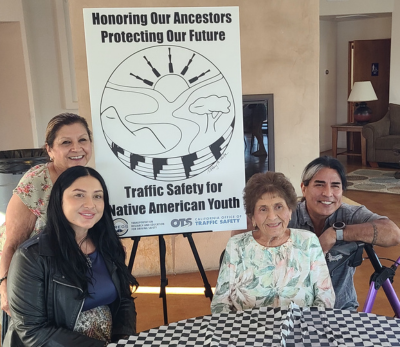
This collaboration demonstrates how public health partnerships can evolve from shared priorities into broader efforts that support education, safety, culture and community wellness. Over time, these partnerships have expanded beyond traditional public health initiatives to include creative collaborations that celebrate and strengthen Kumeyaay culture
For example, this year’s Indigi-Con logo was designed by sisters Nayah and Chanthavy Alvarado, both members of the San Pasqual Band of the Kumeyaay Nation
“Because of our Native history, we know what being silenced is like,” said Nayah. “This was a great opportunity for us to share our work and inspire and encourage other artists, especially Native artists, to express creativity and share who they are through unifying art.”
“We’re letting people know it’s safe to share creative differences,” said Chanthavy. “We can create and join communities through our art and our creativity — don’t be afraid to express yourselves in any medium.”
The logo features a Roadrunner, a culturally significant animal in the region, designed by Nayah, set against a traditional basket image from Myra Masiel-Zamora from the Pechanga Band of Indians, designed by Chanthavy, symbolizing the strength and interconnectedness of community collaboration
The design marks a historic milestone as the first Kumeyaay-created logo for an Indigenous Futures Institute event. In addition to their artistic contribution, both Alvarado sisters will share their creative journeys as presenters on the Indigi-Con youth comic artist panel and as presenters for a San Diego Comic-Con panel
By sharing cultural wisdom and lived experience, Native community members continue to shape public health policy and practice while demonstrating the power of storytelling, art, youth leadership and Indigenous knowledge as public health strategies. This work continues to expand through new collaborations, student groups and community-centered programming that strengthens Native leadership and cultural connection.
In February, the Indigenous Futures Institute partnered with the Rincon Band of Luiseño Indians and the Eyaay Ahuun Foundation to host anintroductory Comic-Con Creator’s Symposium, a celebration of local history and Indigenous storytelling held on Native land.
A precursor to the July 2026 event, the symposium recognized the importance of cultural knowledge and community voices while highlighting the power of storytelling as a tool for education, connection and community engagement and was the first in California to be hosted by a local Tribe.Indigi-Con 2026 reflects years of relationship building, collaboration and shared leadership between the school and Native communities through public health partnerships, creative expression and community-driven initiatives.
