


Key points
- The strength of a con is how long belief survives after the facts turn against it.
- Intelligence is no shield. What protects you is which authorities you’ve chosen to trust.
- Once a belief becomes part of your identity, giving it up feels like betraying yourself.
- Ask where one of your own beliefs still runs on faith after the evidence stopped supporting it.
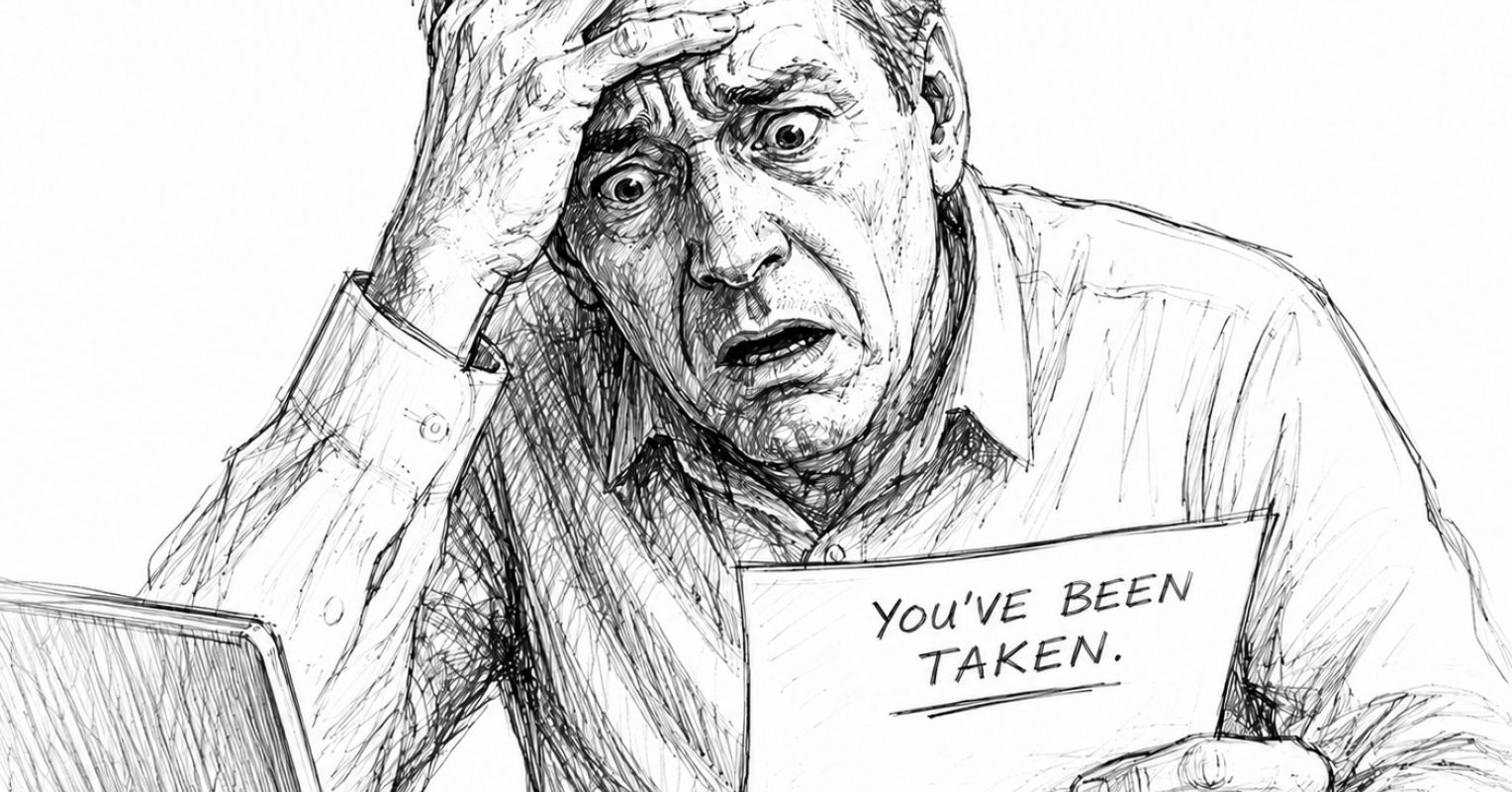
A good con artist does not just take your money. He gets you to defend him for taking it
When Elizabeth Holmes was exposed, many who had believed in Theranos did not turn on her. They blamed the press, the regulators, or the skeptics who would not wait. Holmes was convicted of fraud and sent to prison, yet she still speaks as though the technology could have worked if the world had believed a little longer. The most effective deceivers do not simply fool their marks. They turn them into believers
There is a way to measure a con, and it has nothing to do with the size of the theft. It is how long belief endures contact with reality. Weak cons collapse the moment the facts arrive. Strong ones keep their believers long after the verdict, sometimes for life. The interesting question is what prolongs that survival and why it should worry any of us
The profile of a susceptible mark
Start at the weak end. When Bernie Madoff confessed to the largest Ponzi scheme in history, worth roughly $65 billion on paper, the belief died on the spot. A Ponzi is a clean binary: The money is there, or it is not, and it was not. Nothing was left to believe in. Yet notice who his marks were. Banks, charities, and sophisticated financiers who prided themselves on due diligence. Not amateurs. Fraud researcher Tamar Frankel found that many marks share one combination. They distrust established institutions and readily believe an alternative source that flatters what they already want to be true. It is less about intelligence than about which authorities a person has chosen to trust.
The people most confident in their critical thinking are often the easiest to take. The con validates their skepticism, then hands them a private truth. Social psychologist Roland Imhoff calls this the need for uniqueness, the hunger to hold knowledge that sets a person apart. The pitch writes itself. You are too smart for the official story. Only you and I see what is really going on. It is flattery dressed as revelation
The rhetorical toolkit
The skilled grifter is not improvising. Robert Cialdini’s research on influence catalogs the moves. Borrow authority: Wrap yourself in credentials and a cause. Manufacture consensus: When enough respectable people vouch for you, doubt feels like heresy. Then defend the story at any cost. Lance Armstrong built a halo from a cancer-survival story, a foundation, and a sea of yellow wristbands, and for years, that halo made the doping charges sound like an attack on a hero. He denied everything and sued those telling the truth. Even after his 2013 confession, many fans stayed loyal. Cognitive linguist George Lakoff has shown how framing triggers a moral reflex before reason engages. Each of these moves buys the con more time before belief has to meet reality.
Why belief hardens
The longer you have believed, the longer the belief endures. Part of this is the sunk-cost fallacy: refusing to abandon a bad investment because so much has already been invested. The other part is identity. When Sam Bankman-Fried was convicted of stealing billions from FTX customers, his defenders sent letters praising his altruism, as if the persona answered the charge. When Trevor Milton was convicted of faking a Nikola truck video, rolling a dead prototype downhill to make it look like it was driving, many retail investors kept defending him even as he insisted he had done nothing wrong. Adam Neumann torched tens of billions at WeWork and was then handed the largest check his marquee backer had ever written for his next idea. Political psychologist Lilliana Mason describes how, once an identity fuses with a belief, facts stop being shared reality and become tribal property. Giving up the belief starts to feel like giving up part of yourself. That is what keeps it alive.
The manufactured rescue
The strongest version turns belief into dependency. My research on toxic leadership found a pattern that echoes the psychoanalyst Wilfred Bion. Anxious people form dependency groups around a troubled leader, certain he will save them from a threat he largely created. The self-help world runs on it. Keith Raniere sold NXIVM as personal growth and executive coaching and built a following so dependent that, after his conviction for racketeering and sex trafficking and a 120-year sentence, some members still stood outside the courthouse defending him. Here, belief resists all evidence because the evidence now feels like an attack on the rescuer. This is the con that endures longest, because leaving means indicting your own past.
Why it is so hard to walk back
Some ground is more fertile than others. Arlie Hochschild’s research shows how stories of lost status prepare people to accept anyone who names a culprit. Jonathan Haidt’s moral foundations theory explains why the same con is tuned differently for different audiences, with some moved by loyalty and authority and others by care and fairness. Once someone is in, confrontation backfires. Brendan Nyhan has found that attacking a cherished belief tends to reinforce it, while affirming the person’s values first and then introducing the fact works better. Robert Putnam’s work on social capital suggests why the isolated are the most exposed: They have fewer real ties and more of their reality arrives by algorithm.
The mark is us
Daniel Kahneman spent a career showing that the biases behind all of this are built into every human mind. The Theranos board included former cabinet secretaries and decorated generals. The mark is not a separate kind of person
Here is the question. Each of us has kept faith in something past the point where the facts turned: a stock, a boss, a company, or a person we needed to be right about. The strength of a con is measured by how long belief survives contact with reality. So, ask it plainly: Where is one of my beliefs still running on faith after the evidence stopped supporting it? The person most certain they could never be conned is usually the one who has already stopped checking
Bion, W. R. (1961). Experiences in groups and other papers. Tavistock Publications
Cialdini, R. B. (2007). Influence: The psychology of persuasion (Rev. ed.). Collins
Frankel, T. (2012). The Ponzi scheme puzzle: A history and analysis of con artists and victims. Oxford University Press
Haidt, J. (2012). The righteous mind: Why good people are divided by politics and religion. Pantheon Books
Hochschild, A. R. (2016). Strangers in their own land: Anger and mourning on the American right. The New Press
Imhoff, R., & Lamberty, P. K. (2017). Too special to be duped: Need for uniqueness motivates conspiracy beliefs. European Journal of Social Psychology, 47(6), 724–734. https://doi.org/10.1002/ejsp.2265
Kahneman, D. (2011). Thinking, fast and slow. Farrar, Straus and Giroux
Lakoff, G. (2004). Don’t think of an elephant! Know your values and frame the debate. Chelsea Green Publishing
Lipton, M. (2017). Mean men: The perversion of America’s self-made man. Voussoir Press
Mason, L. (2018). Uncivil agreement: How politics became our identity. University of Chicago Press
Nyhan, B., & Reifler, J. (2010). When corrections fail: The persistence of political misperceptions. Political Behavior, 32(2), 303–330. https://doi.org/10.1007/s11109-010-9112-2
Putnam, R. D. (2000). Bowling alone: The collapse and revival of American community. Simon & Schuster
