


<img src="https://healthylife7.com/wp-content/uploads/2026/07/NYC_aerial-1-1-4.jpg” alt=””>
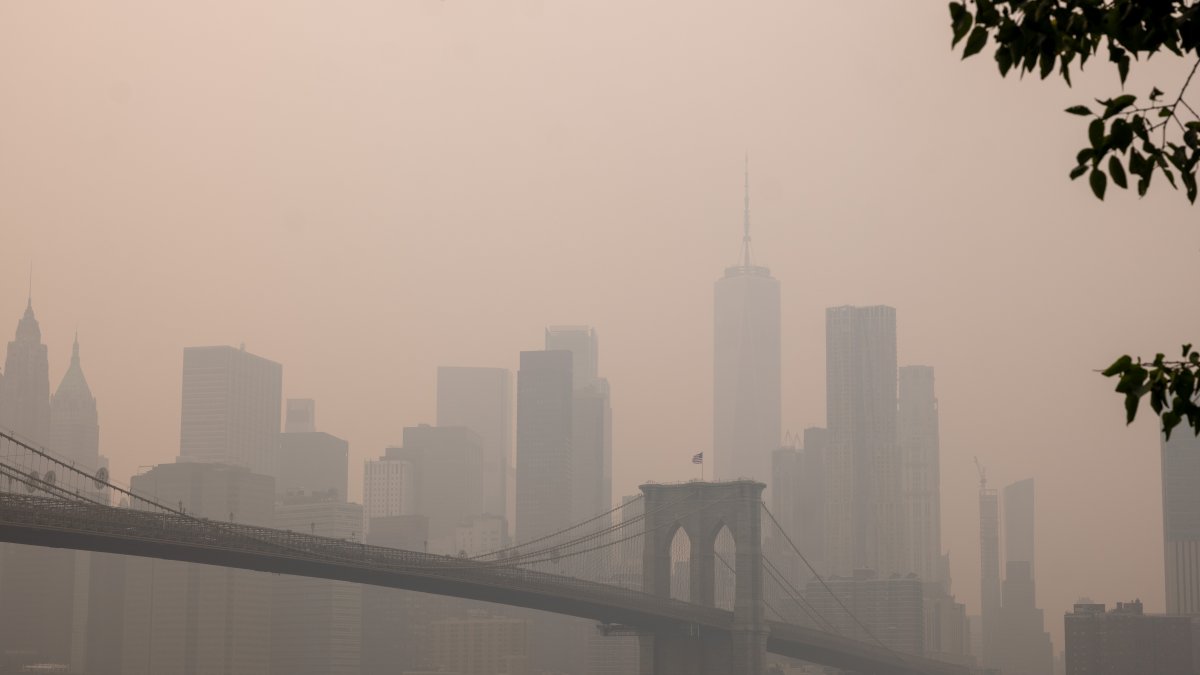
New York City air quality hit its worst levels in three years on Thursday as smoke from Canadian wildfires hits its thickest point over the tri-state area
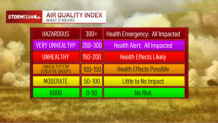
The Air Quality Index in all or parts of the city reached “very unhealthy” levels around 6 p.m., with AQI levels hitting above 230. At those levels, just being outside could cause health issues for everyone, especially any sensitive groups like older adults, children or those with medical conditions such as heart disease, lung disease or asthma
Air quality levels were already in the red “unhealthy” levels before dawn, and stayed there for much of the day before spiking in the evening. The entire region isunder an air quality alert until midnight
Watch NBC 4 free wherever you are
WATCH HERE
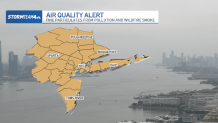
The smoke is coming from wildfires burning primarily in Ontario. The combination of high pressure over the Central U.S. and low pressure over Eastern Canada has been funneling the smoke into the tri-state
Weather Stories
Storm Team 46 minutes ago
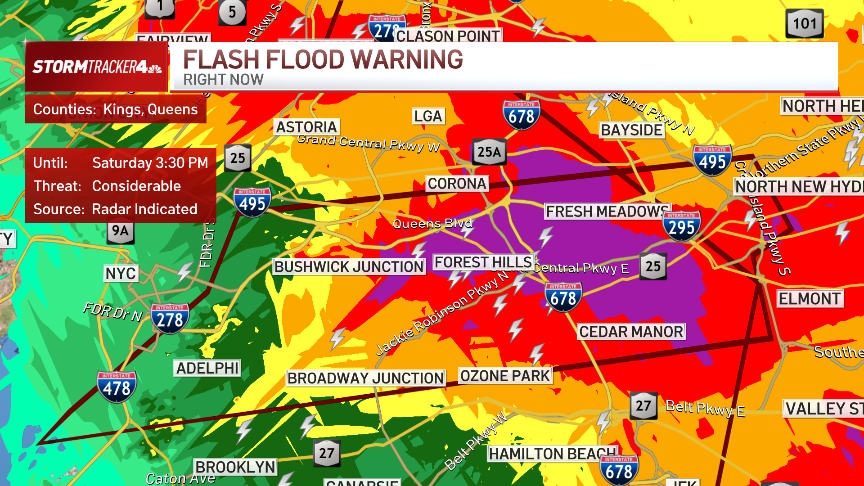
▶ Live radar: Track the storms as they sweep through the tri-state
Storm Team 45 hours ago
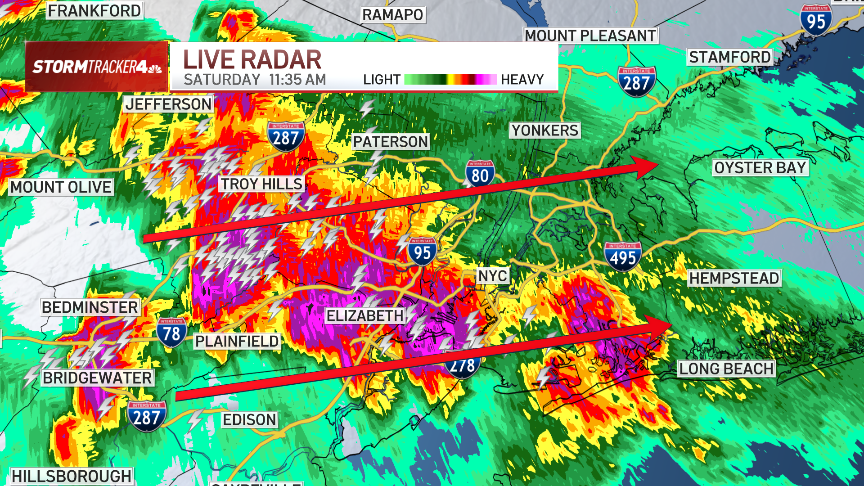
Live updates: Severe storms slam NYC area with flash floods; tornadoes possible
Impacts started Tuesday. Wednesday’s smoke concentrations were worse. The air quality index for midtown Manhattan at 1 p.m. Wednesday topped 150, putting it in the “unhealthy” range. Many people reported eye irritation and the smell of smoke in the air. Live cameras showed the city enveloped by haze
Thursday’s smoke concentrations had been similar to those on Wednesday before surging to levels not seen since 2023, when the city had a Mars-esque look to it from other Canadian wildfire smoke
The Air Quality Index for Midtown Manhattan at noon on Thursday was in the “unhealthy for sensitive groups” category
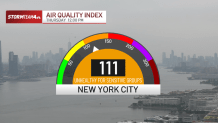
High levels of fine particulate matter in the air from wildfire smoke may be especially unhealthy for sensitive groups, such as children and people with heart or lung conditions. The particulates can cause shortness of breath, coughing, dizziness or fatigue, and aggravate heart and lung diseases and other chronic health issues
The diminished air quality, in addition to the ongoing heat advisory, makes indoors the place to be. Stay in an air-conditioned space if possible
Air quality concerns also have impacted sporting events. The start time for Thursday night’s Mets-Phillies game in Philadelphia was bumped up an hour earlier due to the wildfire smoke in the area
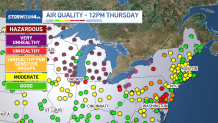
Smoke concentrations in the Great Lakes Region of the country, much closer to theea. Air quality from Michigan to Minnesota is in the “hazardous” range, with AQIs above 300
Experts suggest wearing a KN95 mask if you have to be outside and keeping your indoor air cleaner by closing windows and running an air purifier or air conditioner
The city’s Office of Emergency Management says free KN-95 masks are available at NYPD precincts and public library branches throughout the five boroughs. Masks are also available at the following FDNY firehouses:
- Bronx: 720 Melrose Avenue
- Bronx: 2417 Webster Avenue
- Brooklyn: 172 Tillary Street
- Brooklyn: 885 Howard Avenue
- Manhattan:100 Duane Street
- Manhattan:207 W 77th Street
- Queens:91-45 121st Street
- Queens:108-01 Horace Harding Expy
- Staten Island: 1850 Clove Road
@nbcnewyork Amid air quality concerns due to smoke from Canadian wildfires (along with heat and humidity levels), NYC is handing out free KN-95 masks at NYPD precincts and public library branches throughout the five boroughs. There are also masks available at nine firehouses across the city. The air quality index for midtown Manhattan on Wednesday topped 150, putting it in the “unhealthy” range. Many people reported eye irritation and the smell of smoke in the air. The diminished air quality, in addition to the ongoing heat advisory, makes being outside unadvisable. High levels of fine particulate matter in the air from wildfire smoke can cause shortness of breath, coughing, dizziness or fatigue and aggravate heart and lung diseases and other chronic health issues. #nbc4ny#nyc#health♬ original sound – NBC New York
New Jersey is also taking preventive action
As smoke from Canadian wildfires continues to impact air quality in our region, I’ve directed NJ TRANSIT and the New Jersey Turnpike Authority to make select quantities of masks available to commuters and at rest areas along the Turnpike and Parkway. The Port Authority will also…
— Governor Mikie Sherrill (@GovSherrillNJ) July 16, 2026
Remember when THAT happened?
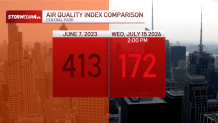
Many people remember the extreme wildfire smoke that blanketed the tri-state area on June 7, 2023. A deep orange haze engulfed New York City and the Northeast, and extended west to Minnesota.
On that day, the AQI in NYC peaked at 416, well into the “hazardous” zone
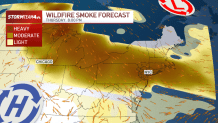
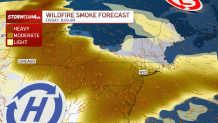
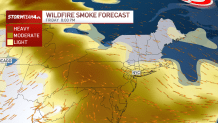
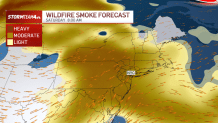
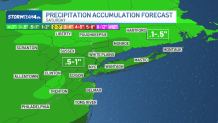
Smoke concentrations will trend lower on Friday and Saturday. Saturday’s smoke concentrations will be lowered by showers and storms during the day, as precipitation helps smoke particles out of the air
See below for what conditions will be like Thursday evening and Friday morning as the smoke lingers:
Thursday 8 p.m
Friday 8 a.m
Friday 8 p.m
Saturday 8 a.m
The smoke comes amid a quick heat spell for the NYC area, with temperatures topping 90 degrees. Those highs combined with high humidity make it feel much warmer
While a heat advisory from the National Weather Service expired Wednesday evening, the city said it would be extending a heat emergency through Thursday, according to the OEM. That means pools will remain open until 8:30 p.m., 21 cooling vans will be deployed again, and outreach teams will be contacting homeless New Yorkers
The Associated Press contributed to this report
