


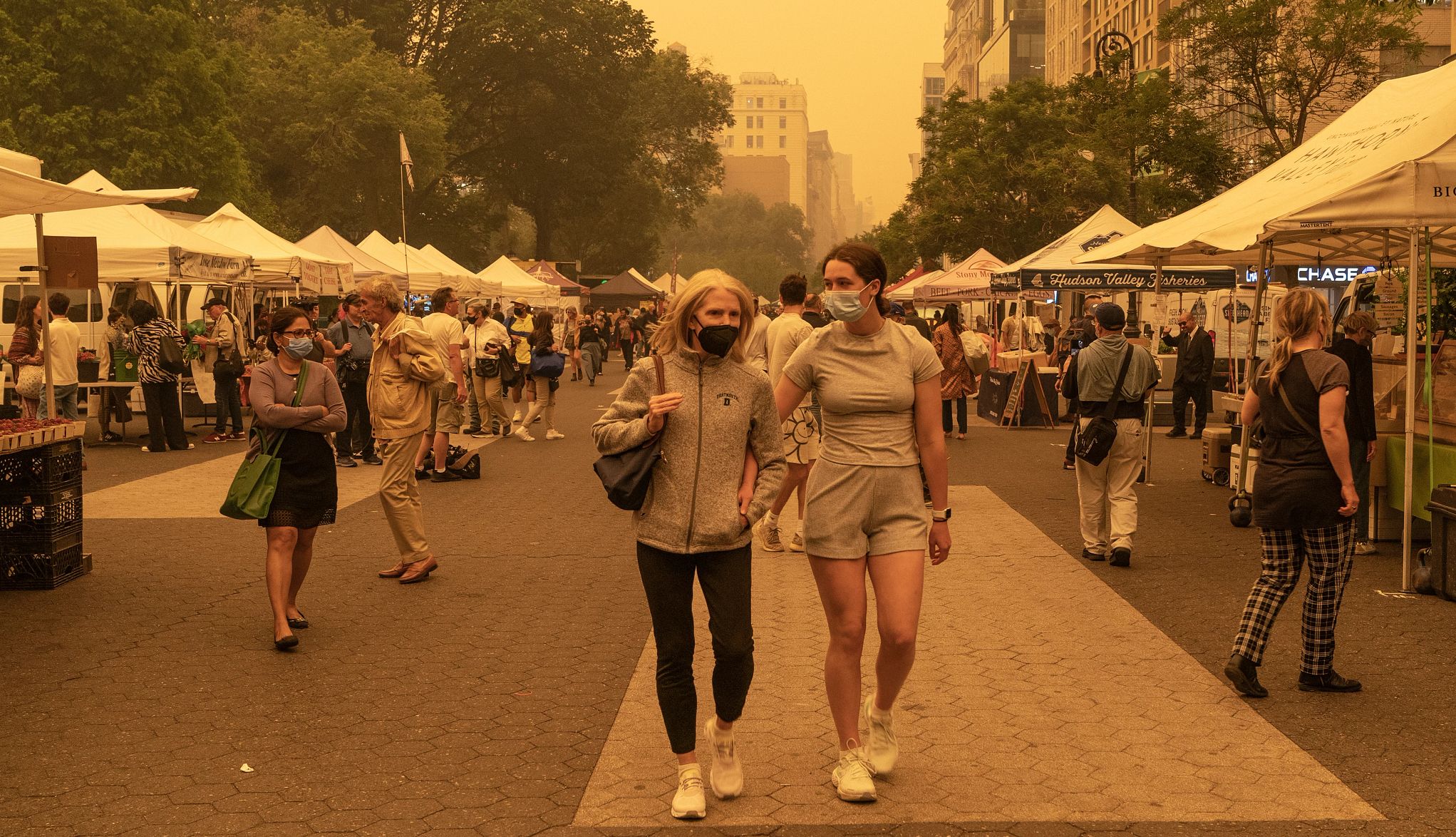
Wildfire smoke is affecting a large portion of the country this season after many areas of the U.S. experienced drought. Experts say that the activity is above average, producing smoke that’s a potential health hazard for people of all ages, especially for those who are older or have certain health conditions
People with asthma, chronic obstructive pulmonary disease (COPD), respiratory ailments and heart issues — as well as those working outdoors and over the age of 65 — can be hard hit by the air pollution, including wildfire smoke
More Ways to Benefit
View All
- Related Benefit 1
- Related Benefit 2
- Related Benefit 3
- Related Benefit 4
- Related Benefit 5
Fine particles in smoke are so small, they can get into the circulation system — not just your lungs, says Tarik Benmarhnia, a professor at the Scripps Institution of Oceanography in La Jolla, California
The potential dangers are greater for older adults in homes with poor or no filtration and no air-conditioning, people with limited access to medical care and those with reduced mobility, says José Guillermo (Memo) Cedeño Laurent, an assistant professor in the Department of Environmental and Occupational Health and Justice at the Rutgers School of Public Health
Think you’re off the hook because you live in a dry area? Not so. “Wildfire smoke is unfortunately impacting a lot of the United States. It is not just the West Coast,” says Dr. Maeve MacMurdo, a pulmonologist at the Cleveland Clinic in Ohio
The dangers of smoke
Here’s what makes smoke so hazardous: It’s made of fine, inhalable particles dubbed particulate matter 2.5, or PM2.5, because the particles are 2.5 micrometers in diameter and smaller
When to Seek Medical Care From Wildfire Smoke Inhalation
Seek emergency care if you have:
- Difficulty breathing
- Chest pain or pressure
- Unusual fatigue
- Irregular or rapid palpitations
- Stroke symptoms like slurred speech or sudden vertigo
Smoke inhalation triggers inflammation and oxidative stress, a process that can damage DNA and cells. It leads to stress on your vascular system and also changes in autonomic nervous system balance, Laurent explains
Researchers estimate that wildfire smoke is about 10 times as toxic as regular air pollution caused by the burning of fossil fuels. In recent years, wildfires contributed to up to 25 percent of total PM2.5 concentrations across the U.S. and up to half in some Western regions, a 2024 study in PNAS (Proceedings of the National Academy of Sciences) found
