




Public Health Newswire from The Nation’s Health brings you the news you need now
Op-ed: As mosquitoes and ticks spread, public health must keep pace
- July 16, 2026
- Guest Author(s)
Innovative and new investments are needed as vector-borne diseases spread, says Gill Capper, MPH, program manager for APHA’s Center for Climate, Health and Equity.
Climate change is reshaping where mosquitoes and ticks can live and thrive. Unfortunately, many states and communities are ill-equipped for a changing landscape of vector-borne diseases
Combined with changes in how we use land and the growth of global travel and trade, these disease-carrying vectors are showing up in new places and staying active for longer periods each year. Warmer average temperatures and more rainfall can enhance reproduction, interaction and survival, elevating the risk of vector-borne diseases such as West Nile virus and Lyme disease in communities across the U.S.
In 2024 alone, more than 100 locally transmitted cases of dengue — a mosquito-borne disease commonly found in tropical regions — were reported in Florida, California and Texas, according to the Centers for Disease Control and Prevention.
Hotter summers and milder winters give rise to a longer breeding and transmission season for mosquitoes and ticks. A recent survey found more half of Americans are worried that climate change will make it more likely they will contract an infectious disease. But limited funding, lack of knowledge or capacity and other barriers have hindered local vector surveillance and interventions, putting communities at greater risk for exposure to vector-borne diseases.
One of the people who is taking creative action is Olia master of health science student. After learning about barriers to surveillance in her New York county, Sterantino collected and tested over 9,000 mosquitoes, detecting West Nile virus in mosquito pools.
She shared findings with her state senator, which led to the introduction of a new bill in the New York State Legislature that would require all counties to create a plan of action for mosquito surveillance. Sterantino said she saw a need in her local community “and felt inspired to do something about it.”
Her work is a great example of how to use your own curiosity and experience to connect with and learn from local decisionmakers. Her story is a reminder that meaningful change often begins when we have the confidence to share our knowledge, ask questions and advocate for the health of our communities
Mosquitoes and ticks are adapting to a changing climate. Our public health systems must do the same. Investing in surveillance, research and community partnerships today will help communities detect new threats earlier and prevent illnesses tomorrow. New and innovative strategies are needed to prevent insecticide resistance from using the same insecticides over many generations, and to avoid inadvertently harming the health of watersheds and aquatic food webs that we also rely on. The longer we wait, the harder and more deadly the challenge will become.
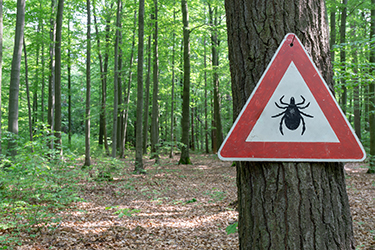
Photo by Gabort71, courtesy iStockphoto
Explore more topics
Climate Change
