


Premium
- HEALTH
How eczema and acne can affect your mental health
Scientists are uncovering a complex communication network linking the skin, immune system, and brain—one that could transform how chronic skin disease and mental health are treated
ByGiulia Mondaini
Published July 20, 2026
For decades, doctors largely viewed the connection between chronic skin conditions and mental health through a psychological lens. Living with acne, eczema, psoriasis, and other visible skin diseases was thought to increase the risk of anxiety, depression, and social isolation
But a growing body of research is challenging that view. “Research has confirmed that the relationship between skin disease and mental health is not just psychological or cosmetic, but deeply biological,” says Mohammad Jafferany, professor of psychodermatology, psychiatry, and behavioral sciences at Central Michigan University
Evidence suggests the skin and brain communicate through an intricate two-way signaling network known as the “skin-brain axis,” linking the immune, nervous, and endocrine systems in ways that may influence both inflammatory skin diseases and mental health
Studies estimate that 30 percent of people living with chronic skin diseases also experience anxiety or depression. Researchers hope that understanding the biology underlying both conditions could ultimately reshape treatment, pointing toward more integrated approaches that address both mental health and skin disease
How the brain and skin communicate
The skin and brain are in constant conversation. Their connection begins before birth—both develop, in part, from the same embryonic tissue layer, the ectoderm—and continues throughout life through a network of neural, hormonal, and immune signals known as the neuro-immuno-cutaneous system
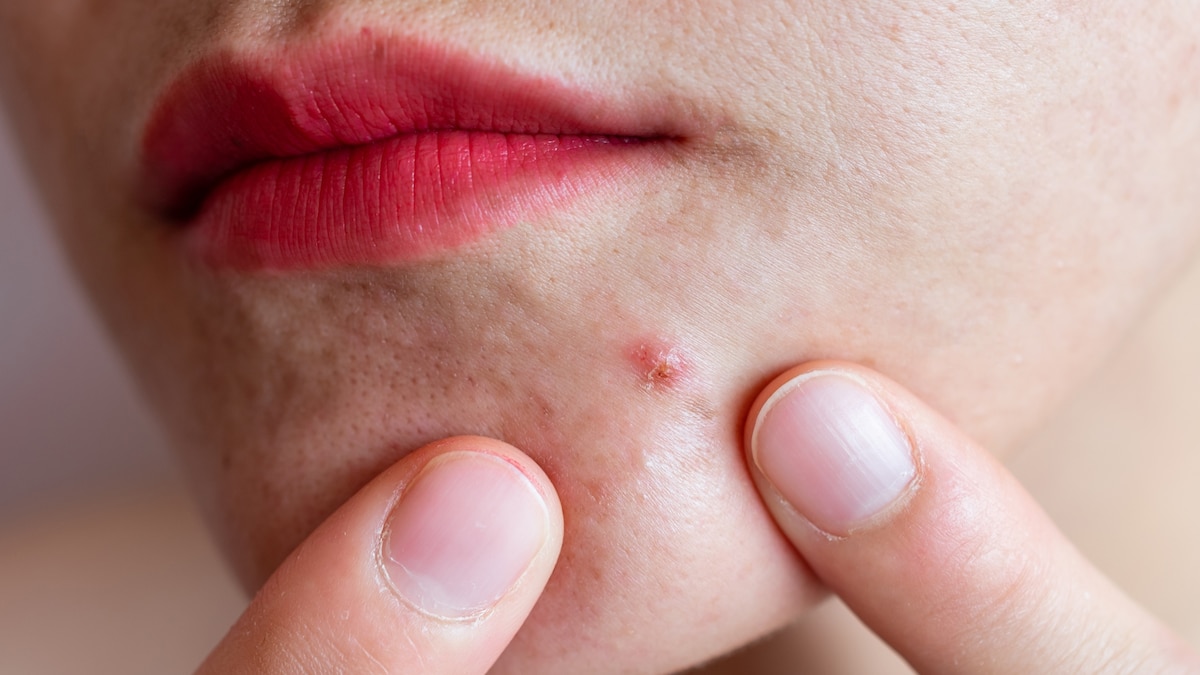
That’s why, for instance, experiencing stress may aggravate acne lesions: stress makes your body amp up its cortisol, adrenaline, and substance P, which, among other things, reach the skin through chemical messengers and nerve fibers. There, they increase inflammation, stimulate oil production, and weaken the skin’s protective barrier
That excess sebum production is one of the main culprits for acne. When too much oil accumulates, it can clog pores, creating the conditions for inflammation and worsening breakouts, says Mariana Ramirez Posada, a researcher at the Stanford University School of Medicine. At the same time, living with a visible skin condition can itself become aeing and further fueling inflammation
(Everybody is tempted to pop zits—but is there a safe way?)
Communication, however, flows in both directions. “The brain will send signals to the skin, but the skin can also produce different signals to the brain, meaning they’re intertwined by a nervous system,” says Ramirez Posada
When inflammation in the skin becomes chronic, it can trigger the immune system signaling molecules known as cytokines. Researchers are now finding that these molecules, once in the bloodstream, can interact with brain systems that regulate mood, stress, and sleep, including neurotransmitters such as serotonin and dopamine. “These molecules are involved in immune signaling but have also been associated with depression, anxiety, fatigue, and altered stress responses,” says Jafferany
Those findings are leading researchers to ask whether the same immune processes that drive inflammation in the skin may also influence brain function—and help explain why chronic skin diseases and mental health disorders so often occur together
The emerging role of the immune system
To test whether the immune system helps link skin inflammation and mental health, researchers measured hundredsof immune-related proteins in the blood samples of people with depression and inflammatory skin diseases. They found that some patients shared similar immune signatures, suggesting the two conditions may arise, at least in part, from common biological pathways. The findings also pointed to an unexpected possibility: Drugs already used to treat inflammatory skin diseases might one day help treat some forms of depression.
“It’s now been established very clearly that psychosocial stress causes inflammatory markers in the blood to go up,” says James Murrough, professor of psychiatry and neuroscience at the Icahn School of Medicine at Mount Sinai in New York City and co-author of the study. Chronic psychological stress doesn’t just affect mood—it also activates the immune system, increasing inflammatory signaling throughout the body. That growing recognition has shifted how researchers think about depression, from a disorder confined to the brain to one that, in some patients, may also involve the immune system.
(Your gut health can affect the rest of your body. Here’s why.)
The idea extends well beyond skin disease. In fact, inflammationhas already been linked to a wide range of psychiatric conditions, including depression, anxiety, and post-traumatic stress disorder, with studies suggesting that the immune system might play a role in the development or progression of these illnesses
That raises an intriguing possibility, says Murrough. If inflammatory skin diseases and depression share some of the same immune pathways, could therapies that target those pathways benefit both conditions?
“That’s exactly what we’re very keen to find out,” says Murrough
Integrating mental and skin health
As evidence for the skin-brain connection grows, many experts say patient care has yet to catch up. Mental-health screening is still not routinely integratedinto dermatological care, even though it could help identify patients whose chronic skin conditions are contributing to anxiety, depression, and social distress, as well as those whose underlying mental-health symptoms may be exacerbating inflammation and making skin symptoms harder to control
“I think right now there’s a big separation between both specialties,” says Ramirez Posada. Closer collaboration between psychiatry and dermatology, adds Ramirez Posada and Jafferany, could lead to more comprehensive care that addresses both the physical and psychological aspects of chronic skin disease
This growing understanding of the skin–brain connection is also influencing new areas of research. One of the newest is neurocosmetics—topical products designed to interact with the skin’s neuro-immuno-cutaneous system to improve not only skin health but also emotional well-being. While the concept is grounded in emerging science about communication between the skin and brain, many products already on the market make claims that outpace the available evidence. “They are highly controversial, and there is no evidence-based benefit or scientific validation so far,” Jafferany says.
(Melanoma is overdiagnosed at “alarming” rates. Here’s what to know.)
Researchers are also pursuing precision psychodermatology, a data-driven approach that brings together psychiatry, dermatology, and neuroscience. By integrating clinical information, psychological factors, biological markers, and artificial intelligence, researchers aim to identify the specific drivers of disease and tailor treatments to patients
For example, two patients with the same skin condition may experience very similar symptoms, but the underlying causes can be quite different. In one person, symptoms may be mainly driven by inflammation at the level of the skin and therefore respond best to targeted treatments that reduce immune-driven inflammation. In another, stress and altered communication between the nervous and immune systems may play a larger role, making psychological support and stress-management strategies more effective.
Taken together, these discoveries suggest that chronic skin diseases are more than skin deep. “This reflects a broader shift in dermatology toward viewing skin disease not as an isolated surface problem, but as part of a complex, whole-body interaction,” says Jafferany
