


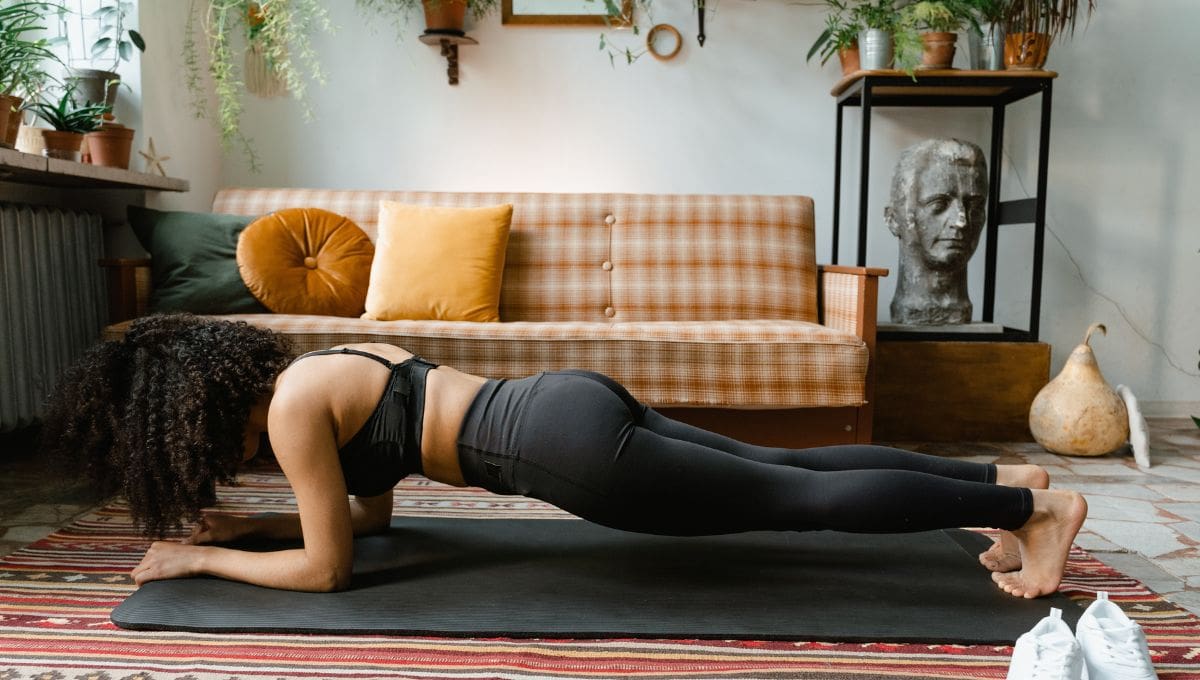
The plank is one of the simplest exercises you can do, but it is also one of the most misunderstood. Many people judge their fitness by how long they can stay in the position, while social media is full of videos showing people holding planks for five, ten, or even thirty minutes. That raises an obvious question. How long should you actually be able to hold a plank at your age?
The answer is more complicated than a single number. Your age matters, but so do your strength, body weight, training history, and technique. A person with excellent form who holds a plank for 60 seconds often demonstrates better core function than someone who maintains a poor position for several minutes
Is the Lu Raise the Perfect Upper Body Exercise for Jacked Shoulders?
Research consistently shows that core endurance plays an important role in athletic performance, injury prevention, balance, and everyday movement. However, there is little evidence that chasing extremely long plank times provides additional health or fitness benefits. Instead, maintaining a solid plank for an appropriate duration with perfect technique is a far better goal
This article explains what science says about plank performance across different ages, what counts as a good plank time, why quality matters more than duration, and how you can improve safely
What Does the Plank Actually Measure?
Despite its reputation as an abdominal exercise, the plank is a full body movement. During a properly performed forearm plank, the rectus abdominis, transverse abdominis, obliques, erector spinae, gluteal muscles, shoulders, chest, and quadriceps all work together to stabilize the spine while resisting movement. This type of muscular action is known as an isometric contraction because the muscles generate force without changing length
Core endurance differs from core strength. Maximum strength reflects how much force your muscles can produce in a single effort. Endurance measures how long those muscles can maintain stability without excessive fatigue. Daily activities such as lifting groceries, carrying children, running, or playing sports rely heavily on muscular endurance
Researchers have found that trunk muscle endurance is associated with reduced risk of low back pain and improved movement efficiency. The ability to maintain spinal stability during prolonged activity is often more important than producing maximal force
Does Age Affect Plank Performance?
Age influences almost every aspect of physical performance. Beginning in the fourth decade of life, adults gradually lose muscle mass and strength through a process called sarcopenia. Balance, coordination, and neuromuscular control also decline over time unless they are maintained through regular exercise
That does not mean your plank time has to decrease dramatically. Studies consistently show that physically active older adults maintain significantly better muscular endurance than sedentary individuals of the same age. Regular resistance training, aerobic exercise, and balance work can preserve muscle function well into older adulthood. In many cases, lifestyle has a much larger impact than chronological age. This means a healthy 65 year old who exercises consistently may easily outperform an inactive person in their twenties.
How Long Should You Be Able to Hold a Plank?
There is no universal medical standard for plank duration because researchers use different testing protocols. However, sports scientists, physical therapists, and strength coaches generally agree on practical benchmarks for healthy adults with proper form
Ages 18 to 39
Healthy adults in this age group should generally aim for at least 60 seconds with excellent technique. Holding a plank for 90 to 120 seconds demonstrates very good core endurance. Beyond two minutes, improvements in muscular endurance become increasingly specific to the exercise itself rather than reflecting overall core fitness. Elite athletes may exceed three minutes, but this is usually unnecessary for general health or sports performance
Ages 40 to 59
Muscle endurance naturally declines with age, but regular exercise greatly slows the process. A plank lasting 45 to 90 seconds with proper alignment represents a strong level of core endurance for most healthy adults in this age range. Individuals who regularly participate in resistance training or functional fitness programs often exceed two minutes without difficulty
Ages 60 and Older
Older adults benefit tremendously from maintaining core endurance because trunk stability supports balance, walking ability, and independence. Holding a quality plank for 30 to 60 seconds is an excellent goal for many healthy adults over 60
For beginners or those with joint limitations, modified planks performed from the knees or on an elevated surface provide similar training benefits while reducing joint stress
Why Technique Matters More Than Time
Many people continue holding a plank after their technique has broken down. The hips begin to sag, the lower back arches, the shoulders collapse, or the head drops toward the floor. At that point, the exercise no longer trains the core effectively and may increase stress on the lumbar spine
A proper plank includes several key characteristics
- The head remains in line with the spine.
- The shoulders stay directly above the elbows.
- The ribs remain pulled down without excessive arching.
- The pelvis stays level.
- The glutes remain lightly contracted.
- The body forms a straight line from head to heels.
- The moment this alignment cannot be maintained, the set should end.
Research examining spinal stability emphasizes that maintaining proper posture is essential for maximizing muscle activation while minimizing unnecessary spinal loading
Is Holding a Plank for Five Minutes Better?
Not necessarily. Long duration planks have become popular because they are easy to measure and compare. However, the scientific evidence does not suggest that extremely long holds provide superior health benefits. After about two minutes, the exercise becomes increasingly limited by discomfort and local muscular endurance rather than improving functional core strength
Strength coaches often recommend progressing the exercise instead of simply extending the duration. Increasing the challenge through weighted planks, stability ball planks, long lever planks, or single leg variations creates greater muscular demand without requiring excessively long sets. Research on resistance training consistently supports progressive overload as the primary driver of muscular adaptation
What Is a Better Test Than a Single Front Plank?
Many physical therapists prefer evaluating core endurance using multiple tests instead of relying only on the front plank. The McGill torso endurance battery includes flexor endurance, extensor endurance, and side bridge tests
Rather than focusing on maximum time alone, the assessment examines balance between muscle groups. Significant differences between front, back, and side endurance may indicate muscular imbalances that could increase injury risk. Research has shown that balanced trunk endurance ratios are more informative than absolute plank duration alone
Can Planks Help Prevent Back Pain?
The relationship between planks and back pain is complex
Planks alone do not prevent every episode of low back pain. However, improving trunk endurance and spinal stability appears to reduce the risk of certain mechanical back problems
The exercise strengthens muscles responsible for stabilizing the lumbar spine while placing relatively low compressive loads on spinal structures compared with many dynamic exercises
Exercise programs that include core stabilization have demonstrated positive effects in individuals with chronic nonspecific low back pain
People with existing spinal conditions should still seek individualized guidance from qualified healthcare professionals before beginning new exercise programs
How to Improve Your Plank Time
Improving your plank is usually straightforward
- Begin with three sets of 20 to 30 seconds while maintaining perfect alignment.
- Gradually increase the duration by five to ten seconds each week only if technique remains solid.
- Strengthening the glutes, shoulders, and deep abdominal muscles also improves plank performance because these muscles share the stabilization workload.
- Adding exercises such as dead bugs, bird dogs, Pallof presses, farmer carries, and side planks develops more complete core function than relying on front planks alone.
Consistency matters more than marathon sessions. Performing core training two or three times each week is generally sufficient for improving muscular endurance
When Should You Stop a Plank?
Fatigue is expected. Pain is not. You should end the exercise if your hips begin to sag, your lower back becomes painful, your shoulders collapse, your breathing becomes uncontrolled, or you can no longer maintain a straight body position
These signs indicate that the target muscles have reached fatigue and continuing the hold is unlikely to provide additional benefit. Quality repetitions consistently outperform poor quality endurance
The Bottom Line
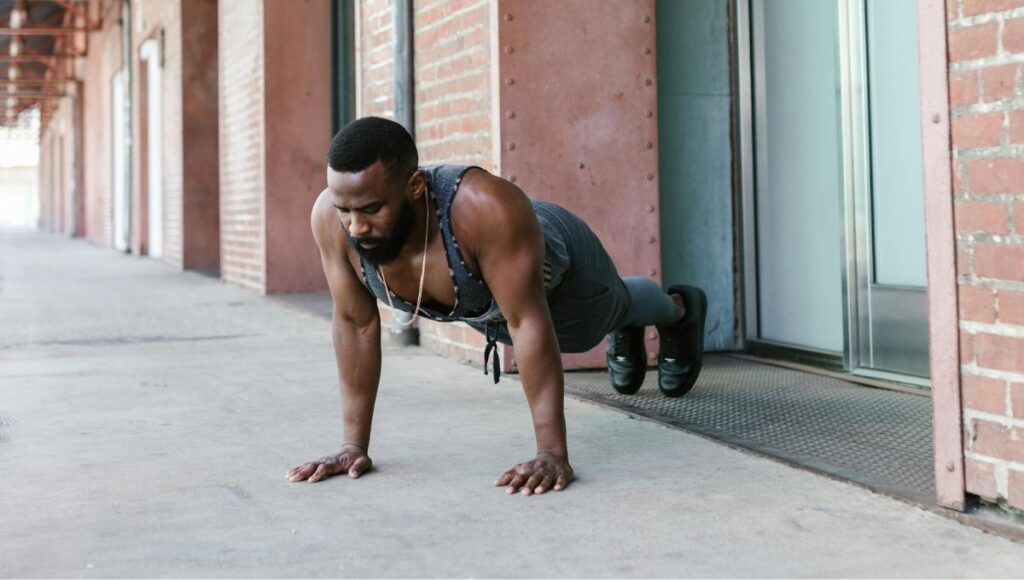
Your plank time should not be viewed as a competition against social media records or viral fitness challenges. For most healthy adults, holding a technically sound plank for around one minute represents good core endurance. Younger adults with higher fitness levels may comfortably reach two minutes, while older adults can achieve excellent functional fitness with holds between 30 and 60 seconds
The biggest predictor of success is not age but consistent training. Rather than chasing increasingly longer times, focus on maintaining perfect technique, gradually increasing difficulty, and building a balanced, resilient core that supports everyday life and athletic performance
Key Takeaways
| Topic | Key Point |
|---|---|
| What the plank measures | Primarily assesses core muscular endurance and spinal stability rather than maximum strength. |
| Good time for ages 18 to 39 | Around 60 to 120 seconds with perfect technique. |
| Good time for ages 40 to 59 | Around 45 to 90 seconds with proper alignment. |
| Good time for ages 60 and older | Around 30 to 60 seconds is an excellent goal for healthy adults. |
| Technique | A straight body position is more important than holding the plank longer. |
| Long planks | Holding a plank for more than two minutes offers limited additional fitness benefits for most people. |
| Better progression | Increase difficulty with weighted or advanced plank variations instead of only increasing time. |
| Training frequency | Two to three sessions per week is sufficient for improving core endurance. |
References
- Behm, D.G., Drinkwater, E.J., Willardson, J.M. and Cowley, P.M., 2010. Canadian Society for Exercise Physiology position stand. The use of instability to train the core in athletic and non athletic conditioning. Applied Physiology, Nutrition, and Metabolism, 35(1), pp.109 to 112.
- Granacher, U., Gollhofer, A., Hortobágyi, T., Kressig, R.W. and Muehlbauer, T., 2013. The importance of trunk muscle strength for balance, functional performance, and fall prevention in older adults. Sports Medicine, 43(7), pp.627 to 641.
- Hicks, G.E., Fritz, J.M., Delitto, A. and McGill, S.M., 2005. Preliminary development of a clinical prediction rule for determining which patients with low back pain will respond to a stabilization exercise program. Archives of Physical Medicine and Rehabilitation, 86(9), pp.1753 to 1762.
- McGill, S.M., Childs, A. and Liebenson, C., 1999. Endurance times for low back stabilization exercises. Clinical targets for testing and training from a normal database. Archives of Physical Medicine and Rehabilitation, 80(8), pp.941 to 944.
- McGill, S.M., 2010. Core training. Evidence translating to better performance and injury prevention. Strength and Conditioning Journal, 32(3), pp.33 to 46.
- Nelson, M.E., Rejeski, W.J., Blair, S.N., Duncan, P.W., Judge, J.O., King, A.C., Macera, C.A. and Castaneda Sceppa, C., 2007. Physical activity and public health in older adults. Recommendation from the American College of Sports Medicine and the American Heart Association. Medicine and Science in Sports and Exercise, 39(8), pp.1435 to 1445.
Tags:coreplank

Is the Lu Raise the Perfect Upper Body Exercise for Jacked Shoulders?
Previous
How to Watch the 2026 CrossFit Games Live From Your Time Zone: Individuals, Teams, Masters, Adaptive and Livestreams

Next
