


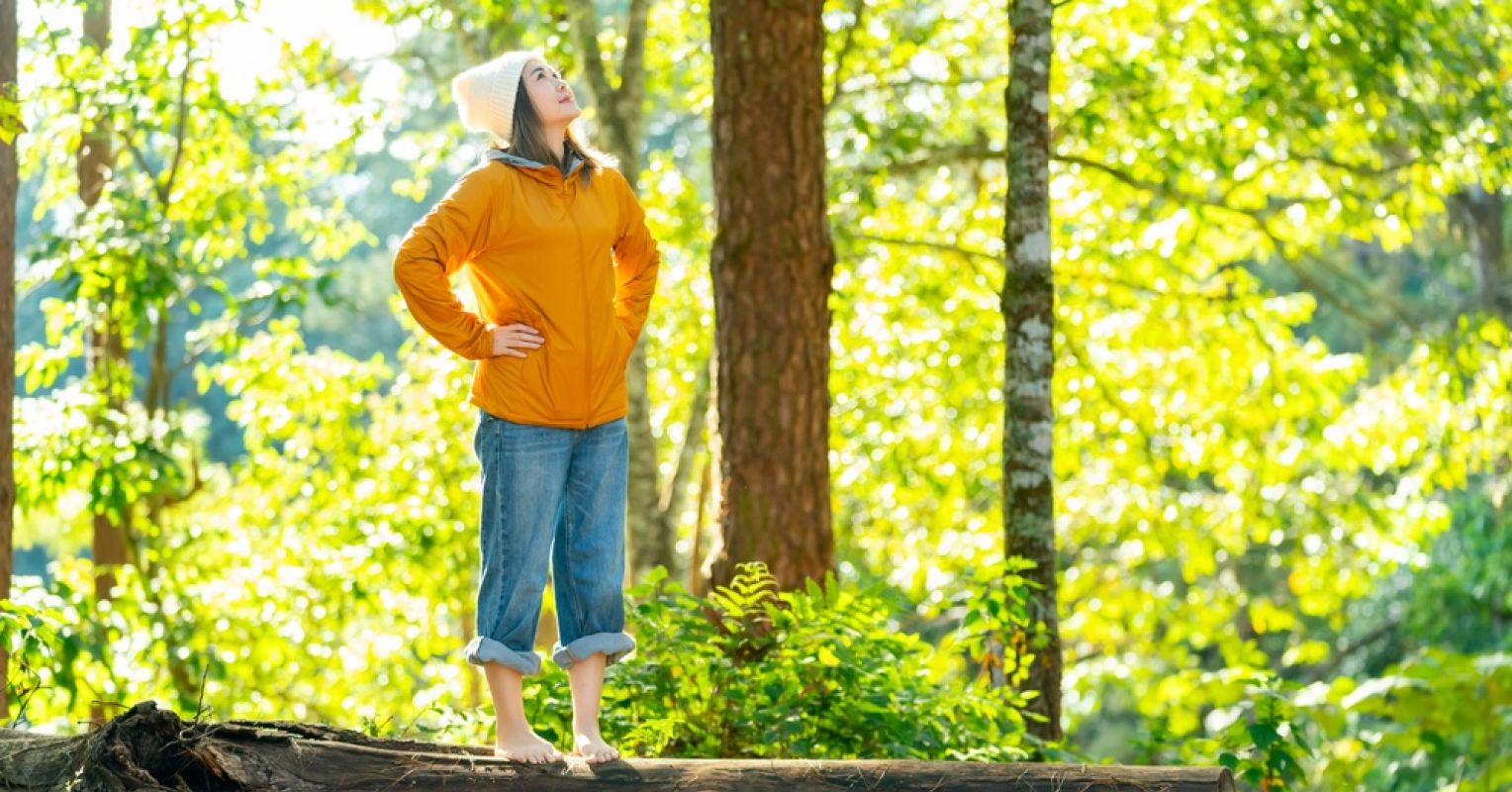
- What Is Forest-Bathing?
- Take our How Stressed Are You?
- Find a therapist near me.
Key points
- Green prescriptions offer a nature‑based alternative to traditional medicinal therapeutics.
- Time in nature reduces stress, improves mood, and strengthens attention and creativity.
- Building your own green prescription doesn’t require wilderness. Local green spaces work just as well.
We spend a lot of time trying to fix ourselves from the inside out. We tweak our mindset, optimize our productivity, refine our self‑care rituals. We read endless self-help books and follow threads about boundaries, attachment styles, and nervous system regulation
But for all this effort, many of us feel more anxious, lonely, and disconnected than ever. What if one of the most powerful ways to improve our mental health isn’t in a book? What if it’s as easy as walking out your door?
Why “Green Prescriptions” Could Be a Mental-Health Gamechanger
Through my work as a behavioral ecologist, I’ve come to realize that by paying close attention to other species, I improve my own life, relationships, work, and sense of community. I’ve sat for hours with prairie dogs in the grasslands and lately gorillas in the forests of southwestern Uganda. I’ve spent countless mornings walking in my neighborhood watching the squirrels and birds start their day. And I spent 18 years with a cat who reorganized my entire schedule. Over and over, other species have been my best teachers in how to live, relate, build community, and stay present.
In my own work and in conversations with colleagues like primatologist Dr. Christine Webb, I’ve become increasingly interested in “green prescriptions,” which is essentially where traditional approaches don’t achieve the desired outcome and the final recommendation is to go outside. I would like to suggest we reverse the order
A green prescription is a treatment plan that deliberately includes time in nature and contact with other living beings as part of mental and physical <a href="https://healthylife7.com/fogg-recognized-for-leadership-in-healthcare-education/” title=”Fogg recognized for leadership in healthcare education”>healthcare. In practice, that might mean being told to walk in a forest three times a week, spend time in a community garden, sit with birds in a city park, or engage with animals in ethical, non‑extractive ways
Back in 2021, I interviewed psychiatrist Dr. Katherine Kennett on my podcast, “Wild Connection.” A specialist in treating young people, Dr. Kennett advocates for a nature-based approach to mental health. Specifically, she works with her patients to develop and implement treatment plans that include incorporating more green space into their lives, developing sustainable interactions with nature, and getting involved in activities that preserve the natural environment. But the history of “green prescriptions” goes back much farther.
History—and Research—Show That Green Prescriptions Work
Shinrin-yokuis a very old practice in Japan. Shinrin-yoku translates into “taking in the forest atmosphere” or “forest bathing,” and it involves immersing yourself in nature and engaging all of your senses
Research out of Japan shows very clearly that exposure to forests reduces cortisol, lowers blood pressure and heart rate, and engages our calming parasympathetic nervous system, thus lowering our sympathetic fight or flight system. This is why, in the 1980s, the Japanese government began an earnest campaign advising people to engage in forest bathing
The phrase “forest bathing” has become trendy, but it transcends a fad and is aication to blunt a vague sense of dis‑ease, patients are encouraged to change the way they relate to the natural world. If you’re still skeptical, let’s turn to the research
- What Is Forest-Bathing?
- Take our How Stressed Are You?
- Find a therapist near me.
Studies of “greening” urban spaces similarly show significant reductions in stress and anxiety, lower rates of certain health problems, and even decreases in crime in neighborhoods that have more trees and accessible green areas. At the individual level, many people report feeling less lonely and more grounded when they regularly spend time in places where plants, animals, fungi, and other beings are visibly going about their lives
From my perspective, these findings aren’t surprising. When I am with other species like prairie dogs, gorillas, ants, birds, or trees, I am fully present. You simply cannot pay attention to other beings and be checked‑out, scrolling on your phone, or obsessing over the latest conflict you’re having with someone. Other species demand a kind of real‑time focus that pulls you out of your head and back into your body. Green prescriptions are a formal way of acknowledging something many of us already know intuitively: being in natural spaces is good for us.
Forest Bathing Essential Reads

The Forest as Physician and Therapist
Why “Green Prescriptions” Work
How to Bring More Nature Into Your Own Life
Beyond just being good for us, implementing your own green prescriptions can impact many parts of your life. Regular time in nature can improve sleep quality, strengthen our immune function, and enhance attention and creativity. It can also shift how we show up in our relationships and workplaces, because spending time in green spaces—yes, even urban parks!—is soothing, which can make us less reactive and more aware of the fact that we are part of a larger living community, not the center of it.
If you’re wondering where to start, you don’t need a cabin in the woods or a plane ticket. You can begin by creating your own simple green prescription:
- Commit to a short daily “micro‑walk” outside, where your only job is to notice three living things and how they’re interacting with their environment.
- Choose one nearby spot (e.g., a tree outside your office, a patch of grass by your building, a park bench) and visit it twice a week, paying attention to what other living creatures (beyond humans) are there.
- Replace one indoor, screen‑based routine (like scrolling before bed) with a small, repeatable outdoor ritual, such as listening to birds at dusk or watching the way the light changes on a particular plant.
These may seem small or even silly at first, but over time you will notice how your attention changes, the details you start to see, or how you feel different during these activities. You might start even craving more of them!
For more tips, check out my courseReconnect with Natureand the companion workbook,Rooted in Nature
