


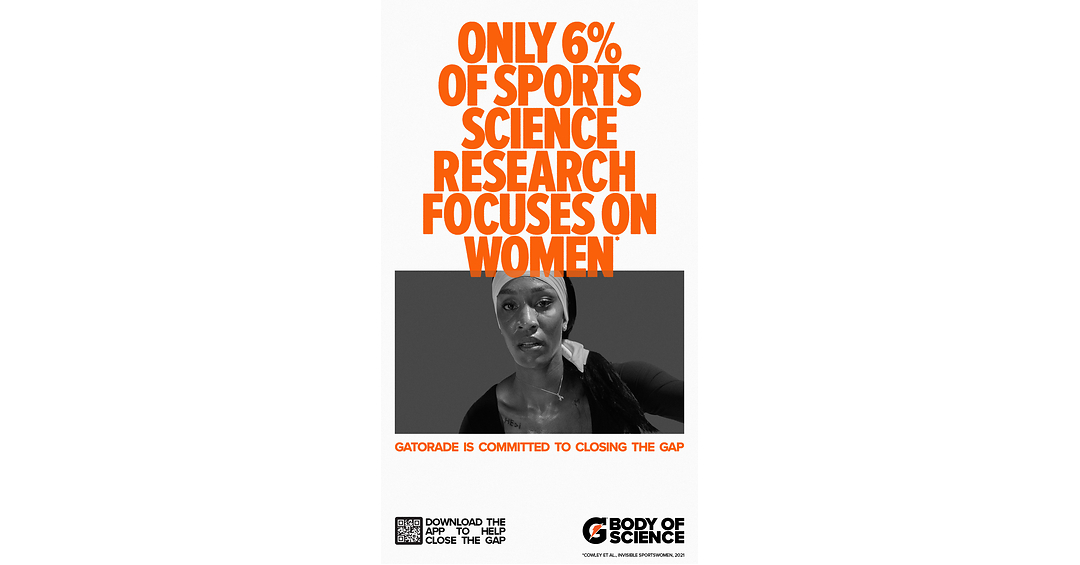
The Science of Her Sweat: Gatorade Sports Science Institute’s (GSSI) new research shows women need more tailored hydration and nutrition guidance
- Only about 6% of sports science research focuses exclusively on women1, leaving a critical gap in hydration and nutrition guidance for female athletes.
- “Body of Science’s” first study2 measures hydration and fueling patterns in more than 500 women across basketball, soccer, and ice hockey, among other activities. Current research expands into life stages, including premenopause, perimenopause, and menopause. Study findings include:
- Nearly half (43%) of participants showed up to workouts already dehydrated.
- Over half (57%) didn’t consume adequate carbohydrates during exercise, with exactly half consuming zero.
- Participants replaced only 20% of their sodium electrolyte losses during practice, versus the recommended 50% (GSSI).
- While women, on average, have lower sweat rates than men, the research found wide variation among women, reinforcing the need for personalized hydration guidance.
- “Body of Science” insights are already being used in real life situations to improve personalized hydration guidance for female athletes, while ongoing research and the GSSI Labs app will help shape future solutions for all women.
- Women across the U.S. can participate in ongoing research via the GSSI Labs app and earn points-based gift card rewards on Gatorade.com.
CHICAGO, July 21, 2026 /PRNewswire/ — This weekend, the Gatorade Sports Science Institute (GSSI), Gatorade’s research arm with four decades of experience in hydration, nutrition, and human performance, is presenting the findings from its first “Body of Science” study2. The first Gatorade “Body of Science” study found that nearly half (43%) of women arrive at workouts already dehydrated. This is one of several disparities in how women hydrate and fuel their bodies. “Body of Science” is part of Gatorade’s multi-year, global commitment to help close the gap in women’s hydration science research. The findings will be presented at the American Society for Nutrition Annual Meeting on July 26.
