


Doctor urges caution as Central Oregon wildfire smoke threatens health
Published 11:59 am Thursday, July 23, 2026
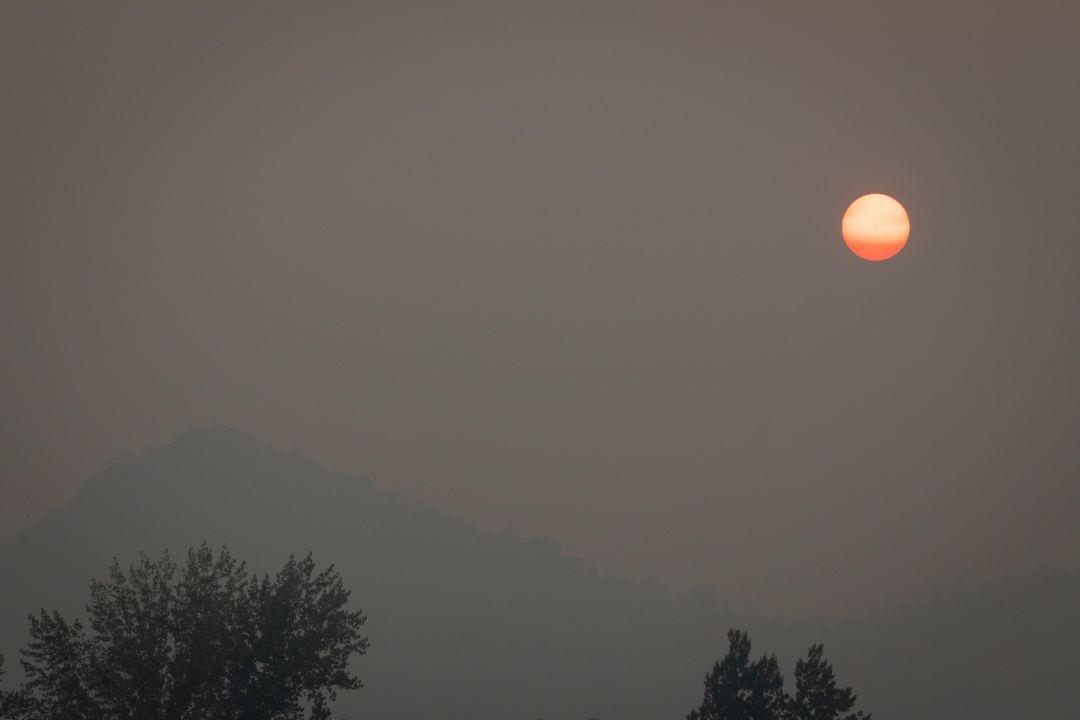
Smoky conditions persist in Central Oregon.
(Oregon Department of Forestery/submitted)
Wildfire smoke that has blanketed Central Oregon in recent days has sent many residents indoors — dusting off air purifiers and pulling N95 masks out of drawers — as air quality deteriorated across the region. Health experts say those precautions can make a meaningful difference
While many people think of smoke primarily as a respiratory hazard, Dr. Ian Smith, head of pulmonary medicine at St. Charles Health System, said prolonged exposure also has been linked to an increased risk of heart attacks and worsening kidney disease because fine particulate matter can enter the bloodstream
“There isn’t a magic new pill for wildfire smoke,” Smith said. “The most important thing is doing the things we know work to prevent the risk.”
Wildfire smoke contains fine particulate matter known as PM2.5, which can penetrate deep into the lungs and enter the bloodstream. The particles can trigger inflammation that contributes to plaque rupture in the arteries, increasing the risk of heart attacks, Smith said. People with chronic kidney disease also may experience worsening kidney function after prolonged exposure
Those at greatest risk include people with asthma or chronic obstructive pulmonary disease, or COPD, children, older adults and people with underlying heart or kidney disease. For people with asthma or COPD, wildfire smoke can increase the likelihood of flare-ups and accelerate disease progression
Smith said the best way to reduce health risks is to limit exposure
“The risk is really around the amount of particulates that are in the air and the time of exposure,” he said. “Exposure is also affected by how much air you’re ventilating through your lungs.”
One of Smith’s key recommendations is to avoid strenuous outdoor exercise when air quality is poor. High-intensity exercise during smoky conditions dramatically increases the amount of polluted air a person inhales because breathing rates rise significantly during physical activity
“Every breath you take is an opportunity for those particulates to get into your lungs and bloodstream,” Smith said
Smith encouraged residents to monitor the Air Quality Index, or AQI, before planning outdoor activities and to adjust their routines accordingly. But he said people also should pay attention to how they feel rather than relying solely on AQI numbers
“If you come back and you’re coughing, your eyes are watering, you have a headache, you don’t sleep as well, you feel poorly the next day, really listen to your body,” he said. “It’s very individualized.”
At home, Smith recommends keeping windows and doors closed during smoke events, replacing HVAC filters before wildfire season, using high-efficiency particulate air, or HEPA, filters when possible and considering indoor air-quality monitors
For people who must spend time outdoors, he recommends wearing a properly fitted N95 or N100 respirator. Surgical masks, Smith said, do not effectively filter the fine particles found in wildfire smoke, and facial hair can prevent respirators from forming a proper seal
For retirees or others with the flexibility to travel, temporarily leaving areas with prolonged poor air quality may be the most effective way to avoid smoke exposure, he said
Most of the patients Smith sees during wildfire season are not arriving in the emergency department with sudden, severe illness. Instead, his pulmonary clinic experiences an increase in phone calls and online messages from patients with chronic lung disease whose symptoms gradually worsen over several days
“We see a lot more triage messages,” Smith said. “Many of my patients have chronic lung disease, and they feel like things are worse and they’re trying to get help.”
Depending on symptoms, physicians may adjust medications remotely, schedule clinic visits or direct patients with more severe symptoms to urgent care or the emergency department
St. Charles has not found a clear one-to-one relationship between spikes in poor air quality and emergency department visits, Smith said. Instead, the health impacts often develop more gradually, with patients experiencing worsening respiratory symptoms over time rather than suffering an immediate medical emergency after a single exposure
Smith said periods of extreme heat can compound the dangers of wildfire smoke by placing additional stress on the heart, lungs and kidneys, particularly for people with underlying health conditions
Ultimately, he said, reducing exposure remains the most effective strategy
“I think about it as, how can you decrease the dose?” Smith said. “Less time in poor air quality, and when you’re out there, not breathing as rapidly through intense exercise.”
See Also:FAQ: here is how to manage air pollution when the AQI spikes
About Michael Kohn

Michael Kohn has been public lands and environment reporter with The Bulletin since 2019. He enjoys hiking in the hills and forests near Bend with his family and exploring the state of Oregon
He can be reached at: 541-617-7818, michael.kohn@bendbulletin.com
More by Michael
