


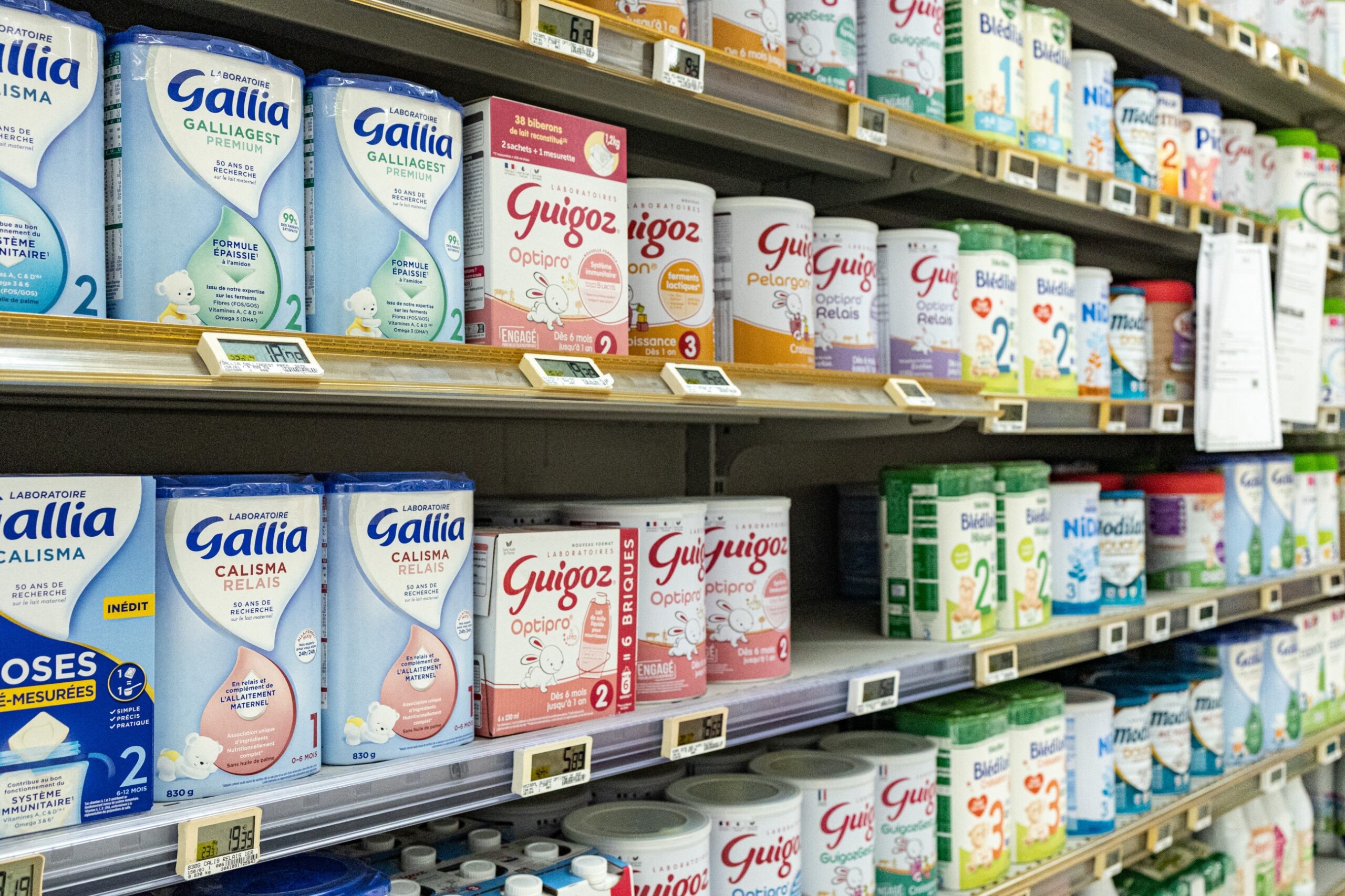
Pick up almost any packaged snack from the toddler aisle at your grocery store and there is a better-than-even chance it fails at least one nutrient standard set by the World Health Organization for children under age three. That is not a consumer-advocacy claim — it is the measured finding of a new audit presented Sunday at NUTRITION 2026, the flagship annual conference of the American Society for Nutrition (ASN), currently wrapping its final day of active programming in National Harbor, Maryland.
Researchers from the University of Texas at Austin photographed the baby and toddler food aisles at 21 Texas grocery stores and analyzed 2,783 products marketed to children ages 6 to 36 months. They found that 81% were classified as ultra-processed under the NOVA food classification system, and 49% of all products failed to meet at least one nutrient standard set by the WHO Nutrition and Promotion Profile Model (NPPM)
“Many parents may assume that products sold on the baby/toddler food aisles of their grocery stores have to meet certain nutrient standards,” said lead researcher Erin A. Hudson, JD, an ASN Science Policy Fellow and PhD candidate at UT Austin. “Our findings highlight that half of the toddler foods available in local grocery stores do not.”
AI Calorie Apps Miss by Hundreds of Calories Per Meal
The toddler food finding is one of two particularly actionable consumer research results to emerge from the four-day conference. The other directly affects the tens of millions of adults who use AI-powered photo-based calorie-tracking apps — and it found that four of the most popular such apps underestimated calorie totals by approximately 250 to 345 calories per meal on average, and underestimated fat by roughly 30 grams, according to NIH research presented at NUTRITION 2026
The research, conducted by NIH’s National Institute of Diabetes and Digestive and Kidney Diseases (NIDDK), tested MyFitnessPal, LoseIt!, CalAI, and Appediet against 102 meals prepared in a controlled metabolic kitchen where every ingredient was measured to the nearest 0.1 gram — eliminating guesswork about what was actually on the plate
“Photo-based calorie tracking apps are very popular, especially for people trying to manage their health or lose weight,” said Aaron Hengist, a postdoctoral visiting fellow at NIDDK and the study’s lead investigator. “However, the accuracy of many of these apps has not been thoroughly evaluated.”
The technical reason for the gap is worth understanding. Photo-based calorie tracking relies on computer vision to identify foods in a photograph and estimate portion sizes, then looks up those estimates in a nutrition database. Food identification has improved to roughly 85–95% accuracy for common foods. The persistent problem is portion estimation: reconstructing a three-dimensional food volume from a two-dimensional photograph requires inference that is technically unreliable, particularly for high-fat meals where the visual density of food does not correspond predictably to caloric density. All four tested apps produced more consistent estimates for carbohydrates — which are visually simpler to estimate — than for fats.
“People using a photo-based tracking app without adjusting the portions or entering the amounts of food should take the results with a grain of salt,” Hengist said. “These apps tend to underestimate calories, especially from fats, so what they actually ate is likely higher than what the app shows.”
For context: a daily calorie underestimate of 345 calories is enough to completely offset a 500-calorie-per-day dietary deficit — the standard clinical target for losing approximately one pound per week
What “Ultra-Processed” Actually Means: What the Numbers Show
The NOVA classification system, developed in 2009 by Brazilian epidemiologist Carlos Monteiro at the University of São Paulo and now widely used in nutrition research, assigns foods to one of four categories based on the extent and purpose of industrial processing — not their nutrient profile. Group 4, ultra-processed, includes products made primarily from food-derived substances (high-fructose corn syrup, protein isolates, modified starches, hydrogenated oils) combined with industrial additives (colors, flavors, emulsifiers) rather than from recognizable whole-food ingredients.
The Hudson and Burgermaster audit found that ultra-processed toddler products were particularly likely to be high in sugar without additional nutritional benefits. Of all 2,783 products measured against WHO’s NPPM standards:
- 17% failed the recommended level for sugar content
- 25% failed for sodium
- 11% failed for fat content
- 12% failed for energy density
Products exceeding at least one threshold included fruit pouches, oat bars, mac and cheese, turkey sticks, cheese puffs, and peanut butter puffs — staples of the toddler food section that many parents purchase with the reasonable assumption that their placement on a children’s food aisle implies some regulatory vetting. It does not. The United States currently has no enforceable requirement that foods marketed to toddlers meet specific nutrient standards, unlike the European Union, Australia, and Canada, according to the study’s findings.
The research was conducted with co-investigator Marissa Burgermaster, PhD, an assistant professor at UT Austin, and is particularly timely: the FDA is actively considering new guidelines for front-of-package nutrition labels, health claims, and marketing of food products to children
“Warning labels on products exceeding nutrient thresholds could help parents navigate the toddler food environment and might encourage manufacturers to reformulate these products,” Hudson said
FDA Voluntary Sodium Targets: No Measurable Industry Response
The conference’s most direct accountability finding came Saturday morning, when a study presented at the 9:15 a.m. session found no evidence that the FDA’s 2021 Phase I voluntary sodium reduction targets produced any measurable reduction in the sodium content of packaged foods, according to research presented at the session. The targets asked food manufacturers to lower sodium levels in packaged foods by 2024. Non-binding voluntary guidance, the research found, produced no industry response
The sodium finding is directly relevant to a broader policy question the conference’s Monday session confronted: whether voluntary guidance is sufficient to change industry formulation, or whether enforceable standards are necessary. The Monday session, co-hosted by NIH, USDA, and FDA researchers, focused specifically on ultra-processed food mechanisms and policy levers
Monday’s Sessions: Genes, Teen Delivery Apps, and the AI Debate
Monday’s research slate addressed several questions that affect different populations. A study presented this morning found that approximately one in four teenagers uses mobile food delivery apps — services like DoorDash or Uber Eats — to order meals while at school, with fast foods and sugary beverages as the most common choices
A separate morning study found that older adults who took a daily multivitamin supplement showed modest but meaningful improvement in symptom burden and functional activities, according to a trial reported at the meeting
The Monday 2:30 p.m. session brought together researchers to examine why some people see their LDL cholesterol spike dramatically on a ketogenic or low-carbohydrate, high-fat diet while others do not. Research presented at the session pointed to genetic variation as a major explanatory factor — findings that could shift how clinicians counsel patients considering low-carb eating patterns toward nutrigenomic screening as a prerequisite
Also opening this afternoon: the conference’s AI nutrition session, examining accuracy standards, ethical guardrails, and data privacy requirements for AI dietary tools in both coaching and research applications — a discussion made more pointed by the NIDDK calorie-app accuracy findings presented Saturday
Read more:Ultra-Processed Food Drives a Third of Heart Deaths, GLP-1 Drugs Fight Inflammation
GLP-1 Drugs Are Reshaping What Nutrition Science Needs to Answer
Sunday’s sessions addressed a clinical challenge that will define nutritional science for the next decade: how to manage the nutritional needs of millions of patients on GLP-1 receptor agonists — drugs like semaglutide (Wegovy) and tirzepatide (Zepbound) that suppress appetite so effectively they create real risk of protein and micronutrient deficiency, as covered in prior reporting on the ADA’s 2026 scientific sessions. A <a href="https://nutrition.org/nutritional-priorities-to-support-glp-1-therapy-for-obesity/” rel=”nofollow noopener” target=”_blank”>2025 joint nutrition advisory from ASN and three partner organizations recommended protein targets of 1.5 grams per kilogram of lean body mass daily for GLP-1 patients — significantly above general guidelines and a target that is frequently missed by patients whose appetite is pharmacologically suppressed.
Sunday’s session on GLP-1 therapies across different populations — adolescents, adults, and elderly patients — addressed age-specific complications including muscle preservation, bone density, micronutrient deficiencies, and what happens to nutritional status when approximately half of patients discontinue treatment within a year
Women’s Health, Meal Timing, and a Study That Favors the Breakfast Skeptics
Sunday’s program also produced two findings with direct consumer implications. A study presented at the 9:30 a.m. session found that weight loss achieved through time-restricted eating — limiting food consumption to a shorter daily window — was associated with cognitive benefits in older adults that went beyond what weight loss alone could explain, suggesting potential neurological effects of meal timing independent of caloric reduction
A Saturday morning finding offered partial vindication for the much-dismissed advice to eat breakfast: older adolescents who started the day with a meal consumed better overall nutrient profiles and took in less daily fat and sugar than breakfast skippers, with the benefit most pronounced when the meal was high in protein
The Saturday program also included a study of more than 65,000 postmenopausal women finding that higher adherence to the Planetary Health Diet — a predominantly plant-based eating pattern — was associated with meaningfully lower risk of overall cardiovascular disease, coronary heart disease, and stroke
Tuesday’s Closing Session Will Challenge Ultra-Processed Food Consensus
The most scientifically contentious moment of the conference is still ahead. On Tuesday morning at 8:45 a.m. ET, a Harvard research team is scheduled to present findings that challenge one of the central assumptions driving ultra-processed food policy: that the level of processing is itself a meaningful driver of health risk, independent of the nutritional quality of what a food contains
The Harvard study is expected to find that overall diet quality — whether nutrients are well-balanced and high-quality — predicts long-term health outcomes more strongly than processing level alone. Healthy diets will lower risks and unhealthy diets will raise them, the researchers are expected to report, regardless of whether the foods in question are ultra-processed or minimally processed
This matters beyond the scientific debate. Regulatory momentum in the US and internationally is building around NOVA-based frameworks that treat processing level as a distinct health risk factor requiring its own regulatory category — separate from and in addition to nutrient limits. Monday’s NIH-USDA-FDA session was explicitly investigating whether processing mechanisms drive excess energy intake independently of nutritional quality. If Tuesday’s Harvard data hold up, they represent a significant challenge to that policy direction, though they would not eliminate concern about ultra-processed foods, which still tend to be high in sugar, sodium, and saturated fat for nutritional reasons.
The closing day’s 10 a.m. session will look beyond current GLP-1 drugs to the next generation of obesity medicines, focusing on amylin and glucagon signaling pathways. Amylin is a peptide secreted alongside insulin from pancreatic beta cells that suppresses glucagon and amplifies satiety signals through hindbrain pathways — a mechanism complementary to GLP-1 rather than redundant. Novo Nordisk’s CagriSema, a combination of the GLP-1 agonist semaglutide and the amylin analog cagrilintide, is currently under FDA review after producing 22.7% weight loss at 68 weeks in the REDEFINE 1 trial, as reported in prior TechTimes coverage of the ADA sessions.
All findings presented at NUTRITION 2026 are preliminary and have not completed the peer-review process required for publication in a scientific journal. Session recordings will be available through ASN’s DiscoverNUTRITION learning platform beginning October 1, 2026
Frequently Asked Questions
How accurate are AI calorie tracking apps at counting calories from photos?
Not accurate enough to trust without verification. An NIH study presented Saturday at NUTRITION 2026 tested four popular AI photo-tracking apps — MyFitnessPal, LoseIt!, CalAI, and Appediet — against 102 precisely measured research meals and found that all four underestimated calorie totals by approximately 250 to 345 calories per meal on average, and fat content by about 30 grams. The core technical problem is portion size estimation: computer vision can identify foods with 85–95% accuracy but has significant difficulty converting a two-dimensional photograph into a reliable three-dimensional volume estimate, especially for high-fat foods. Carbohydrate estimates were more consistent. Researchers recommend using photo-based apps as a rough directional tool rather than a precise counter, and suggest combining them with manual portion entry for greater accuracy, according to ScienceDaily’s coverage of the NIDDK study.
What percentage of toddler food at the grocery store fails WHO nutrition standards?
According to research presented Sunday at NUTRITION 2026, 49% of packaged toddler foods sold at 21 Texas grocery stores failed to meet at least one nutrient standard set by the World Health Organization for commercial foods intended for children ages 6 to 36 months. Additionally, 81% of the 2,783 products sampled were classified as ultra-processed by the NOVA system. Specific failure rates: 25% failed sodium standards, 17% failed sugar standards, 12% failed energy density limits, and 11% failed fat content limits. Researchers noted the US has no enforceable requirement that toddler-marketed foods meet specific nutrient thresholds. Checking individual product labels remains the only way parents can currently verify whether a product stays within WHO-recommended ranges.
Does eating ultra-processed food cause harm because of processing itself, or just because of what’s in it?
That is the central contested question in nutrition science right now, and NUTRITION 2026 is putting it directly into conflict. Monday’s NIH-USDA-FDA session investigated whether ultra-processed foods drive excess energy intake through processing mechanisms independent of their nutritional profile — including food matrix disruption, industrial additives, and hyper-palatability. On Tuesday morning, a Harvard team is expected to present findings suggesting that overall diet quality (the nutritional content of what you eat) predicts long-term health more strongly than processing level alone. If the Harvard findings hold up, they challenge the regulatory assumption underlying NOVA-based policy frameworks that are gaining momentum in the US and internationally — though they would not eliminate the concern that ultra-processed foods are often nutritionally poor.
Are GLP-1 weight-loss drugs safe for teenagers, and what should young patients know about nutrition?
GLP-1 drugs like semaglutide (Wegovy) are now approved for adolescents, and prescription rates for teens with obesity rose from 0.12% to 1.38% between December 2022 and July 2025. Sunday’s session at NUTRITION 2026 addressed age-specific clinical considerations. The primary nutritional concern across all GLP-1 patients — including adolescents — is that the drugs suppress appetite so effectively they create significant risk of inadequate protein intake and lean muscle mass loss. A 2025 joint advisory from ASN and partner organizations recommended protein targets of 1.5 grams per kilogram of lean body mass daily for GLP-1 patients, a level that is frequently missed. Adolescents additionally face age-specific concerns around bone density and growth. Parents and young patients should discuss protein targets and micronutrient monitoring explicitly with their prescribing clinician.
ⓒ 2026 TECHTIMES.com All rights reserved. Do not reproduce without permission
Tags:MyFitnessPalWHO
