


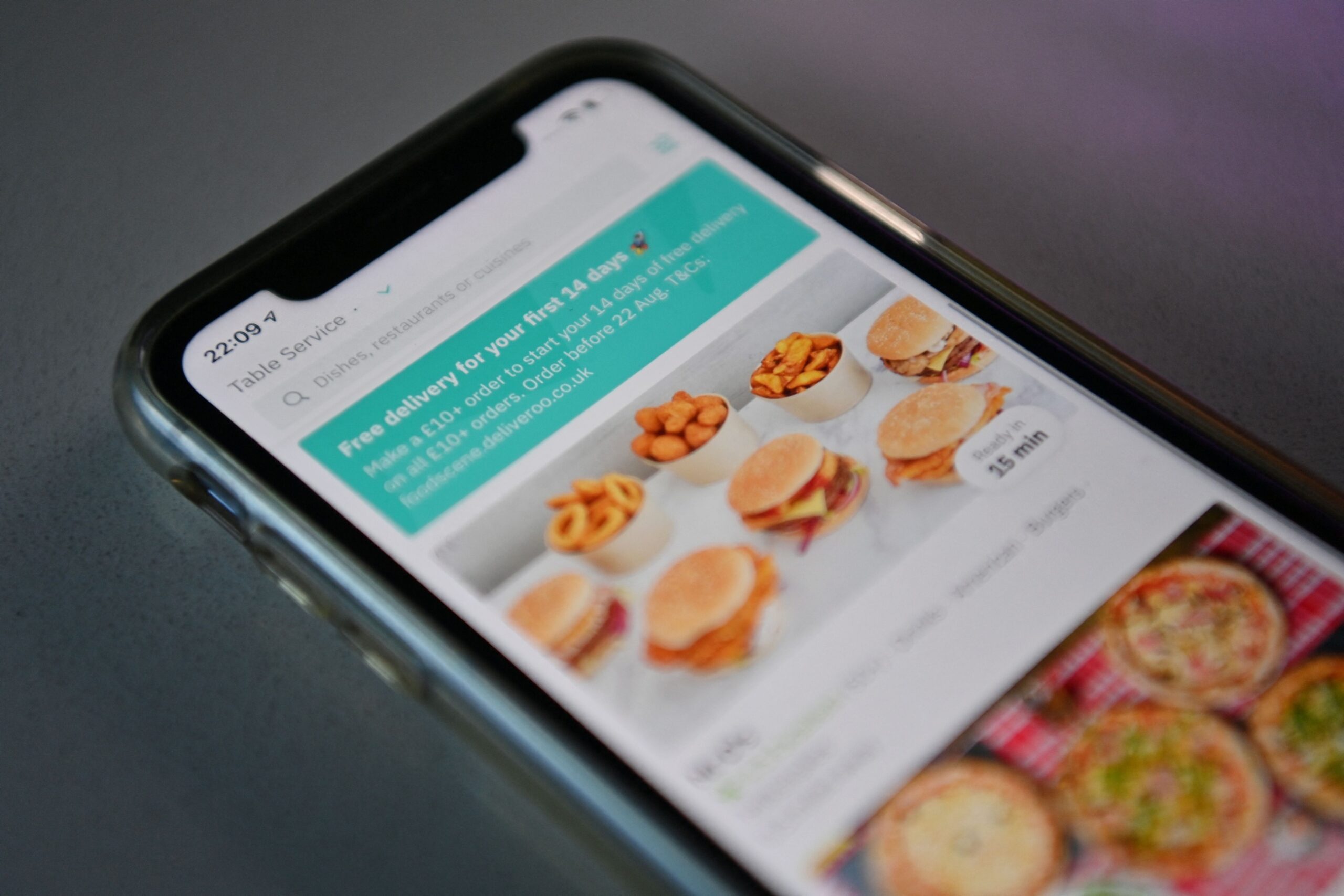
Roughly one in four American teenagers are using DoorDash, Uber Eats, and similar apps to order food while sitting in school — and nearly 60% of them are ordering fast food. None of it falls under a single federal nutrition rule. That is the finding of the first nationally representative study of its kind, presented today at NUTRITION 2026, the American Society for Nutrition’s annual flagship conference in National Harbor, Maryland
The study, led by Mika Matsuzaki, PhD, MS, MPH, an assistant professor of human nutrition at the Johns Hopkins Bloomberg School of Public Health, surveyed 1,027 adolescents ages 13 to 17 across the United States in the summer of 2025. About 25% reported using a mobile food delivery service during school hours. Nearly half said they use these services after school. Among those who do order at school, 58.8% reported ordering fast food — burgers, pizza, burritos — while 34.1% reported ordering sodas and other sugar-sweetened beverages.
Those are precisely the items federal law requires school cafeterias to restrict. But the law has a structural blind spot built into its own language — and the smartphone just found it
School Lunch Policy’s Structural Blind Spot: What the Law Actually Says
The USDA’s Smart Snacks in School regulation, which took effect in 2014 under the Healthy, Hunger-Free Kids Act of 2010, sets nutrition standards for all foods “sold on the school campus during the school day.” It covers cafeteria lines, vending machines, school stores, and fundraisers. It covers more than 30 million students in districts that participate in the National School Lunch Program
What it does not cover is a transaction that originates on a student’s phone, runs through a third-party platform, and results in a delivery driver pulling up to the school entrance with a bag of food. Under the statute’s operative language, that food was never “sold on campus.” The purchase happened off-campus, through a private commercial platform with no institutional connection to the school — and the USDA’s regulatory authority under the Healthy, Hunger-Free Kids Act may not reach it at all.
This is not a gap that can be closed by enforcement. It is a jurisdictional question about whether any existing federal rule applies to this category of food acquisition in the first place
“Federal and state school nutrition policies are designed to support access to healthy foods and beverages in school cafeterias and vending machines, but technology has outpaced policy,” Matsuzaki said in a statement accompanying the research. “Today, a smartphone instantly brings a food outlet many miles away right to the school gate, fundamentally changing how our children access foods and beverages at school. We can no longer look at school nutrition without looking at the smartphone in a student’s pocket.”
Decades of Nutritional Progress, One Policy Gap Away From Reversal
The federal investment in school nutrition is not trivial. The National School Lunch Program and School Breakfast Program together represent roughly $17 billion in annual federal spending, and research has documented measurable improvements in student diet quality and childhood obesity rates since the Healthy, Hunger-Free Kids Act expanded nutrition standards. Studies by Matsuzaki and colleagues found that California and federal school nutrition policies reduced obesity rates among children of Pacific Islander, American Indian/Alaska Native, and Filipino origins.
If a quarter of students are substituting app-delivered fast food for cafeteria meals — or adding app orders on top of them — that investment’s effect is diminished from a direction the policy’s authors never anticipated. The most regulated food items in American schools, sugar-sweetened beverages and fast food, are now among the most easily obtainable items through the channel the policy does not cover
The CDC’s National Center for Health Statistics documented in June 2025 that 30.1% of youth ages 2 to 19 consumed fast food on a given day during August 2021 through August 2023, with adolescents ages 12 to 19 drawing 14.6% of their daily calories from fast food. Fast food consumption is associated with higher total calorie intake, more added sugar, less fiber, and lower intake of fruits and vegetables
How Students Are Ordering — and What They Think About It
The survey, administered using the AmeriSpeak Teen Omnibus platform run by NORC at the University of Chicago, is the first to generate nationally representative estimates of school-hour app-based food ordering. The panel weighted responses by age, sex, census region, race/ethnicity, and parental education to reflect the U.S. teen population
The ordering patterns broke down in ways that challenge the assumption that teens use delivery apps primarily because cafeteria food is inadequate. Among all items ordered — whether at school or elsewhere — fast food and fast food combined with sugar-sweetened beverages were the two most common order types. Grain bowls, non-fried vegetables, and fruit were among the least common. For beverages, 34.1% of teens ordered sugar-sweetened beverages compared to 5.3% who ordered unsweetened beverages.
Regional variation adds complexity. About 34% of teens in the western United States attended schools that formally permitted mobile food delivery — a substantially higher proportion than in the Northeast, Midwest, or South, where allowance rates were around 22 to 24%. Paradoxically, western teens were also more likely to cite high costs as a reason for not using the services — suggesting that in regions where the policy door is open, economic friction does some of the work that rules are not doing.
Student opinion on the practice is more divided than the adoption rate might suggest. About half of all respondents said they support allowing mobile food delivery during school. But across both supporters and opponents, students raised consistent concerns: classroom distractions, campus safety (strangers arriving at school entrances), inequity and stigma between students who can afford delivery and those who cannot, and disruption to the learning environment
“Interestingly, students themselves are divided on whether this should be allowed,” Matsuzaki said. “Even those who support it openly worry about campus safety and classroom distractions. It’s rare to see teenagers raise flags about their own digital habits, which signals to us that they recognize these platforms are a double-edged sword.”
Does Anyone Regulate What Happens at the School Gate?
In the 2025–2026 academic year, 31 states enacted bans or restrictions on mobile phone use in schools, according to data from the NCES School Pulse Panel cited in the study. More recent tallies from Ballotpedia and Newsweek suggest the number had risen further by the start of 2026, with as many as 35 states and Washington, D.C. having enacted some form of phone policy by late 2025
But phone bans and food delivery bans are not the same thing. A school that bans phones during instruction may still permit phone use at lunch. A student may place an order before the school day begins. A teacher or staff member may unknowingly accept a delivery on a student’s behalf. The researchers note that even broad phone restrictions may have lunchtime carve-outs, and that there are currently no federal or state policies specifically addressing whether or how mobile food delivery should be regulated in schools.
The UNICEF 2025 Child Nutrition Report, “Feeding Profit: How Food Environments Are Failing Children,” documented that digital food marketing gives the ultra-processed food and beverage industry unprecedented reach into young people’s food decisions — through targeted algorithms invisible to parents and regulators — and warned that 2025 marked the first year in which obesity surpassed underweight as the most common form of malnutrition among school-age children and adolescents worldwide. A global U-Report poll cited in the report found three out of four young people recalled seeing ads for sugary drinks, fast food, or snacks in the previous week.
Can Delivery Platforms, Schools, and Policymakers Do Anything?
Matsuzaki and her colleagues — who also include researchers from Harvard T.H. Chan School of Public Health, Drexel University, and San Francisco State University — stop short of recommending a blanket ban on delivery apps at schools. Instead, they identify three avenues for action
Schools, they argue, have an opportunity to treat digital food environments as a literacy issue. Teaching teens to navigate app-based ordering thoughtfully — including understanding nutritional content, delivery fees, and budgetary impact — could be incorporated into health education requirements that most states already mandate as part of core curricula. Health education codes could be updated to include these competencies
Policymakers and administrators could use the study’s regional data to calibrate their responses. The western U.S. data suggests that where delivery is permitted but costs are high, usage self-limits — a finding that does not argue for permissiveness, but does suggest that economic friction can act as a partial moderating force in the absence of rules
The researchers also point to a potential collaborative role for delivery platforms themselves. Default healthy-option displays, discounts on nutritious orders, or location-based filters that trigger when a user appears to be ordering from a school address could be implemented without requiring legislation
“For many school administrators and parents, this study will be a wake-up call as they may not be aware of this relatively new phenomenon,” Matsuzaki said. “We hope these findings will bring proactive conversations.”
Study Limitations
The data are self-reported, collected from teens recalling their school-year behavior during a summer survey window. Self-reported surveys carry inherent limitations in both over- and under-estimation. The study was conducted in July and August 2025, outside the school year, relying on recall rather than real-time measurement. Future research using objective data — potentially including order records from delivery platforms — could sharpen the picture
The findings have not yet completed peer review. The study was presented at NUTRITION 2026 as a conference abstract and posted as a medRxiv preprint in November 2025. The scale of the survey — more than 1,000 respondents from a weighted, nationally representative panel — gives the estimates considerable weight for a first national look at a largely unmeasured phenomenon, but the findings should be regarded as preliminary until peer-reviewed publication
The research was funded by the National Heart, Lung, and Blood Institute and the National Institute on Minority Health and Health Disparities. The authors declared no competing interests
Frequently Asked Questions
Does federal law apply to food delivery apps at school?
No existing federal rule specifically covers food ordered through apps like DoorDash or Uber Eats and delivered to a school. The USDA’s Smart Snacks in School standard applies to foods “sold on the school campus during the school day” — language that covers cafeteria items, vending machines, and school stores, but may not extend to transactions that originate off-campus through a third-party delivery platform. There are also no state-level rules specifically targeting app-based food delivery in schools as of the 2025–2026 academic year, according to the Johns Hopkins research team.
Can schools ban food delivery apps without a phone ban?
Yes. Schools can adopt policies specifically prohibiting the receipt of food delivery on campus, separate from any phone policy. Phone bans restrict device use during instruction; they do not necessarily address a student who places an order before school or during lunch, or a delivery accepted by a staff member. The researchers note that explicit delivery-specific rules are uncommon and that the extent to which schools have addressed this particular practice remains largely unclear from available data.
Why are teens ordering fast food and soda instead of healthier options?
The survey’s open-ended responses suggest a mix of preference, cafeteria dissatisfaction, and practical convenience. Students cited long lunch lines, food quality concerns, limited options for dietary restrictions, and simple personal choice with their own money as reasons for ordering. The researchers found that healthier items — grain bowls, fruit, non-fried vegetables — were among the least commonly ordered items. This pattern aligns with the broader research literature showing that price, speed, and taste dominate food choice decisions among adolescents, particularly when no nutritional guardrails are in place at the point of ordering.
What could actually close this policy gap without banning the apps outright?
The Johns Hopkins team identifies three non-ban paths: updating health education requirements to include digital food literacy, equipping school administrators with data to make evidence-based delivery policies, and direct engagement with delivery platforms to implement location-based healthy-choice defaults or filters. The researchers also note that economic cost is already acting as a natural moderating factor in some regions — particularly in the West, where school delivery is more commonly permitted but usage is constrained by perceived expense. Legislative options would likely require new statutory language extending federal nutrition authority to app-mediated food transactions, a significant regulatory undertaking with no current federal proposal on record.
ⓒ 2026 TECHTIMES.com All rights reserved. Do not reproduce without permission
Tags:Teen healthDoorDashUber EatsSchool lunchPublic health
