


Parents deserve honest answers about vaccines. They deserve physicians who will listen to their concerns, explain the evidence and help them make informed decisions. Above all, they deserve confidence that the nation’s leading public health institutions are communicating science and not suggesting that there’s uncertainty where none exists
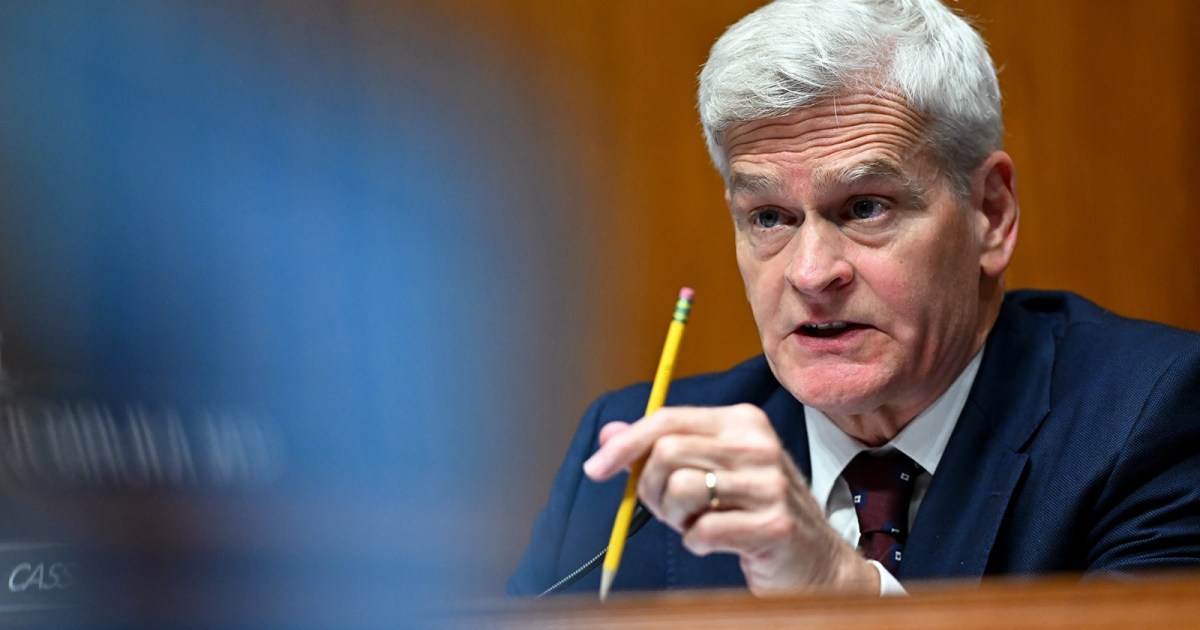
That is why the recent changes to information presented on the Centers for Disease Control and Prevention’s website regarding vaccines and autism are so concerning. News organizations reported in November that the website had been wrongly edited to say, “The statement ‘Vaccines do not cause autism’ is not an evidence-based claim.” Last week, Sen. Bill Cassidy, R-La., said that in exchange for his support for Dr. Erica Schwartz to lead the CDC, the Department of Health and Human Services made “a sign of good faith” and “modified the CDC’s autism and vaccines webpage.”
The science has not changed: Vaccines do not cause autism
But those changes have done nothing to mitigate the concerns. The website continues to wrongly say that a rejection of a link between vaccines and autism isn’t based on evidence. It also says, “Studies supporting a link have been ignored by health authorities.”
As pediatricians who have spent our careers caring for children and their families, we know that trust is one of the most valuable tools in medicine. Trust takes years to build and moments to erode. At a time when public confidence in health institutions has already been tested, government agencies should be strengthening that trust by communicating what decades of scientific evidence have consistently shown, not reopening questions that have long been settled
The science has not changed: Vaccines do not cause autism
This conclusion does not rest on one study, one expert or one government agency. The conclusion follows decades of rigorous research conducted around the world involving millions of children, using multiple study designs and across different populations and health systems
<img src="https://healthylife7.com/wp-content/uploads/2026/07/1763645738322_n_mj_gupta_251120_1920x1080-gc7ss6_d0bf71.jpg” alt=””>
‘We can’t trust the CDC anymore’: Website revised to say vaccines may cause autismNovember 20, 2025 / 06:16
The evidence is overwhelming
A 2014 meta-analysis by Taylor and colleagues pooled data from more than 1.2 million children in cohort studies and nearly 10,000 children in case-control studies. The researchers found no association between vaccination and autism spectrum disorder; no association between the measles-mumps-rubella, or MMR, vaccine and autism; and no evidence that thimerosal-containing vaccines or mercury exposure increased autism risk
In 2021, the Cochrane Collaboration, widely regarded as one of the highest standards in evidence-based medicine, reviewed studies examining MMR, MMRV and varicella vaccines. Once again, researchers found no evidence linking MMR vaccination to autism spectrum disorder
That same year, an updated systematic review commissioned by the Agency for Healthcare Research and Quality examined 338 studies identified from more than 56,000 scientific citations. The authors concluded with high-strength evidence that MMR vaccination does not increase the risk of autism
Perhaps the clearest assessment came from The Lancet Infectious Diseases, where researchers described autism as the example for which evidence demonstrating no relationship with vaccination is “particularly strong.” Study after study, conducted by different investigators using different methodologies in different populations, has reached the same conclusion
Healthy science welcomes questions. But science also requires us to acknowledge when a question has been answered
In medicine, that is what scientific consensus looks like
Healthy science welcomes questions. It encourages new evidence, replication and debate. But science also requires us to acknowledge when a question has been answered. Continuing to imply uncertainty after decades of consistent evidence does not advance scientific inquiry; it risks undermining public confidence in one of the safest and most effective public health interventions ever developed
Cassidy, a physician who chairs the Senate Health, Education, Labor and Pensions Committee, was right to emphasize that the overwhelming body of evidence shows vaccines do not cause autism. Reasonable people may disagree about public policy, but scientific facts should not be replaced with political talking points
