


Create an account or log in to save stories
Thanks for liking this story! We have added it to a list of your favorite stories
Show me!
Audio transcript
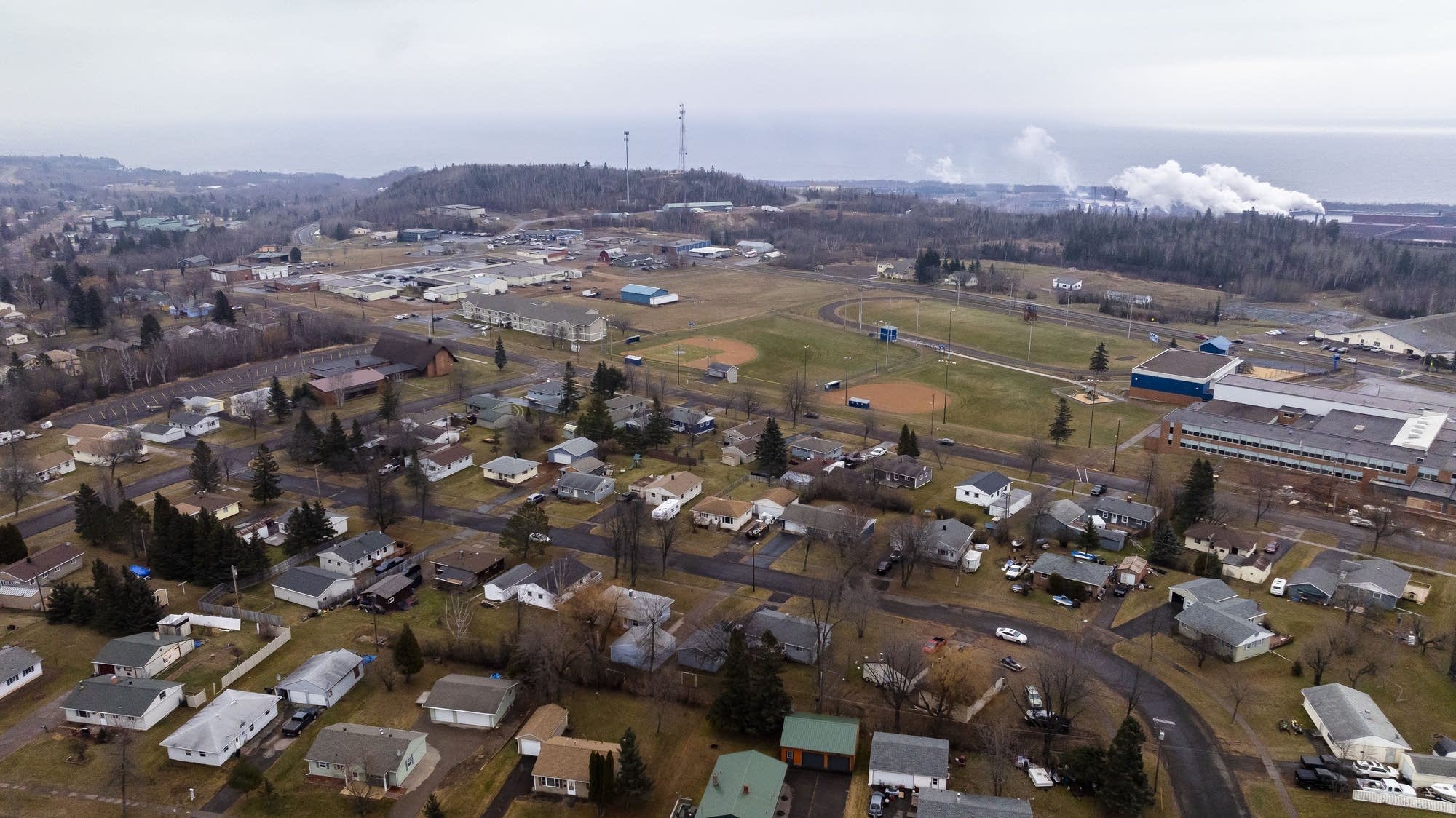
NINA MOINI: Tonight, the state Health Department is holding a hearing about the closure of a primary health clinic along the North Shore. The Aspirus Health Lakeview Silver Bay clinic is set to close at the end of this year. That leaves the residents of Silver Bay to get their primary care at least 30 miles away. The clinic closure is part of a growing trend of shrinking access to health care in rural Minnesota. Joining me now are two people looking at rural health care access and finding solutions. David Beard is a professor at the University of Minnesota Duluth, working with the Arrowhead Regional Development Commission on rural health transportation. Thanks for being with us, Professor. DAVID BEARD: Thank you. NINA MOINI: We’re also happy to have Beverly Sidlo-Tolliver, who’s the principal planner and mobility manager at the Arrowhead Regional Development Commission. Thanks for being here as well, Beverly. BEVERLY SIDLO-TOLLIVER: Yes, thanks for having me. NINA MOINI: David, I’d love to start with you. For people who are unfamiliar with the North Shaw. Could you tell us a little bit more about Silver Bay and who’s going to be impacted by this clinic closure? DAVID BEARD: Silver Bay is an absolutely unique town in the North Shore of Minnesota. It’s only 70 years old, formed 70 years ago to support the mining company taconite processing plant, which is located right up against the water. Silver Bay is itself pushed back from the water. All the rest of the North Shore towns are right up to the edge. But the taconite processing plant got the lakefront property, and the town is up the hill. It’s about 1,800 people, about 30% of whom are over 65. NINA MOINI: Hmm, that is interesting. That’s quite a population, a third of the population over 65 and older. So I understand that Silver Bay also recently lost its main social services center. Could you tell us about this center and what that loss might mean on top of a clinic closure? DAVID BEARD: Yeah, so the county is removing its permanent office in town. They’re leasing a small space in one of the local nonprofits where they’ll offer a fraction of the services. But instead of having drop-in availability, it will be by appointment, or there will be a drop box. You can put a letter in the drop box, and the drop box will be monitored for correspondence, which is just such an incredible decrease in the availability of mental health resources, food shelf resources. Lots of different resources will decline because the county is pulling away. NINA MOINI: And Beverly, could you give us a sense for health care access more broadly in the Arrowhead region, how close the nearest hospital would be for people along the North Shore? BEVERLY SIDLO-TOLLIVER: Sure. Generally, on the North Shore, I mean, as you get further north, of course, that’s going to exacerbate the distances folks have to travel upwards two hours one way to access, whether it’s their primary care or maybe more getting into the Duluth area because, as these clinics continue to close through the Arrowhead and up the North Shore, Transportation is usually not maybe considered in that factor, and as a whole for transportation access. So hopefully, we can bring that topic to light. NINA MOINI: Yeah, tell us a little bit more about that. Is this about who’s going to be able to give folks a ride over to where they’re going or what if they don’t have transportation? Tell us a little bit more about how that factors in. BEVERLY SIDLO-TOLLIVER: Sure. And of course, transportation is multifaceted. Most people think of it from the point of view of their own, being able to get to point A to B throughout their own vehicle. But there’s quite a bit of folks that have to rely on either friends or neighbors, family or non-emergency medical transportation, which is a benefit that folks with Medicaid and other insurances can access. And those providers, those non-emergency medical transportation providers, are already not paid when there’s not that rider in the vehicle. It’s called unloaded miles. And so as clinic spaces become further from town centers, those providers are also having to travel farther father without being reimbursed for their time and distance it takes for them to get to pick up that passenger. They’re paid to bring that passenger, bring them back home. But then, of course, that extra distance as they’re traveling back to their home base is considered unloaded and not necessarily reimbursed through the state. NINA MOINI: Yeah, this is important to talk about because we often do think about the physical clinic being gone, a loss to access that way. But then how do you get to where you need to go? David, what do you say to folks who might say, well, it is a smaller town of around 2,000 people or so. Is it inevitable that they wouldn’t have the same resources that larger towns would, or why do you think there’s this focus shifting away from rural health care? DAVID BEARD: I mean, a portion of it is the declining funding at the federal and state levels for rural health care, for health care broadly. That’s certainly part of it. I don’t want to say it’s inevitable, though. And the reason I don’t want to say it’s inevitable is that it becomes way too easy for us to console ourselves and say, well, a town of 1,800 couldn’t possibly support those kinds of services. But what’s the cutoff point? A town of 5,000? A town of 10,000? At what point will the austerity measures, which are slowly eroding rural health care begin to erode the health care that we see in the larger cities on the Iron Range, perhaps even in a city the size of Duluth? NINA MOINI: Yeah, Beverly, what would you add to that? BEVERLY SIDLO-TOLLIVER: That it is a topic that needs to be always brought to light, that rural Minnesota matters, and that there’s value in those communities and the people that reside there and the life they’ve wanted to have for themselves by either moving to that area or staying in that area or moving back to the area, that rural Minnesota, as David said, really, does matter where there’s the cutoff is of a small town. What does that mean? What is small town? And so this goes beyond, just say, an inconvenience, which I think could be looked at as this rural infrastructure continues to maybe close one by one. It could be maybe put off as just an inconvenience. But it really is more to that than to the folks that live there and rely on those resources. NINA MOINI: Yeah. And Beverly, what kinds of solutions are you looking at in your work to expand access? If the clinic is gone, then you have to get creative. What are some of the solutions you are looking at? BEVERLY SIDLO-TOLLIVER: At this point, when the work we’re doing with the University of Minnesota– and they’re powering small Minnesota communities– is information gathering to this point to really get a gauge on the problem, how severe it is, and then that trickle effect out when a person either can’t easily access these resources or cannot at all and how that affects then their employer, the community, the state, the health care system itself, and provide that information to those leaders that can make real change at a policy level. I could list my wishlist out, but mostly, at a high level, is for folks to listen to these issues and take them seriously. And then as far as from a creative standpoint, I’m from a point of view that there’s a system that could work if it were to work well and maybe focus there. But reality is, there might have to be a need to get innovative and look beyond the traditional a person seeing a doctor face to face and what other type of access points that could be created. NINA MOINI: Mm-hmm. And David, what should people do if they’re listening? Maybe they live in the area, and they think, well, I’m passionate about rural health care, or I want to help. Could people sign up to provide transportation, or how can people get involved? DAVID BEARD: So the non-emergency medical transportation system is an absolute web of overlapping a patchwork quilt of overlapping solutions. We’ve got volunteer drivers working with local nonprofits. Check the local nonprofit in your area, especially for people over the age of 60. There’s a complicated web of nonprofits trying to fill the gap. There’s advocacy. Write a letter to your newspaper. Write a letter to your state Representative expressing the needs that you see and the changes that you want. There are lots of cool ways to take action here. NINA MOINI: All right. I really appreciate you both David and Beverly. Thanks for your work and your time. BEVERLY SIDLO-TOLLIVER: Yes, thank you. DAVID BEARD: Thank you. NINA MOINI: Thank you. David Beard is a professor with the University of Minnesota Duluth, and Beverly Sidlo-Tolliver is with the Arrowhead Regional Development Commission.
Transcription services provided by3Play Media
