


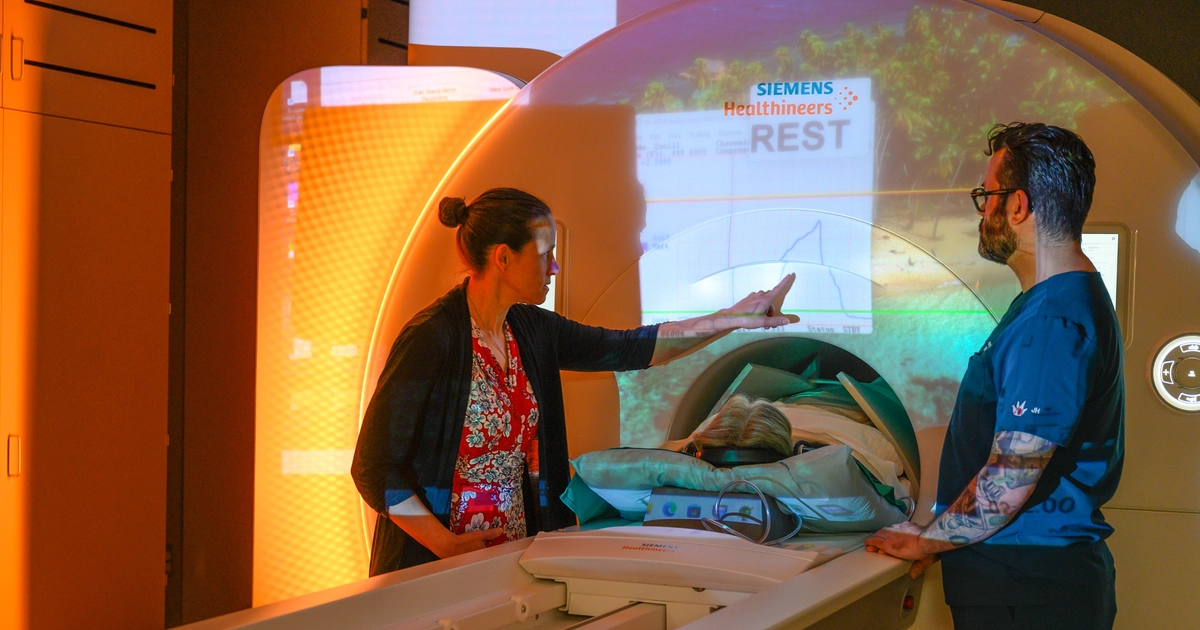
Diagnosing and treating disease is often a long and uncertain process. Symptoms can take years to explain, therapies may not work the same way for every patient, and doctors frequently lack tools that reveal what’s happening inside the body early enough to change outcomes
At Michigan State University, researchers are working to change that timeline
Across campus, scientists, physicians, engineers and veterinarians are using advanced imaging systems, radiopharmaceuticals and molecular technologies to develop more precise ways to detect, monitor and treat disease in both animals and humans
This work is powered by world-class research infrastructure found at only a handful of institutions nationwide. Together these facilities exemplify MSU’s “One Team, One Health” vision — a collaborative and interdisciplinary approach that brings together expertise from various fields that include human medicine, veterinary medicine, agriculture, plant science, environmental science and engineering. This collaboration across disciplines recognizes the interconnectedness across human, animal and environmental health in efforts to solve some of today’s most complex health challenges.
Seeing disease earlier and more clearly
Inside the 13,000-square-foot Center for Imaging and Image-Guided Therapies, or CIIGT, in MSU’s Biomedical Research Complex, researchers have started using a brand-new imaging system that can capture anatomical structures and biological activity simultaneously, faster and in better quality. This leads to a more complete picture of disease, which can aid early detection, diagnosis and monitoring. As a place for scientific discovery, CIIGT helps create new approaches to treating disease, ultimately guiding improved patient care.
