


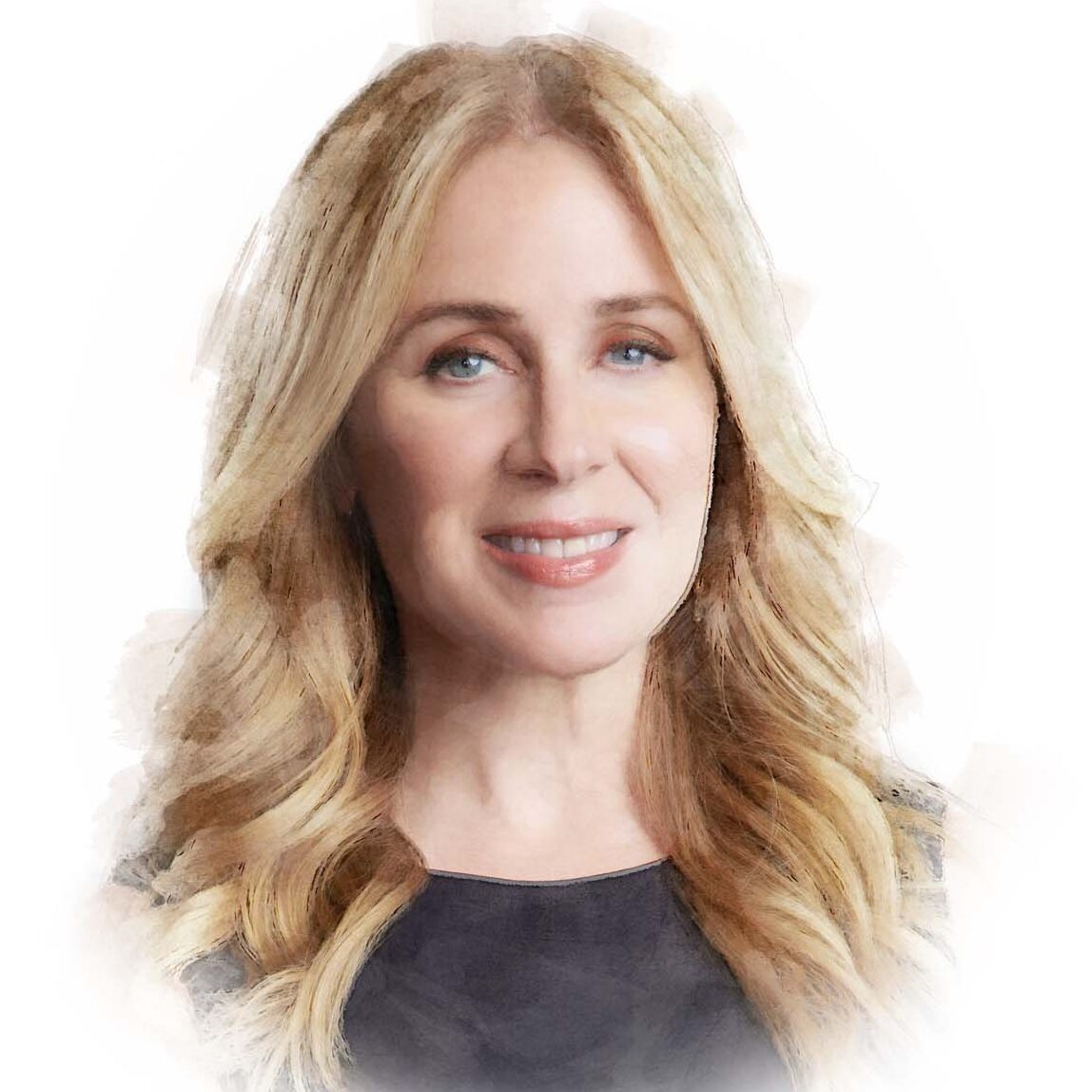
Becky Quick is a well-known television personality: she’s the co-anchor of the morning show Squawk Box on CNBC. From Davos to Wall Street, Quick has interviewed a stellar list of billionaires, CEOs, analysts, and investors, never seeking to inject herself into the news
That changed earlier this year, when Quick decided to go public with her own family’s diagnostic odyssey. Her daughter Kaylie was diagnosed with a rare genetic disorder related to the gene SYNGAP1 (the disorder is also often referred to as SYNGAP1). Quick not only talked movingly about her daughter’s and her family’s journey, but also decided to do something about it. In March 2026, she hosted CNBC Cures, a half-day summit in New York, in which Quick moderated discussions with a group of A-list experts and personalities. She plans to convene another CNBC Cures event in 2027.
As part of Inside Precision Medicine’s annual virtual summit, The State of Precision Medicine, editor-in-chief Damian Doherty interviewed Quick for the keynote session. Quick discussed her family’s journey and her motivation for launching CNBC Cures
(This transcript has been edited for length and clarity.)
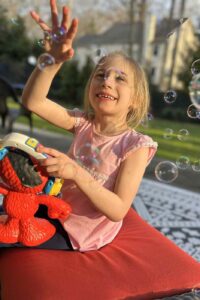
Q: Becky, let’s start with Kaylie. For some parents of children with a rare disease, the symptoms can slowly emerge over time, but in other instances, it can be apparent very soon after birth. What did those early days look like, the moment when your instinct told you something just didn’t seem right?
Becky Quick: I had a perfectly normal pregnancy and Kaylie was a wonderful, sweet, smiley baby. I remember taking a picture of her when she was just a few weeks old; I know they always tell you it’s gas when they’re smiling at that age, but it wasn’t. She was happy to see me and happy to be in the world
Everything seemed perfect for the first six months. She even traveled with me to the World Economic Forum in Davos, Switzerland, very early on. I remember counting her fingers and toes when she was born and thinking, “Thank you, God, for giving me such a perfect child.” She is a perfect child, but at about six months, I started noticing she wasn’t hitting some of her developmental milestones. Because Kaylie is our fourth child, it was probably easier for me to see some of these things because I had prior experience.
Q: What did those specific early signs look like?
Quick: She couldn’t reach out and grab things in the bathtub, like a toy duck or a chain. Her eyes crossed a lot, and we found out she had strabismus. We had surgery for that, but then more things emerged. She struggled with walking and talking, and it became more apparent she was having developmental delays. I remember thinking, “We’ll just get her therapists for OT (occupational therapy), PT (physical therapy), and speech, and we’ll be able to outrun this if she works really hard.” The delays became more apparent over time.
By the time she was two, we had her in early intervention, and just before she turned three, genetic testing showed she had SYNGAP1. We realized then that this was not something therapies could outrun.
Q: What did your diagnostic odyssey look like during that intervening period?
Quick: In hindsight, I wish I had pushed for genetic testing earlier. I blame myself to some extent for not taking the advice of my neurologist sooner, but at the time, we weren’t seeing obvious seizure activity. Her seizure activity is subclinical; you couldn’t see it until we finally got a brain scan that showed what was taking place. That is what pushed us to do genetic testing—I wanted to know what was causing those seizures
It’s a frustrating system. When she was about eight months old, I waited a long time and paid a fortune for a developmental doctor to tell me she had “global developmental delays,” which was so nonspecific that I already knew it. I come from a position where people return my calls because of my job, and I have rehout those advantages because of how hard it was for me even with [those re
Q: We need to rethink the framework for identifying these diseases, moving from recognizing a specific disease to looking at signals and creating an urgent escalation pathway, similar to how we handle suspected cancer
Quick: Exactly. Science is moving fast, and we need to take advantage of that. If you can give physicians a pathway, we are in a much better position to tackle this
Q: Once you got that diagnosis, did it offer some degree of comfort to know what you were dealing with, even if you didn’t know the path forward?
Quick: It gave us a path for action. Our neurologist admitted she didn’t know much about SYNGAP1 and said I would likely know more than her soon. I spent that entire weekend online and immediately found parent groups. Finding a community of people dealing with the same thing meant we didn’t feel alone or “crazy” anymore
The SYNGAP1 parents have done a phenomenal job with advocacy—raising awareness, seeding the scientific community, and creating mouse models and ICD codes. My “village” also includes the mothers of Kaylie’s school friends who have autism or other genetic diseases. We are in the trenches together, making sure our kids have the remeans ensuring they have friends, proper therapies, and are living in the world every day
Q: What does day-to-day life look like? You and your husband, Matt, have demanding jobs. Where do you find your strength?
Quick: Work is a welcome distraction. Having to get up early and not having time to dwell on my thoughts is helpful. When I’m on air, I don’t have time for self-pity or to worry about what might happen down the road
However, being at home can be tough. SYNGAP1 involves behavioral issues, often due to the frustration of not being able to communicate. Kaylie has very few words. When you can’t communicate what you want to eat, if you’re in pain, or if you’re dizzy, it leads to significant obstacles. Matt and I know her well enough that she doesn’t always need her AAC (augmentative and alternative communication) device with us, but being trapped with opinions you can’t express leads to behavioral issues. As she gets bigger, it’s harder to redirect her effectively.
I don’t want to sugarcoat it. Kaylie is a beautiful, radiant light, but she was upset with me recently and ripped a huge chunk of hair out of my head. She felt bad afterward, but these challenges—managing seizures, communication, and behaviors—must be part of the conversation because these parents need help
Q: How do you balance this with the needs of your other children?
Quick: I’m always cognizant of not letting them get lost in the shuffle. My brother had a traumatic brain injury when I was young, so I know what it’s like to be the sibling who doesn’t need as much attention. As parents, we naturally give the most time to the child who needs it most, and Kaylie needs it almost all the time. Matt and I tag-team to give our other three kids the attention they deserve. The silver lining is that our other children are three of the most empathetic people on the planet. They are better people for this experience, though I wish they had gained that empathy in an easier way.
Q: Your decision to go public with this journey couldn’t have been easy. What was the genesis of that?
Quick: We had the diagnosis for six-and-a-half years before we spoke publicly about it. Personally, I didn’t have the emotional ability to discuss it; I can barely talk about it now without crying. I couldn’t do my job on air if I allowed myself to get into it. Eventually, Matt and I decided Kaylie would want to help if she thought it was doing some good
Our goal was to get the word out. While there are only about 1,700 identified people with SYNGAP1, rare diseases collectively impact 30 million Americans and 300 million people globally. This is our “superpower.” I don’t know how to start a biotech company, but I know how to tell stories. If we can contribute by telling these stories, we should bring that gift to the table
Q: You also mentioned the importance of sharing best practices between different rare diseases
Quick: We shouldn’t have to reinvent the wheel 7,000 times. I heard a story about Angelman syndrome trials, where they realized that specific dosing and using a saline wash-out during ASO (antisense oligonucleotide) therapy prevented kids from losing the ability to walk. We need to share these stories so that other children in trials don’t have to learn these lessons the hard way. We need to bridge the chasm between science and patients, which might mean special considerations from the FDA (U.S. Food and Drug Administration) or incentives from Congress. We also need certainty for investors so they know the “rules of the road” won’t change with every new administration.
I’ve been blown away even by the seven years that we’ve been doing this. Things that I thought were going to be 20, 30, 40 years down the road when I first started hearing about it seven years ago, like gene editing. It’s here! I mean, here’s what you can do with science at this point. But getting it to the patients, that’s such a long chasm. I’d like to bridge that divide a little more easily. If that means looking at rare [diseases] as an area that needs special considerations from the FDA, or if we can get Congress to look … Maybe there are some things we can do to incentivize progress using the tax code or using money to get these things done. Many times, the science that we’re using in this case can be used for many bigger diseases and problems down the road. This can be a proving ground for some of those areas.
We need to make sure that the FDA looks at this and says, “Okay, you don’t have to do a double-blind placebo test, because it’s unethical if you’re talking about making an incision into somebody’s brain.” You should never be doing that to these patients. We’ll use a placebo test [instead]. We should be able to say, if you’ve got a good natural history study, we know what the other path would be. By the way, if you can fix it for this rare genetic disease, we can probably tweak it a bit and use it for a similar rare genetic disease and maybe use it time and time again.
Then it becomes attractive to investors, too, right? Our audience at CNBC is talking to all of those constituencies. When they hear how they might be able to be helpful, they respond in kind, and that’s what I’ve been so floored by. We’ve been making up what we’re doing with CNBC Cures as we go along; we just launched in January [2026] after getting approval for it in October 2025. It’s a handful of us: my brother, Brad Quick, is writing the newsletter and heading things up. My producer, Katie Kramer from Squawk Box, has done all of the podcasts. Katie’s doing this in her spare time. Kelly Lynn helped out by creating this incredible prime time documentary that we put on. This is really relying on the kindness of people here in the building who have given us so much of their free time. We feel really good about the potential for this work.
It’s the same story in the community and from viewers who write in. This is a cause where everybody wants to help out. Our goals have gotten bigger and grander as we’ve gone along. At this point, we’re looking at issues that we want to try and tackle, like long-term housing and care for people once they’re an adult. That is every parent’s biggest nightmare. What’s going to happen to my child when I can’t get up and take care of them anymore, when I’m not here? These are now longer-term issues that we’re trying to figure out. It’s not just cures and therapies; it’s about how to give the best possible life to all of our kids once we’re not here. That’s what’s been so exciting about this—the goodwill of people in general wanting to help and do something. We’re just trying to identify what it is we can and should be doing.
Q: Is CNBC Cures something you will be continuing?
Quick:Our plan is to make this an annual event where we bring people from all those constituencies together with the patient advocacy groups to figure out the low-hanging fruit. What are things that we could be really helpful with? And if we can identify issues like housing or structures that would help from Congress or from the FDA. If we can identify the stuff that our community at large could really use, and then communicate that message to the people who are in power, that would be fantastic.
Part of what we are trying to communicate right now with the FDA, too, is not just the idea of these no double-blind placebo trials and the ability to use natural history studies, but just the ability to have some certainty not just for patients and parents and advocacy groups and scientists, but for investors. You are not going to get investors who will put money into this industry unless they know the rules of the road. Those rules can’t change with different administrations. They should be driven by science, but if you are working for a couple of years on something, you shouldn’t have the rug ripped out from under you because a new administration comes in. I think the more we can articulate that and help them understand that, maybe the better results we’ll get.
Q: There are some positive signs. Three publicly traded companies—Stoke Therapeutics, CAMP4 Therapeutics, and Praxis Precision Medicines—are all looking to get candidates into human trials. Does that give you hope?
Quick: This is good news. CAMP4 is talking about human trials, maybe as soon as the second half of this year. I don’t want to let myself get too excited about it. You get excited about things, you get let down, and that was the same thing with my brother with the traumatic brain injury. We chased stem cells for so long that we thought they were going to be there, and so it’s hard to get super excited. … At the same time, just for my own sanity, I try to keep moving forward as if nothing’s going to happen. As a parent, I have to keep my head down. But I’m incredibly hopeful and amazed by what they have pulled off and where we are.
Q: We will follow your journey with interest. If there’s anything we can do here to amplify that story, we will. Kaylie is a remarkable young girl, a real poppett! I’ve watched all of the videos that you’ve produced. I think what really struck me were the two times where she handled the change in environment with ease. Once was ringing the NASDAQ bell last year, to celebrate 30 years of Squawk Box, which must have been a huge thing for her, and the second one was when she came to the CNBC studio—it showed that she really did understand the importance of those events and adapted so well.
Quick: She is a charmer, and she’s got a huge personality that goes along with it. I’m grateful to have her as my daughter. Damian, thank you so much for the interest and for your work
News & FeaturesGenesGenetic diseasesGenetic testing (Diagnostic technique)Precision medicineRare diseasesTraumatic brain injuryCAMP4 TherapeuticsPraxis Precision MedicinesStoke Therapeutics
