


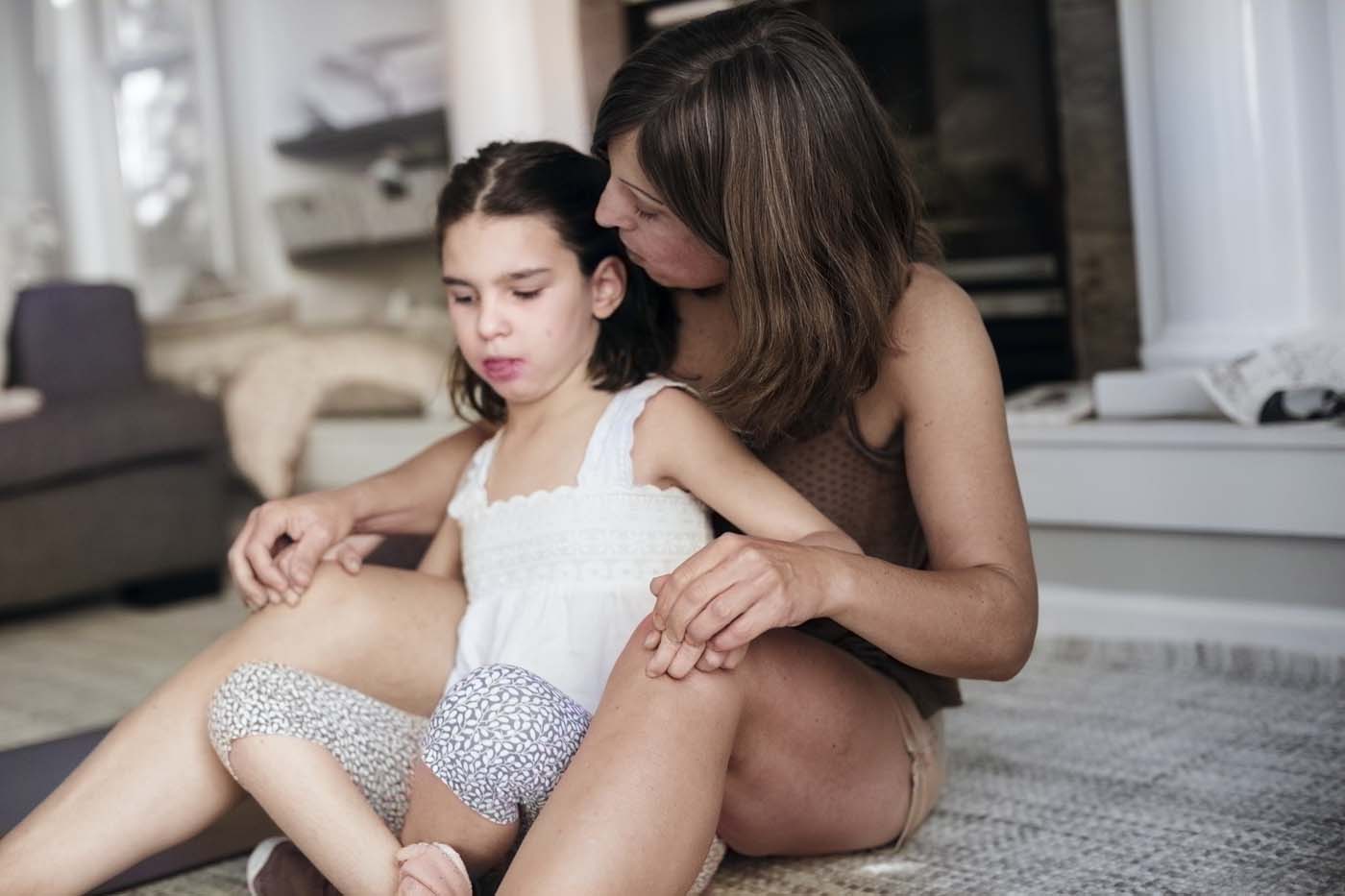
When Mila Makovec was three years old, her parents started to notice that something was wrong. Previously an active and healthy toddler, Mila began to get stuck on words, have sight problems, and walk strangely. This was just the start of the symptoms of her ultra-rare genetic disease, a fatal neurological disorder called Batten disease (CLN7 type), which rapidly progressed over the next couple of years before she was diagnosed in 2016
Mila became the first person in the world to receive a medicine designed just for her, an individualized antisense oligonucleotide (ASO) therapy. ASOs are short synthetic strands of nucleic acids, a bit like single-stranded DNA, designed to bind specific RNA sequences and change gene expression. The change typically occurs by altering the way genes are read or edited, or by triggering the breakdown of toxic mRNA
Mila Makovec and Julia Vitarello, 2017. [Jewel Afflerbaugh]
ASOs are just one form of nucleic acid therapy. Aptamers and small interfering RNAs (siRNAs) are two other examples and have been used successfully to treat a number of rare and ultra-rare diseases
One ASO, Spinraza (nusinersen), was the first approved therapy for spinal muscular atrophy, an inherited neurological condition affecting between one in 8,000 and one in 10,000 births in the U.S
“Spinraza was approved in December 2016, and that’s when my daughter was diagnosed. It happened to be on everyone’s minds, especially in neurology, and it was obviously quite a game changer for children with spinal muscular atrophy [who] otherwise should have been dead or in wheelchairs or on respirators,” explained Mila’s mother Julia Vitarello
“My daughter came along with another terrible, fatal genetic disease, Batten CLN7. And then her story took a big turn, because she happened to be amenable to a similar ASO approach to Spinraza, but the difference was [that] instead of being for 10s or 1,000s of patients, she was the only one in the world that had that mutation.”
Since then, more than 35 individualized ASOs have been designed for patients with ultra-rare genetic diseases, mostly in the U.S., but the process remains laborious. Getting access to these potentially lifesaving therapies is also challenging for all involved
Tireless campaigners such as Vitarello, as well as many scientists like Timothy Yu, MD, PhD, Harvard Medical School, who helped create Mila’s therapy, Annemieke Aartsma-Rus, PhD, Leiden University Medical Center, and Marlen Lauffer, MD, PhD, University of Oxford, are among the many working to get these therapies to more patients
“Many patients have been treated with individualized ASOs and then more recently, baby KJ, with individualized CRISPR therapy in the last eight years, and that’s incredible. It’s so exciting, but it’s barely scratching the surface,” said Vitarello
“The science isn’t the limiting factor, it’s the system … meaning primarily regulation and reimbursement payments—these are the big barriers.”
Answer to a desperate plea
Vitarello is not a scientist nor clinician by training, but like many parents of children with rare diseases, she has had to become an expert
“Whole genome sequencing, from my research, seemed to be what would give the best chance possible to find Mila’s mutation. It was $25,000 at the time and took five months. I knew that I could somehow magically raise the money, but I could not take five months. There was no way that was going to be in time for Mila. I also had a son who didn’t have any symptoms, but I needed to be able to test him immediately too,” she said
“That ended up being part of a desperate plea on Facebook, which was passed through several people to Timothy Yu, MD, PhD, at Boston Children’s Hospital. … He reached out to me the day after I posted that, so that’s where that amazing relationship started.”
Yu and his team agreed to try to help Mila and her family. It turned out that she had two mutations in the CLN7 gene, a known “loss of function” variant and a never-before-seen insertion mutation that disrupted how the gene was read by the body. Fortunately, her brother did not have the same mutation and was not affected by the condition
After finding the mutation, Yu and team developed a therapy for Mila. Although Mila’s family was initially focused on the gene therapy route, Yu thought that the ASO route could be more effective, safer, and cheaper to produce
Mila received the first doses of her individualized ASO, milasen, in late January 2018. The researchers had to not only work out how to manufacture it, but also liaise with the U.S. Food and Drug Administration (FDA) to push the therapy forward
“The FDA themselves had never seen a novel medicine made for one person, so we were very lucky that it fell to a group at the FDA that was really forward thinking,” emphasized Vitarello. “There was a government shutdown in the U.S. on the same exact day we were supposed to hear back from them, and they very wonderfully sent us the go-ahead letter a minute before the government shut down for weeks!”
The first of many
Although milasen was the first so-called N = 1 therapy designed for treating one person, more than 35 ASOs have now been developed to treat more than 80 patients with ultra-rare genetic diseases, according to Aartsma-Rus, who is a professor of translational genetics in Leiden, Netherlands. She was instrumental in developing different ASOs to treat Duchenne muscular dystrophy and co-founded the Dutch Center for RNA Therapeutics
“With any new therapy or technology, there’s often a hype situation of overpromising, and then there’s this valley of depression when things do not happen quick enough. When I started, we were in that valley, and we had one approved ASO,” she remembered
“Between the first and the second ASO to be approved, there was 15 years. Then between the second and the third, there was three years, and between the third and the fourth, only three months. Since then, every year more are approved. We’ve really seen a lot of basic knowledge being gathered, improved understanding of chemical optimization of these compounds, and better delivery moieties. … So now they’re becoming a mainstream therapeutic approach.”
ASOs are by no means the only option in the molecular medicine for rare disease space. Last year, the case of baby KJ Muldoon hit the news when a CRISPR base-editing therapy was manufactured to treat his severe carbamoyl phosphate synthetase 1 (CPS1) deficiency. However, ASOs have a number of advantages, particularly for treating ultra-rare conditions. For example, because they act at the RNA level and are not permanent, they can be stopped if unexpected effects occur
“As a parent of a dying child, it is a huge advantage to have a medicine that you can stop, you can ramp up the dose, you can ramp down the dose, you can space out the doses,” said Vitarello
“On top of that, because they have been around for a long time, you’re not introducing a new technology while also trying to change the system. The innovation here is not necessarily the ASOs themselves; it’s the innovative use of ASOs to change the system.”
Another advantage of ASOs is that they can be used to treat neurological conditions if injected intrathecally into the cerebrospinal fluid. This is currently not possible with therapies like those based on CRISPR
“The cells in the central nervous system will actually take up the ASOs very efficiently,” said Aartsma-Rus. “It was always thought that it would be too burdensome to treat locally, but then because it turned out that the half-life was really long … the maintenance dose might be three times per year. With intrathecal injections, that is doable.”
Reaching others in need
Although treatment with her personalized ASO helped Mila for a few years, she died at the age of 10
“Tim explained going into this, he said, ‘Mila’s neurons are dying, some of them are dying or have already died, and we won’t be on time. … Some are in the process of dying, and maybe we’ll be able to stop them.’ The way I translated that was that probably the best-case scenario is that we’d be in limbo, and that’s kind of where we ended up,” said Vitarello
“It’s very likely that we got to Mila too late, which is the story of most children that I know that have been lucky enough to receive a genetic medicine. The ideal window of intervention is different for every disease, but it’s going to be as close as possible to birth, and Mila was seven when she received this treatment.”
Most of the N = 1 or N-of-few cases that have been treated with ASOs over the last decade have been in the U.S., where philanthropic nonprofit organizations like the n-Lorem Foundation have been helping patients access such therapies. Indeed, n-Lorem announced in April that it had treated its 50th “nano-rare” patient with a personalized ASO
Although Europe is currently behind the U.S. in terms of developing therapies for ultra-rare diseases, the 1 Mutation 1 Medicine (1M1M) initiative, with which Aartsma-Rus is involved, was founded a few years ago to help develop therapies for very rare, primarily neurological genetic diseases across the EU
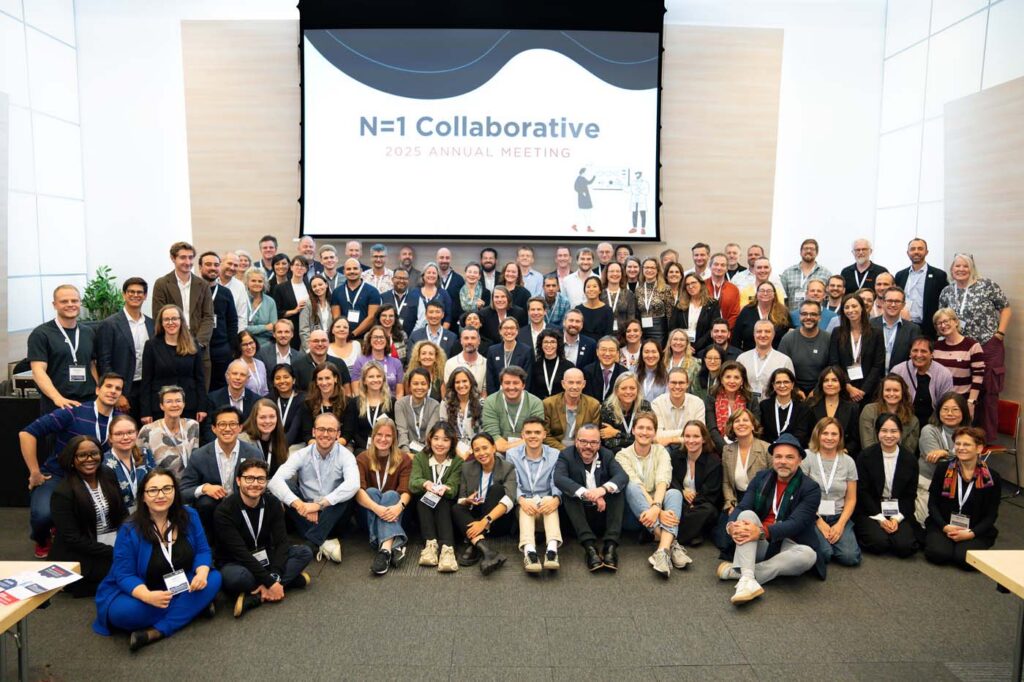
Inspired to help other families in positions similar to her own, Vitarello has helped set up initiatives like the N = 1 Collaborative, a nonprofit international hub for individualized medicines founded in 2021 with Yu on the board of directors, and Aartsma-Rus and Lauffer in advisory capacities
Lauffer is now based at the University of Oxford’s Institute of Developmental and Regenerative Medicine, but previously worked with Aartsma-Rus at the Dutch Center for RNA Therapeutics in Leiden
She has been working to create some guidelines on behalf of the N = 1 Collaborative to make fairer assessments for ASO therapy eligibility for ultra-rare diseases, as some conditions are more suitable for the treatment than others
“Families will reach out to anybody they can find, which is absolutely understandable. I’d be doing the same, but you don’t want to have 10 nos and two yeses. We said within the N = 1 Collaborative, we need to align, we need to standardize this,” she explained
“We wanted to have nationwide and global standards for communicating with the families and the patients … so we all give the same answers to families. If something goes wrong … it also helps me justify my decisions towards the patient, towards the clinicians, towards the hospitals and institutions as well.”
Payment and regulatory issues
Two key issues in getting ASOs or other therapies to people with ultra-rare genetic diseases are how to pay for and regulate them to make sure that they are as safe as possible, but also get to patients in time
One of the projects Vitarello has been involved with is the Rare Therapies Launch Pad in the U.K., which was set up to test how to find children with ultra-rare diseases, design individualized therapies (starting with ASOs), manufacture them, and treat patients
“I found that to be one of the more promising things I’ve done, because it was an infrastructure pilot. The idea was, if we have the science to do this, but we don’t have the system, how can we actually demonstrate it?” she explained
This successful pilot led to a new proposal from the Medicines and Healthcare products Regulatory Agency (MHRA) in the U.K. in May: the draft Rare Disease Therapies Regulatory Framework. It proposes ways to shorten therapy development timelines for rare and ultra-rare diseases and explicitly aims to enable individualized therapies using shared processes and master protocols instead of treating each N = 1 therapy as a completely new product
Similarly, in February, the FDA proposed a change in the regulatory system for ultra-rare disease therapy development, called the Plausible Mechanism Framework. This proposal suggests that sponsors can seek approval when randomized controlled trials are not feasible if they show a well‑supported, biologically plausible mechanism such as an ASO treatment correcting a mutation, good data, and convincing evidence that the therapy hits its target and improves outcomes
Vitarello tried to explore similar ideas of building standardized, regulator-aligned processes for individualized therapies in the company she started with Yu, called EveryONE Medicines, but the company had to close in March due to a lack of funds
She is currently launching a new company in this space but says she feels like EveryONE Medicines succeeded despite the closure. “It put on the table the concept of ao it at scale, and that has already spurred the creation of a number of other individualized medicine companies, which in itself is success for me.”
Vincent Forster, PhD, is the CEO and co-founder of Nerai Bioscience, a Zurich-based gene editing startup developing a next-generation CRISPR platform to create ultra-precise, personalized genome editors for rare genetic diseases
He is enthusiastic about the steps taken by the MHRA and FDA and thinks it will encourage more companies to develop treatments in this space. “It’s really a change in the way that we see drug development. … There is a true commitment, I feel, from the regulator to rare diseases across the world.”
Payment for these therapies is an issue, though, as the small number of therapies needed mean it can be hard to persuade biotech and pharma companies to develop them. High prices and uncertainty around insurance reimbursement in many places means that these therapies remain out of reach for many families
“My own feeling is that if you’re going to move outside of the value-based pricing space … a reasonable approach is to say, ‘Okay, we want this therapy, we value the patient, and we value seeing the progress in terms of having the technology available, but we’re only going to pay you for your reasonable costs so this isn’t going to be a big money-making venture for you,’” said Aidan Hollis, PhD, a professor of economics at the University of Calgary who has a special interest in the economics of rare disease therapies. “You’re not going to turn this into a profit-making venture if the justification for the high price is that it’s a rare disease.”
Aartsma-Rus and colleagues are exploring similar payment ideas and ways to make manufacturing cheaper and more efficient for these therapies. “If you have a good hospital pharmacist … and they have a synthesizer machine, they could GMP (good manufacturing practices) produce oligonucleotides. They would have to optimize it for each ASO, but if they could do this in-house, it would make it 10 to 20 times less expensive than if we have to outsource it,” she explained. However, she acknowledged that buying this kind of expensive equipment, which requires a large upfront payment, is difficult in an academic setting.
Another problem with payment can be linked to reimbursement by health insurance companies. “The criteria that you set for approval in Europe are not the criteria used for reimbursement,” said Aartsma-Rus. “In the U.S., it’s the FDA—if it’s approved, then it’s reimbursed. But in Europe, the EMA (European Medicines Agency) approves a therapy and then, country by country, it needs to be marketed. If the criteria by which they market and do their cost evaluations differ from the criteria by which the regulators approve it, then you lack the data to show cost-effectiveness of the treatment.”
Making the future brighter
“My foundation, Mila’s Miracle Foundation, allows me to be a pure voice hopefully for millions of children and for other families like mine, because they don’t have the luck to be under the spotlight or on a stage or being listened to,” said Vitarello
“For example, explaining what happens if we put a system in place that is correct and we find kids at birth and treat them soon after, and they and their families never know what life with disease looks like. Also, what happens if we don’t get this right and millions of children die?”
There is still work to be done in this space, but thanks to the efforts of tireless campaigners and parents like Vitarello, as well as scientists and nonprofits willing to donate their time and reents than ever before
“The science isn’t the limiting factor now. The regulatory is not about to be, so I think now we’re getting there, and we’re getting to the point where we just need to have a company show that this is possible, and once they do it’s going to unlock investment,” said Vitarello
“Mila created a crack down a big iceberg. Now we’re in the Russian icebreaker, using small numbers of patients, dying children, and ASOs to be able to break that open. The purpose of this is to then allow for CRISPR or other molecular therapeutics to follow, but ASOs are very uniquely suited to be the icebreaker.”
Aartsma-Rus and Lauffer are hoping to see more individualized therapies being developed in Europe. “I think in the next few years that will start happening. I also hope that a linked approval and pricing system will take off,” said Aartsma-Rus
“Where there’s patients traveling or moving because the treatment is reimbursed in one country and not in the country they live in … I think we need to change this for rare diseases. That’s just not acceptable.”
Hollis believes governments should help support insurers and subsidize ultra-rare disease treatments to make them more accessible. “Maybe we could put aside money, which would be applicable as a subsidy to purchase drugs that are for ultra-rare diseases, with some threshold that [is] appropriate,” he suggested
Like Vitarello, Lauffer wants to see a better clinical trial system for these sorts of therapies, like that proposed by the MHRA. “We don’t have to do this one at a time anymore. We need to get basket or umbrella trials approved so we can have a platform that can test the five variants I’m going to target all together in one trial instead of one by one.”
She also emphasized the value of speed. “By the time the parents find us, it’s months to years after their child got diagnosed because they [didn’t] know where to go. They don’t get any help and support and counseling on what the next step is. I want to have a system where we do the diagnosis … and then immediately we can find out if the variant is targetable with existing treatments.”
ASOs may be one of the older therapy options for rare diseases, but newer options like the therapies being developed by Forster and colleagues at Nerai Biosciences, alongside others like potentially curative gene therapies, are on the horizon if challenges around funding and reimbursement can be addressed. “I hope now because of this shift in the regulatory motivation to support rare disease, it will all waterfall towards the investor being more interested in the space as well,” said Forster.
Helen Albert is senior editor at Inside Precision Medicine and a freelance science journalist. Prior to going freelance, she was editor-in-chief at Labiotech. She was editor of The Biochemist magazine and blog, but also worked as a senior reporter at Springer Nature’s medwireNews for a number of years, as well as freelancing for various international publications. She has written for New Scientist, Chemistry World, Biodesigned, The BMJ, Forbes, Science Business, Cosmos magazine, and GEN. Helen has academic degrees in genetics and anthropology, and also spent some time early in her career working at the Sanger Institute in Cambridge before deciding to move into journalism.
News & FeaturesAntisense oligonucleotidesCRISPRGene expressionGood manufacturing practiceRare diseasesRNA sequencing (Sequencing)Spinal muscular atrophy
