


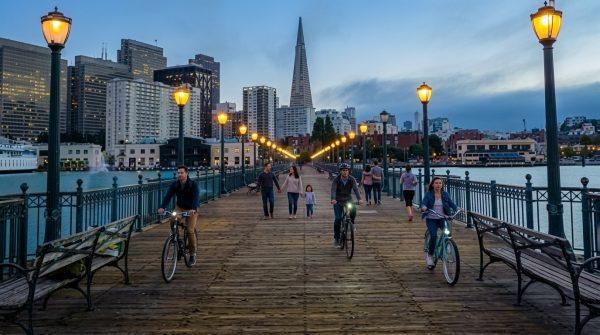
Wellness lifestyle cities guides residents across the country toward ideal urban environments designed to optimize their holistic wellness through consistent physical activity
Diverse institutions analyze the national territory to determine which localities offer the best infrastructure dedicated to the physical care of the population
Wellness experts evaluate key public health indicators to establish a definitive ranking regarding the quality of urban settlements
Healthy living in USA highlights current trends during July 2026 when Reverse Health publishes an exhaustive analysis evaluating 342 cities with over 100,000 residents across the U.S., examining 7 essential variables that integrate a 100-point fitness index to measure the real impact of the environment on the population; furthermore, specialists track gym availability, green spaces, walkability and obesity rates to understand national health behavior
Loading video…
Loading Video
View Source Video
Likewise, this rigorous urban study demonstrates how municipal infrastructure directly influences citizens’ daily habits, although regional differences reveal notable contrasts between the best-equipped metropolitan centers and those with major structural deficiencies; consequently, urban planners and public health professionals utilize these data points from Reverse Health to drive urban design policies aimed at disease prevention and the promotion of sustainable active environments
The best cities to stay in fit shape
Advanced urban infrastructure remarkably boosts residents’ physical performance by providing secure recreational spaces, accessible parks and a broad availability of specialized sports centers dedicated to comprehensive conditioning; furthermore, local governments foster active mobility through efficient pedestrian networks that drastically reduce dependence on traditional motorized transport
Equally, residents in these privileged zones enjoy optimal air quality and a lower density of fast-food establishments, enabling the population to adopt balanced nutritional habits spontaneously; therefore, the study positions specific geographical enclaves as the undisputed benchmarks of national wellness
Ranking of localities with higher physical wellness
Boulder, Colorado tops the list with 79.8 pts. thanks to its 27.9 sports centers per 100,000 residents and exceptional walkability conditions
San Francisco, California reaches second place with 76.6 pts., standing out for recording the study’s best walkability and the lowest levels of fast food
Denver, Colorado occupies the third position with 76.4 pts. by offering a large number of gyms and adequate spaces for consistent physical activity
Ver esta publicación en Instagram
Statistical data compiled by Reverse Health confirm that combining sports-oriented public policies with smart urban design positively transforms community health; additionally, these localities demonstrate that investing in green spaces generates quantifiable benefits in reducing general obesity rates
Healthy lifestyle and determining factors
The analysis reveals profound structural disparities in regions where the density of sports facilities drops sharply and the proliferation of fast-food outlets hinders the development of healthy habits; furthermore, poor urban walkability limits daily movement options for resident citizens living in those marginalized territories
Meanwhile, health institutions warn that a sedentary lifestyle increases notably in the country’s worst-rated zones, demanding urgent reforms in municipal planning; this way, consolidating effective wellness strategies depends directly on the comprehensive transformation of public spaces
Cities with lower physical performance healthy living in USA
Augusta, Georgia occupies the lowest position in the study due to a scarce density of barely 6.8 gyms per 100,000 residents and a high presence of fast food
Killeen, Texas ranks among the localities with lower performance due to architectural barriers limiting urban walkability and physical activity
Brownsville, Texas shows high rates of physical inactivity and obesity driven by an urban environment poorly suited for routine exercise
Edinburg, Texas presents severe limitations in its recreational infrastructure and deficient access to safe green spaces for the population
Hesperia, California stands out negatively by recording critical indicators in obesity rates and a scarcity of alternatives for mass sports
Las Cruces, New Mexico faces significant structural challenges related to street design and a lack of incentives for active mobility
Victorville, California evidences a major lag in integrating municipal policies designed to improve community physical health
Visalia, California shows notable deficiencies in the supply of accessible sports facilities for all registered inhabitants
Rio Rancho, New Mexico lacks proper road infrastructure to encourage safe and steady pedestrian displacement among residents
Warren, Michigan records troubling inactivity rates directly linked to urbanism designed primarily for motorized vehicles
Pueblo, Colorado closes the low-performance list with severe limitations in its overall fitness index
Municipal corporations analyze these results to redesign their urban development plans and correct historical deficiencies affecting community quality of life; additionally, collaboration between planners and health experts proves indispensable to guarantee that municipal progress reaches every corner of the territory through healthy living in USA
