


Listen to this article in summarized format
Loading…
×
×
Subscribe to

Unlock AI Briefing and Premium Content
New Year Offer 24 Hours Left
Already a member? Sign In
What’s Included
- Exclusive Stories
- Daily ePaper Access
- Smart Market Tools
- Curated Investment Ideas
- Ad-lite Experience

Subscription


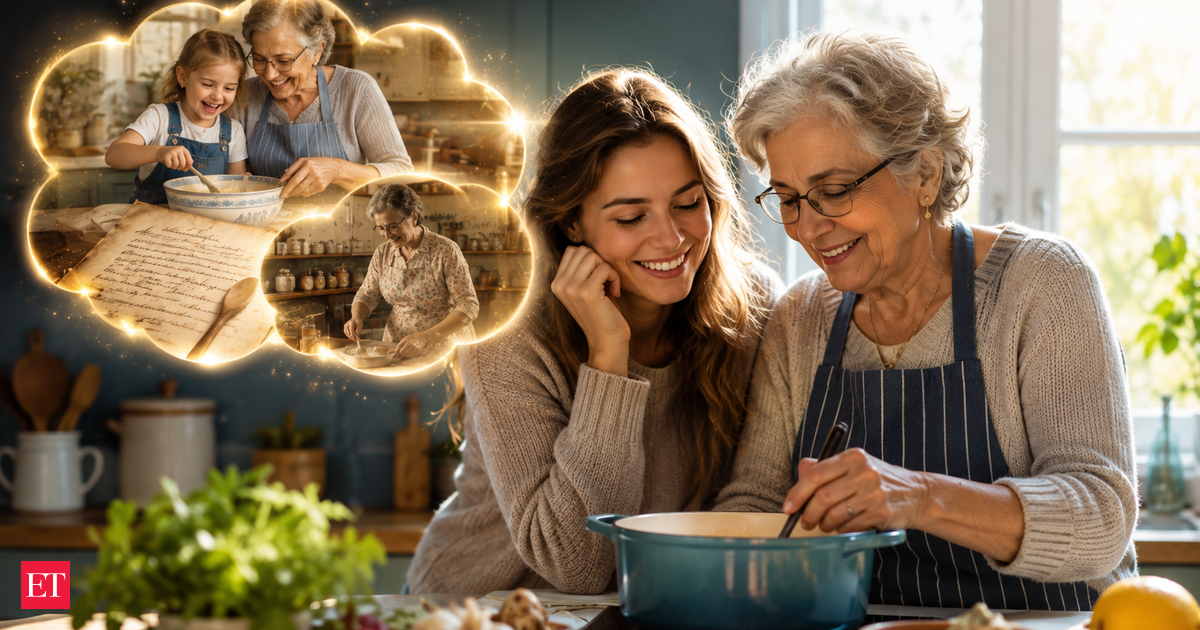
Every family seems to have at least one treasured recipe that has been passed down through generations. It might be a grandmother’s biryani, a mother’s homemade soup or a dessert that appears at every family celebration. Even with thousands of recipes available online, many people continue reaching for the old handwritten notebook or a faded recipe card. Psychology says this preference is rarely just about taste. Instead, research suggests that family recipes often become powerful emotional symbols connected to identity, memory, relationships and belonging. There is no evidence that people who rely on their mother’s or grandmother’s recipes share one personality type. However, psychologists have identified several processes that explain why these recipes remain so meaningful throughout life.
Nostalgia makes familiar recipes emotionally comforting
One of the strongest explanations comes from Nostalgia Theory, a field of research led by psychologist Constantine Sedikides.Psychologists describe nostalgia as a meaningful reflection on positive personal memories rather than simply longing for the past. Nostalgic experiences often improve mood, strengthen feelings of connection and provide emotional comfort during stressful times.Imagine preparing your grandmother’s vegetable curry exactly as she taught you. The smell alone may bring back memories of family dinners, childhood conversations and festive gatherings. The recipe becomes much more than food. It becomes a bridge to meaningful life experiences.
Childhood memories stay closely linked to food
Another explanation involves Autobiographical Memory, the system responsible for storing personal life experiences. Researchers have found that smell and taste are especially powerful memory triggers because they are closely connected to brain regions involved in emotion.For example, tasting a familiar lentil soup may instantly remind someone of rainy afternoons spent in their childhood home. Even decades later, those memories can return with remarkable clarity. This is why people often describe certain meals as tasting “just like home.”
Family recipes strengthen emotional bonds
According to Attachment Theory, developed by psychiatrist John Bowlby, people naturally form strong emotional bonds with caregivers.Food preparation often becomes part of these relationships. A parent or grandparent may express love through cooking, making meals emotionally significant as well as physically nourishing.Someone who continues preparing a grandmother’s recipe after her passing may feel that the tradition keeps an important emotional connection alive. In this way, cooking becomes an act of remembrance as much as nourishment.
Cooking traditions are learned through observation
Psychologist Albert Bandura’s Social Learning Theory suggests that people learn many behaviors simply by observing others. Children who regularly watched parents or grandparents prepare meals often absorb cooking techniques, ingredient choices and family traditions without formal instruction.For instance, someone may automatically add spices in a particular order because they watched their grandmother cook that way for years. The recipe reflects not only ingredients but also years of shared observation and learning.
Familiar foods create psychological safety
Researchers in Comfort Food Psychology have found that familiar foods often provide emotional reassurance during periods of stress.Studies by psychologist Shira Gabriel suggest that comfort foods can temporarily increase feelings of social connection by reminding people of supportive relationships.Someone living far from home may prepare a traditional family meal after a difficult week because the familiar flavors create a sense of stability and belonging. The emotional comfort comes from the memories associated with the meal rather than from the food itself.
Family recipes become part of personal identity
Psychologists also study Narrative Identity Theory, developed by psychologist Dan McAdams, which suggests people understand themselves through the stories they tell about their lives. Family traditions, including recipes, often become part of those stories.Preparing the same festive meal every year may reinforce a person’s sense of belonging within their family and culture. For example, teaching a child how to cook a recipe that has been passed down for generations allows family history to continue through everyday experiences.The recipe becomes part of the family’s identity rather than simply a list of cooking instructions.Nostalgia, autobiographical memory, attachment, social learning and family identity all contribute to the powerful meaning these recipes carry. While new recipes offer variety, traditional family dishes often provide something different, a sense of continuity, comfort and belonging. Psychology reminds us that food is never only about nutrition. Sometimes a familiar recipe preserves relationships, memories and traditions that continue nourishing people long after the meal is finished.
FAQs:
Why do family recipes feel more meaningful than new recipes?
Psychologists say family recipes are often connected to memories, relationships and traditions, making them emotionally significant.
Why can the smell of a familiar meal bring back childhood memories?
Smell is closely linked to brain regions involved in memory and emotion, making food aromas powerful triggers for autobiographical memories.Add 
as a Reliable and Trusted News Source

Add Now!
(You can now subscribe to our Economic Times WhatsApp channel)
Read More News on
cooking from old family recipefamily recipes psychologynostalgiacomfort food psychologyattachment theoryautobiographical memoryfood memoriesfamily traditions
(Catch all the US News, UK News, Canada News, International Breaking News Events, and Latest News Updates on The Economic Times.)
Download The Economic Times News App to get Daily International News Updates
…moreless
(You can now subscribe to our Economic Times WhatsApp channel)
Read More News on
cooking from old family recipefamily recipes psychologynostalgiacomfort food psychologyattachment theoryautobiographical memoryfood memoriesfamily traditions
(Catch all the US News, UK News, Canada News, International Breaking News Events, and Latest News Updates on The Economic Times.)
Download The Economic Times News App to get Daily International News Updates
…moreless
