


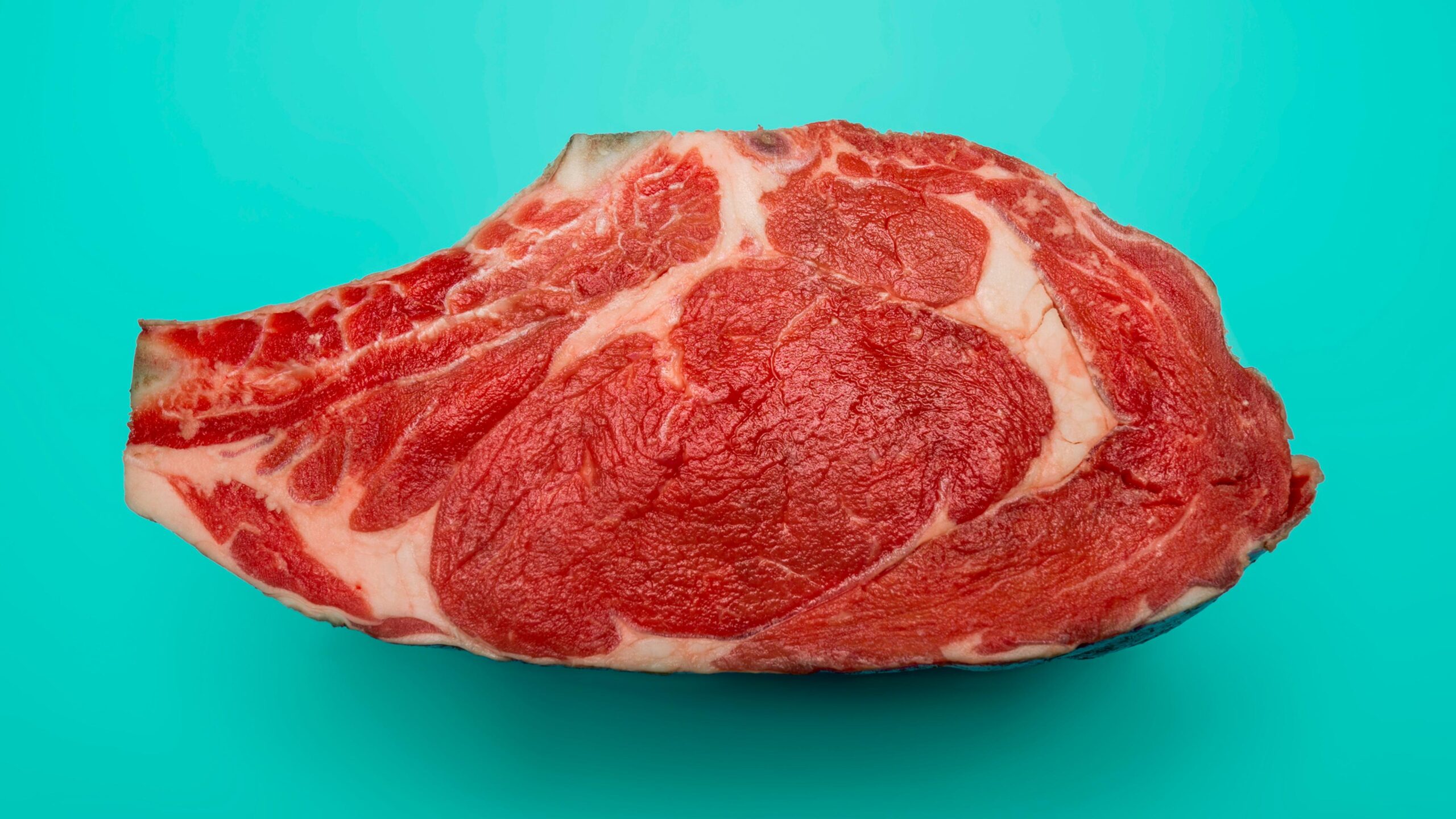
Protein is having a moment. Supermarket shelves are chock-full of protein-packed cookies and cereal, popcorn and Pop Tarts, and even coffee, soda, and water. Social-media influencers—and people at the highest levels of the U.S. government—are advocating for Americans to eat more of the nutrient. The Trump Administration issued new U.S. dietary guidelines in January 2026 that urge people to prioritize “protein at every meal.”
But more protein might not always be the healthier choice, a new scientific review suggests. Instead, restricting protein could be better in some cases for health and longevity
The review, published July 31 in the journal Cell Press Blue, analyzed 350 studies of protein-restricted diets in animals and people. It found that mice, rats, flies, and fish that ate less protein consistently lived longer and healthier. In some small human studies, people who ate a protein-restricted diet for several weeks lost weight and fat mass, and saw improvements in their fasting blood sugar—even though people on these diets tended to eat more calories.
While animals in these experiments were sometimes placed on diets that were very low in protein, the lower protein diet in the human studies usually was within the range of the official RDA, or recommended dietary allowance, of the nutrient. (The new U.S. dietary guidelines recommend people consume 1.2 to 1.6 grams of protein per kilogram of body weight daily, which is up to twice the minimum RDA.)
Still, eating the RDA of protein and not more appeared to be sufficient to improve health outcomes in people, the review shows. “Accumulating evidence challenges the idea that higher protein intake is beneficial,” it says
These findings appear to contradict other research that suggests higher protein diets are more beneficial for health. Some studies have shown that eating more protein promotes weight loss, lowers the risk of sarcopenia—age-related muscle loss—in older people, and extends health span, or the period of life spent in good health.
This apparent paradox is part of what drew Dudley Lamming, co-author of the new review and a researcher of aging, to study protein in the diet and its effects on health
“We think of protein as beneficial because it promotes satiety and it’s good for muscles, but at the same time, a series of epidemiological studies have shown that people eating higher protein diets tend to have higher rates of cancer, diabetes, cardiovascular disease, and even, in some studies, mortality,” says Lamming, a professor of medicine at the University of Wisconsin-Madison
Some studies have also suggested that more protein doesn’t necessarily equal more muscle. A 2023 study of about 1,500 pairs of British twins found that the sibling who ate more protein had a higher risk of developing sarcopenia compared to their protein-restricted twin—“exactly the opposite” of what one might expect, Lamming says.
Advertisement
How protein restriction may slow aging
Scientists have known for decades that protein restriction can slow aging in animals, but interest in the subject—particularly how it could benefit people—has snowballed in recent years as longevity research has intensified and people want to eat more protein
Lamming says scientists don’t know for sure why protein restriction appears to lengthen life and improve health, but one theory is that limiting protein consumption might prompt the body’s cells to shift from a “growth and proliferation” state—in which new cells and new components of cells are made—to one focused on the “recycling and repair” of existing cells.
Cell division, Lamming explains, can accelerate aging and disease. “One of the easiest ways to think about this is that every time you replicate a cell, you need to copy its DNA, and that process isn’t perfect. There are always errors introduced,” he says. “Every time a cell divides, it increases the chance of that cell getting cancer.”
Advertisement
But when protein consumption is limited, the thinking is that the body prioritizes repairing and recycling cells instead of making new ones—processes that some scientists think could help delay aging. The same theory has been used to explain why calorie restriction improves health and extends lifespan in animals and people. But protein restriction and calorie restriction aren’t the same thing, Lamming says, and appear to trigger distinct biological responses.
“In some of these [protein restriction] studies, people actually ate more calories,” he says, including in his own research. Studies in mice suggest a potential mechanism: protein restriction appears to increase thermogenic fat—a special type of body fat that burns energy to produce heat instead of storing extra calories. “They’re eating more calories, but they’re also increasing their energy expenditure,” Lamming says.
Calorie restriction is widely acknowledged by scientists as the “gold standard” experimental intervention for delaying aging in lab animals, Lamming says. “But anyone who has tried to go on a diet knows that calorie restriction is very difficult,” he says, which is why researchers are exploring lower-protein diets as an alternative anti-aging intervention and also searching for drugs that could mimic the health benefits of calorie and protein restriction.
Advertisement
People likely have different protein needs
Despite some promising research on protein restriction, people shouldn’t start eating diets that are very low in protein, Lamming and other scientists of aging say
“While we know that protein restriction extends lifespan in yeast, fruit flies, mice, and rats, that doesn’t necessarily mean it will do so in humans,” says Christopher D. Morrison, a professor at Louisiana State University’s Pennington Biomedical Research Center whose lab pioneered the discovery of a life-extending hormone known as FGF21 that is required by mice to respond to protein restriction. The hormone also increases in people eating a protein-limited diet
Protein restriction studies in people have also been small in scale and short-term, Lamming says. He adds that more research is needed into how protein restriction might impact exercise and people of different ages and needs.
Matt Kaeberlein, a molecular biologist and longevity scientist, says there could also be some negative consequences of a diet that is very low in protein, such as poor immune function and lower bone density. He also points out that while the diets of lab animals in protein restriction studies can be extreme, the studies in people have involved more moderate diets. “We’re not talking about extreme protein restriction down into malnutrition territory,” he says.
Advertisement
There also remains plenty of evidence that a protein-rich diet can be good for health. A 2024 study, for instance, found that people who ate more protein than the RDA were associated with healthier aging, including better physical health and cognitive function.
Lamming says he suspects that some people may benefit more from higher-protein diets than others, including those who do resistance training and pregnant women
“Protein is now infused in water and spread on potato chips, and maybe that’s neutral to beneficial for people who are doing some exercise. But maybe for sedentary people, that could be detrimental,” he says.
The type of protein likely also matters, says Andres V. Ardisson Korat, a Tufts University researcher who led the 2024 study linking more protein intake with healthier aging. In that study, Korat says people who ate more plant-based protein were significantly less likely to suffer from chronic diseases and had better physical and cognitive health compared to people who ate less plant-based protein. On the other hand, people who consumed more animal-based protein were at higher risk of chronic diseases than people who ate less animal-based protein, though they had better physical function than people who ate less protein overall.
Advertisement
The new review points out that even individual amino acids—the building blocks of protein—could be more beneficial to health than others. Of the nine essential amino acids that people and many mammals need to survive, studies suggest that restricting some of them could extend lifespan, the review says. This research is too preliminary, however, to warrant people supplementing or restricting specific amino acids, says Kaeberlein, the longevity scientist
Eventually, he says, we might have enough scientific data to personalize how much and what kinds of protein someone should ideally consume. But for now, “our understanding of how to optimize protein levels for the population or even for an individual is still really early,” Kaeberlein says. “For the average person, you’re better off not getting lost in all the weeds, because we don’t really have concrete answers.”
Instead, Kaeberlein recommends that people focus on the quality of their diet, eating mostly “whole foods and lots of vegetables.”
Advertisement
“Think about the quality of your diet before you worry about how much protein you’re eating. And then I think it really depends on your goals, where you are in your life course, and what’s going to be sustainable for you,” he says. “I know people want a number, like how many grams of protein should I eat per pound of body weight. But we don’t have the long-term data to be able to say with confidence that we know what’s optimal.”
