


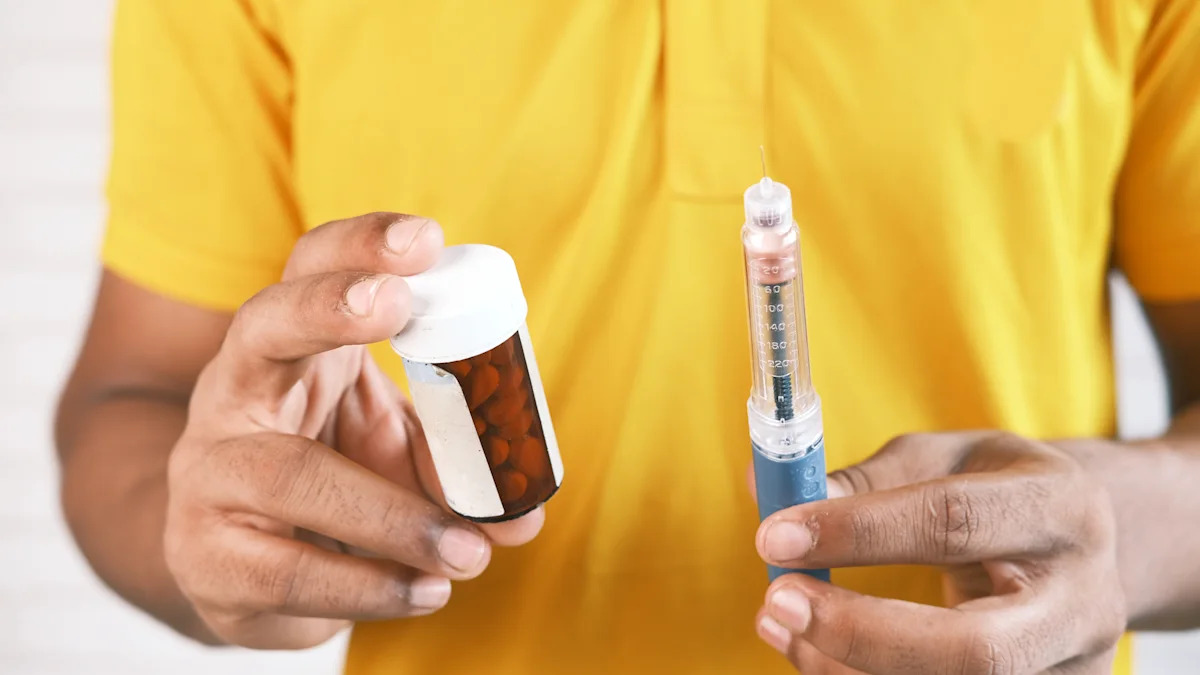
When the FDA approved the Wegovy pill, the first oral semaglutide for weight management, in late December 2025 (with the launch following in early January 2026), the response was immediate. Patients who had spent months dreading their weekly injections suddenly had a new question for their doctors, and doctors suddenly had a much harder question to answer. As it turns out, the pill is not the straightforward upgrade many people assumed it was
Dr. Anthony Puopolo has been fielding those questions firsthand. What he said will prepare you to have a more informed conversation with your own doctor
About Our Expert:Dr. Anthony Puopolo, board-certified family medicine physician and Chief Medical Officer at LifeMD, brings 25+ years of clinical experience to the guidance in this article
The pill and the shot are more alike than you think
The first thing Dr. Puopolo wanted to clear up was the assumption that the pill is some new breakthrough. It isn’t, exactly. “The pill and injection deliver the same molecule to the same receptors with the same effects,” he said, “but the oral route requires pharmaceutical engineering to overcome fundamental biological barriers, resulting in lower and more variable absorption that demands strict adherence to dosing conditions.”
Advertisement
The oral version, sold as the Wegovy pill, delivers the same semaglutide found in the injectable Wegovy and in Ozempic, the related injection approved for type 2 diabetes. Once the drug gets into your system, it behaves identically. Getting it there is where things get complicated
He also pushed back on the idea that a pill must somehow be gentler than a shot. “That assumption is dangerous,” he noted, “and the data clearly suggests that oral semaglutide is not safer or gentler than the injection. In fact, it may have slightly more gastrointestinal side effects and carries all the same systemic risks.”
The strict morning routine most patients don’t know about

If you take the oral formulation, you need to take the pill exactly as directed every single day. “The dosing requirements aren’t arbitrary pharmaceutical fussiness,” Dr. Puopolo explained, “they’re biologically necessary for adequate absorption.” He added that while perfection isn’t required every single day, “consistent adherence to the core requirements is essential for the drug to work as intended.”
For patients who already take multiple medications in the morning, or who have unpredictable schedules, this matters. “The injectable avoids the 30-minute waiting period,” he pointed out, making it logistically simpler for certain patients
Who should actually choose the pill
Despite the caveats, Dr. Puopolo was clear that the oral option is a real advance for the right patient. He described the pill as ideal for “needle-averse patients who can reliably follow the strict dosing protocol.” He also noted practical advantages for people who travel frequently or lack reliable refrigeration access
Advertisement
When I asked him what he’d say to a patient sitting in front of him today, he said, “I would tell the patient, while the pill is less costly in general, it also takes a bit more commitment. The best formulation is the one you’ll actually take consistently and one that you can afford financially.”
The muscle loss question both options raise

One concern many people have when taking injectable GLP-1 medications is muscle loss. “There’s no biological reason to expect the pill to be better or worse for muscle preservation than the injection,” Dr. Puopolo explained. “Both formulations deliver the same molecule, create the same caloric deficit, and result in the same proportional body composition changes.”
He added that the mitigation strategy is identical regardless of which form a patient takes: resistance training and adequate protein intake
What switching from shots to pills actually involves
For patients already on injectable semaglutide who are tempted to switch for convenience, Dr. Puopolo urged caution. Switching is “clinically reasonable for motivated patients who understand the trade-offs,” he acknowledged, but he stressed it is “not a decision to make casually for convenience.” The transition can bring transient GI side effects and a potential gap in efficacy while the body adjusts
The bottom line on cost and hype

On the question of cost, the picture is more nuanced than the marketing suggests. The pill is genuinely less expensive for patients paying out of pocket, but he confirmed: “For insured patients, the out-of-pocket difference is minimal.” And either way, he noted, “the biggest cost driver isn’t which formulation you choose, it’s whether you can maintain adherence long-term and whether you’re implementing the lifestyle interventions that maximize the drug’s value.”
Advertisement
He concluded, “The oral formulation is a genuine advance in convenience and access, but it’s the same drug with the same benefits, same risks, and same need for resistance training and protein optimization.”
More About Our Expert:Dr. Anthony Puopolo is a board-certified family medicine physician with psychiatry training and integrative wellness expertise. He is Chief Medical Officer at LifeMD. He has over 25 years of experience in the medical field. He graduated from Boston University School of Medicine in 1999. He completed a combined Family Medicine and Psychiatry residency program in the U.S. Army at Tripler Army Medical center in Honolulu, Hawaii. He also completed an intensive wellness fellowship with the acclaimed Dr. Andrew Weil, the founder and director of the Andrew Weil Center for Integrative Medicine at the University of Arizona.
Please note: Robin Raven is a journalist covering health and medicine. This article is based on an interview with Dr. Anthony Puopolo and is intended for informational purposes only. It does not constitute medical advice, diagnosis, or treatment. Always consult a qualified healthcare provider before making any decisions about your medication or health regimen
Thank you for reading. I invite you to follow me on Yahoo for more on health and wellness
Robin Raven Creator
Robin Raven is a journalist who covers travel, entertainment, health, wellness and more. You can often find her writing songs, flying somewhere she’s never been, reading and listening to Taylor Swift.
Creators are not employed by Yahoo. Views expressed by creators do not reflect the opinions and position of Yahoo.Learn how to become a creator.
