


Advertisement
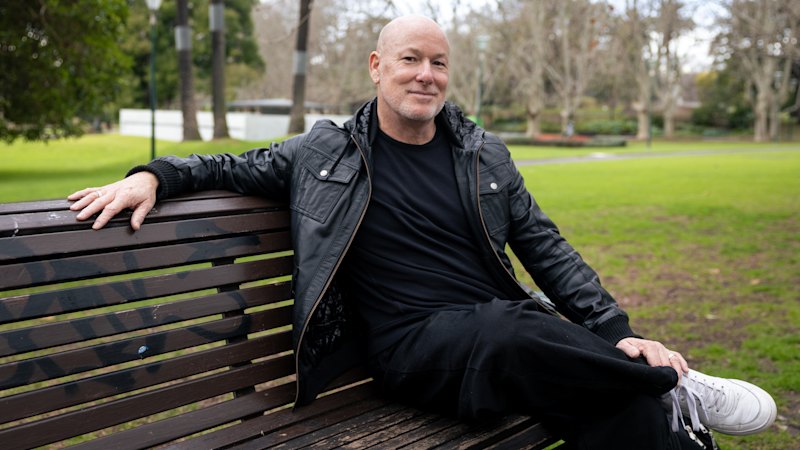
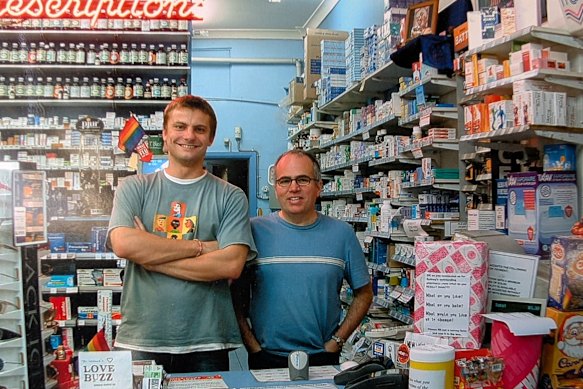
Greg Johnston was working as a pharmacist on Oxford Street during the height of the HIV/AIDs crisis in the 1980s and 1990s
But for the 62-year-old, who is not HIV-positive, recollections of that period in his life – as a 20-something from rural Tasmania, newly out and making his way in a cosmopolitan Sydney – are infused with joy
His latest novel, For a Moment More, opens with a hedonic scene. It’s 1993, and protagonist Chris – HIV-positive for eight years – is venturing out for the night in Darlinghurst. It’s during a rendition of Something’s Coming by a life-sized Barbra Streisand puppet that Chris decides to fight, rather than give into, his illness
“That’s my memory of the time – that even though this horrific thing was happening, I met some of the funniest people I’ve ever met in my life who were comedic geniuses,” Johnston says
“I realised well before I’d started writing that if I didn’t have humour and joy, it was just going to be too turgid and just really unreadable and uninviting.”
Johnston was transported back to this era during the pandemic, prompting him to start thinking about writing of those lost in the crisis
“When COVID happened, and we started hearing all this language again of people testing positive, seroconversion, viral loads, splashed on the television and across newspapers again, it made me really recoil,” he says
Advertisement
Of course, despite the happy memories – Johnston recalls the “incredible village atmosphere” and freedom that came from working in a predominantly gay and lesbian populated-suburb (the “gay ghetto” as many referred to it) – his job put him on the front line of the crisis
“When I started doing research and went through the gay papers, the pages of obituaries every fortnight was startling. I’d forgotten how many there were and how many of them were people who came to the pharmacy,” he says
This year marks the 30th anniversary of the introduction of highly active retroviral therapy (HAART), a potent combination of drugs that became the new standard of care for the treatment of HIV
Unlike previous antiretroviral drugs – to which the virus became resistant, and which often came with crippling side effects – combination therapy proved highly effective, transforming HIV from a death sentence into a manageable, chronic condition
“Just seeing people getting better was incredibly rewarding,” says Johnston, who worked in the pharmacy for more than a decade
Advertisement
“HIV wasn’t cured, but it’s not often you see in a pharmacy that kind of blooming again of people going from literal skeletons to quite chubby young men. That was a privilege to see.”
Since the start of the epidemic in 1981, there have been an estimated 84.2 million HIV diagnoses around the globe, and about 40.1 million deaths due to AIDS-related illnesses
Associate professor Bridget Haire, from the University of New South Wales’ School of Population Health, has worked in HIV and sexual and reproductive health for decades. She describes the shift as “breathtaking” for the lives it saved
According to the Kirby Institute, AIDS-related deaths in Australia peaked between 1994 and 1995, before dropping sharply from 1996
Globally, AIDs-related deaths increased through the 1990s, peaking in the mid-2000s with almost 2 million annually. That toll has since halved
Since 1996, antiretroviral therapy (ART) has grown increasingly sophisticated compared to the complex regimen required of patients at the beginning
Advertisement
“It was a bit of a full-time job,” says Haire
“With one of them, you needed to be drinking about three litres of water a day. With the first one that was released in Australia, its bioavailability wasn’t great. You had to take it at really strict intervals, and you were asked to take it alongside grapefruit juice.”
Standard ART today requires just one pill a day, similar to the government-subsidised pre-exposure prophylaxis (PrEP), which is the standard preventative medication for HIV
Last year, the first twice-yearly injectable, lenacapavir, was approved by the Therapeutic Goods Administration for use in Australia as a form of PrEP and treatment, though it’s not yet available on the Pharmaceutical Benefits Scheme (PBS)
The life expectancy of those taking ART has increased substantially in the three decades since its introduction, while the therapy has virtually eliminated partner to partner transmission
Indeed, in 2016, the campaign U=U, or Undetectable=Untransmittable, marked another milestone in our understanding of HIV – that if a person is on an effective antiretroviral treatment for HIV, they will reach an “undetectable” viral load and be unable to transmit the virus to sexual partners
Advertisement
Today, an estimated 40.1 million people globally live with HIV and an estimated 30,890 in Australia (28,940 diagnosed, 95 per cent of whom receive antiretroviral therapy)
Australia has aligned its national framework with that of the United Nations’ global targets to virtually eliminate HIV as a public health threat by 2030, although a UN report last month warned decades of progress were at risk as global funding dropped by one-fifth in 2025
“In 1996, we didn’t know that completely suppressing a person’s viral load really would stop transmission,” says Haire
“It’s hard to underestimate how important that is – for a person living with HIV in 1995, you would think, ‘OK, I’m really likely to die of an AIDS-related condition sometime in the next 10 years’.”
“Now, the knowledge that if you are taking your pills correctly – and that’s not such a hard thing to do – your viral load is undetectable. You can’t transmit. That is such a huge weight off people.”
Australia’s HIV-response has often been hailed as world-leading, which Haire puts down to the mobilisation of community
Advertisement
“The medicine has been absolutely extraordinary. But the medicines themselves aren’t effective without a context – which is about government putting policies into place and funding for community organisations that ensure that there can be informed and respectful partnerships between communities and researchers,” she says
For Johnston, one of the period’s legacies was a reframing of how we think, and talk, about disease more broadly
“HIV forged the concept of livingwith HIV/AIDS rather than being a victim, which was a huge rhetorical shift,” he says
“And that rhetoric has been taken up by breast cancer, bowel cancer, every psychiatric illness, all of those diseases have taken up that notion, and I don’t think that’s ever been fully acknowledged of where it came from.”
It’s been heartening too, to see his novel resonate with younger generations
“The number of people and the full spectrum of queer people who came to a book fair I was at, who were genuinely interested in [the book], were interested to find out the history and admitted that they didn’t know much about it, that was just really warming for me,” he says
In 1998, Jacob Boehme was just starting his career at Sydney’s NAISDA, the country’s premier performing arts college for Aboriginal and Torres Strait Islander young people, when he was diagnosed with HIV
“I was just a little 20-something dance student having a gay old time in Sydney, and at the tender age of 24 I noticed that I had a cold that I couldn’t shake for months,” he recalls
It was during a traditional dance class, facilitated by Aboriginal elders, that he first realised something might be wrong
“Aunty Peggy stopped me, and said, ‘Come and sit here’. She started doing traditional healing over me. Her and Aunty Mona started to sing over me,” recounts Boehme
“At the end of it, she turned around and said, ‘Everything’s red, I can’t help you, you need a western doctor.’”
For Boehme, when a teen venturing out underage to Melbourne’s gay nightlife, the disease had always been a spectre
“I was sh-t scared of HIV ever since I was like 13 when the bowling alley ad with the Grim Reaper came out. And I was well aware of my sexuality by then,” he says
Later in Sydney, he was introduced to Anthony, the partner of a dancer friend, who had been diagnosed with HIV and committed suicide not long after
When he received his own diagnosis, Anthony and the Grim Reaper ad of his youth came hurtling back
“I thought, ‘Get ready for an early death. There goes the idea of having a relationship or a marriage.’I just started saying goodbye to all of that.”
“What I’d only ever seen in media was lots of stories about gay men who had sex and died, and I wanted to see a story about a gay man who fell in love and lived.”
Jacob Boehme, an Indigenous, gay artist living with HIV
Boehme’s experience was common for those diagnosed with HIV before ART, which was Coined Lazarus Syndrome after the biblical figure Jesus raised from the dead. Many weathered the whiplash of facing certain death before reckoning with a second chance at life
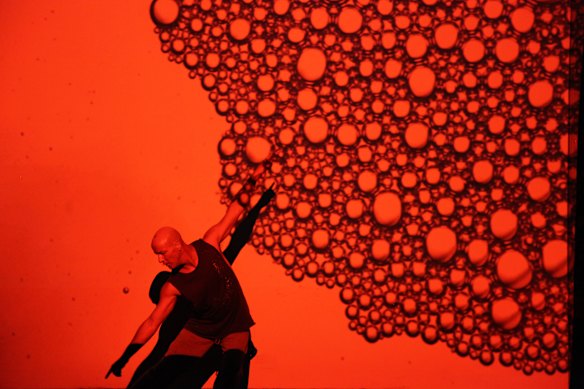
In 2017, Boehme premiered his solo show Blood on the Dance Floor – an exploration of what it means to be an HIV-positive, gay, Indigenous man
“What I’d only ever seen in media was lots of stories about gay men who had sex and died, and I wanted to see a story about a gay man who fell in love and lived,” says Boehme, who conceived of the show in the years leading up to this 40th birthday
Today, alongside work as a writer, director and choreographer, Boehme facilitates Mob+ a First Nations HIV peer program supported by Living Positive Victoria
“There has been a lack of reectly to First Nations communities,” he says
“There needs to be targeted messaging that is translated so that people can understand it, other than a poster or digital campaign. It needs to be sitting down yarning [for example].”
Like Boehme, Richard Keane, chief executive of HIV not-for-profit Living Positive Victoria, was diagnosed with HIV young, aged 19
“I wasn’t very experienced in the ways of the world and really a little bit naive. I didn’t have a whole lot of self-confidence. So in some ways I was quite a vulnerable young person,” he says
“I was just starting uni, and I thought, ‘Well what’s the point of finishing that?’”
Then, aged 23 – just four years after his own diagnosis – he lost a partner to AIDS-related illnesses, alongside many close friends
“I was very, very lucky,” says Keane
“I set myself an internal deadline of reaching 30. And here I am at 56 today.”
“It’s hard to explain what a life-changing thing [ART] was because I was so concerned about forward transmission of HIV that I would only ever have sexual relationships with other positive people.”
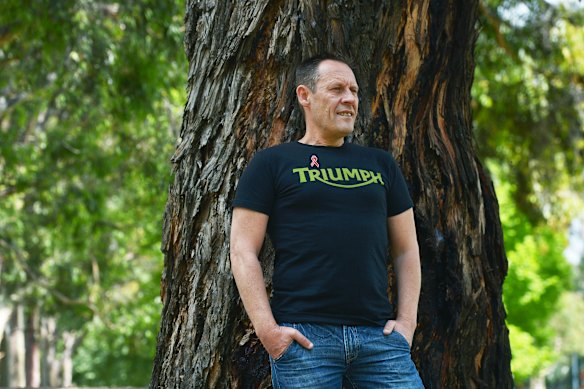
Slowly, Keane has come to terms with a long life ahead of him
“There was this sense of relief… I am so grateful every day and I sit here now 37 years later and I just can’t quite believe, to be perfectly honest with you, that this is how my life would go,” he says
Diagnosed in 1989 before the advent of combination therapy, Keane, like many other community members, put his body through the rigours of trials for early experimental drugs
He lives with the permanent side effects from some of these experimental drugs, including peripheral neuropathy, a kind of nerve damage that causes pain, numbness and tingling in the arms and legs
Today, Johnston lives in Sydney’s inner west with husband John and their border collie Wilma and tuxedo cat Bob
The pair will celebrate their 30th anniversary in October
He hopes readers of For a Moment More come away with an appreciation of the kinship and activism that came out of the epidemic
“Gay liberation was only just finding its legs when [HIV] happened, and it was potentially going to just blast everything back into the past. I just thought, ‘Oh well, that’s the end of that,’ ” he says
“But what happened was, because HIV hit a largely educated community, people came out swinging. They just came out saying, ‘Nah, this is not good enough.’ ”
Make the most of your health, relationships, fitness and nutrition with ourLive Well newsletter.Get it in your inbox every Monday
