


Low-Fat Vegan Diet Supports Weight Loss By Reducing Energy Density, Not Portion Size Or Willpower
A low-fat vegan diet substantially lowers dietary energy density, helping people take in fewer calories and lose weight easily, finds new study
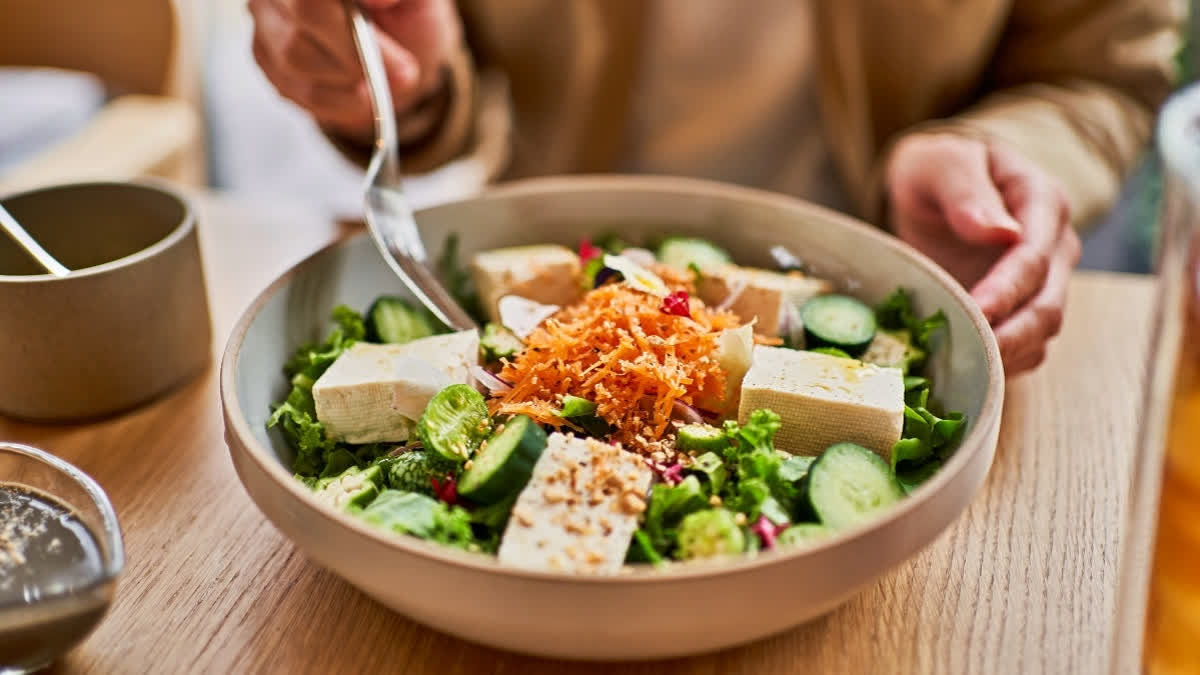
Low fat plant foods may make it easier for people to reduce calorie intake without cutting down the amount they eat (Getty Images)
ByETV Bharat Health Team
Published :August 7, 2026 at 12:41 PM IST

A low-fat vegan diet lowers the energy density of the foods people eat by roughly 30%, allowing them to eat satisfying amounts of food while taking in fewer calories and losing weight without deliberately restricting calories, according to new research published in JAMA Network Open
“This helps answer a question people often have about plant-based eating: How can you lose weight without counting calories or going hungry?” said Hana Kahleova, MD, PhD, director of clinical research at the Physicians Committee for Responsible Medicine and lead author. “The answer is energy density. Plant foods are rich in water and fibre, so you can fill your plate, feel full, and still take in fewer calories.”
Mechanism Behind The Weight Loss
The analysis drew on a 16-week randomized trial in which adults with overweight were assigned to either an ad libitum low-fat vegan diet of fruits, vegetables, grains, and legumes, or a control group that made no dietary changes. Neither group was given calorie limits. Energy density was calculated for each participant as the ratio of total energy (kcal per day) to total food weight (grams per day)
Also read:3 Simple Vegan Recipes To Try This Monsoon Season
Key findings include:
- Total food weight did not change significantly in either group; participants on the vegan diet ate just as much food by weight.
- Energy intake fell in both groups but more in the vegan group, by about 357 kcal/day.
- Dietary energy density did not change in the control group but dropped about 30% in the vegan group.
- Greater reductions in energy density were associated with greater weight loss, and the link held after accounting for changes in calorie intake.
Eat More Food, Take in Fewer Calories
The shift was driven by what landed on the plate. On the vegan diet, calorie-dense animal foods such as meat, dairy, and eggs were eliminated while intake of high-volume, low-energy-density plant foods (especially vegetables and legumes) rose sharply. Because these foods carry few calories per gram, participants could eat generous portions while consuming less energy overall. “This isn’t about willpower or smaller portions,” Dr. Kahleova said. “It’s about choosing foods that naturally deliver fewer calories in every bite. A 30% reduction in energy density is a substantial shift that would be very hard to achieve and sustain through portion control alone.”
Energy density refers to the number of calories per gram of food. It has long been studied as a driver of how much people eat. Controlled feeding studies show that lowering the energy density of meals helps people feel full and reduces how much they eat afterward, all while keeping the volume of food the same
“When the foods you eat are lower in energy density, your body’s natural appetite signals work in your favour,” Dr. Kahleova said. “You eat until you’re satisfied, and you simply end up with fewer calories. That’s a sustainable way to manage weight.”
Weight Management Tool
With dietary guidance often focused on cutting calories or controlling portions, the study points to a different and potentially more practical lever: the composition of the diet itself. Emphasizing water-rich, high-fibre plant foods may make it easier for people to reduce calorie intake without feeling deprived
“From a clinical standpoint, targeting energy density offers a realistic strategy for weight loss,” Dr. Kahleova said. “Instead of telling people to eat less, we can help them eat differently… and the results follow. You don’t have to eat less,” Dr. Kahleova said. “You can eat more food, feel full, and still lose weight by choosing foods that are naturally lower in energy density.” (Physicians Committee For Responsible Medicine)
Source:
https://jamanetwork.com/journals/jamanetworkopen/fullarticle/2852520
Also read:
- New Study Says Your Diet Could Cut Climate Pollution By 35%, When You Swap Meat And Dairy For Plants
- Replacing Animal Products With Plant-Based Foods Leads To Weight Loss In People With Type 1 Diabetes: Study
- Anushka Sharma’s Wellness Staple Is Almond Milk, Here’s How To Make It At Home Along With 6 Other Vegan Milks
