


3D Weather: How temperatures affect sweat, heat-related illness
Fri, August 7, 2026 at 10:13 PM

 5VIEW ALL PHOTOS
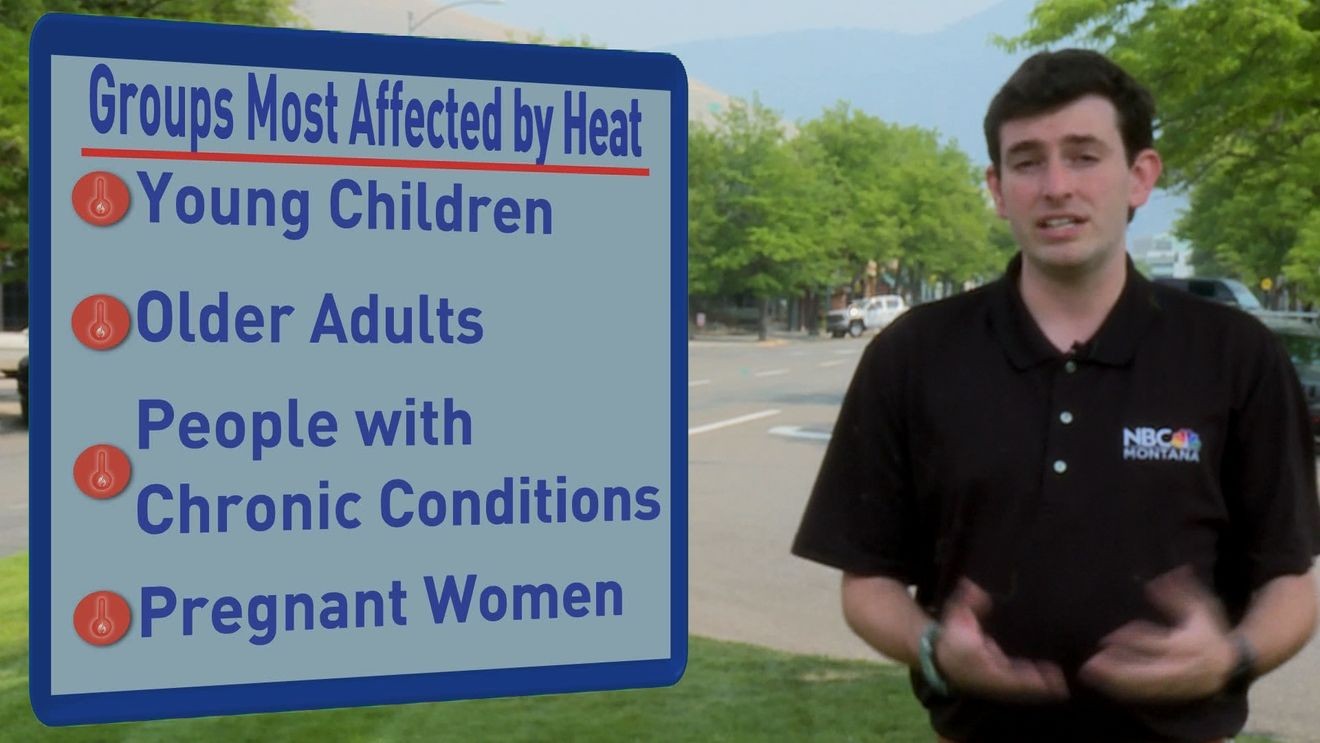
Anyone can be affected by the heat, but young children, older adults, people with chronic medical conditions, and pregnant women are among those at the greatest risk.
MISSOULA, Mont. —What exactly is heat when it comes to the weather? Using 3D technology, Meteorologist Mitchel Coombs takes a closer look
It all starts with the sun. Solar radiation heats the Earth’s surface, which then releases that energy back into the atmosphere. During the summer, as the temperatures climb, so does the risk of dangerous heat
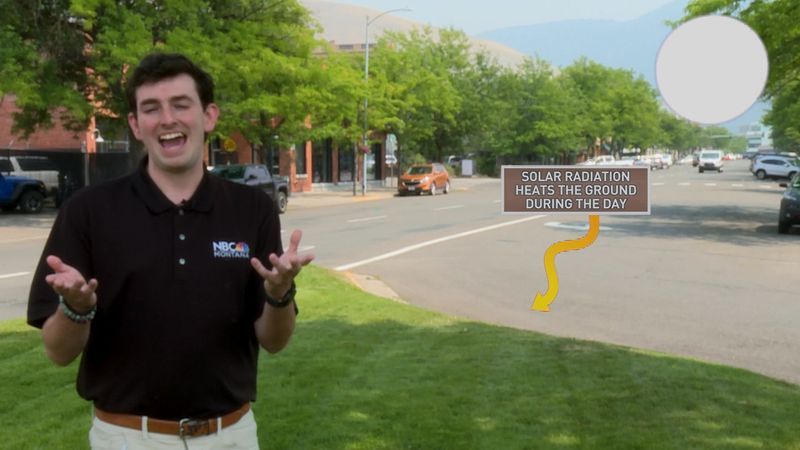
Solar radiation heats the Earth’s surface, which then releases that energy back into the atmosphere. During the summer, as the temperatures climb, so does the risk of dangerous heat.
While hot weather can be uncomfortable, there’s science behind how our bodies stay cool
Thankfully, our bodies have a built-in cooling system: sweat
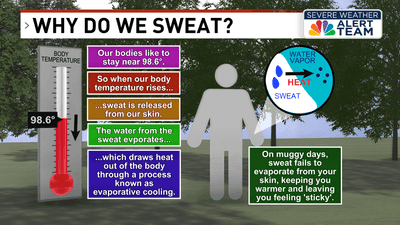
Our bodies work to maintain an internal temperature of about 98.6 degrees. When we get too warm, the brain signals sweat glands to produce sweat
But sweating alone doesn’t cool us off. The real cooling happens when sweat evaporates from our skin, carrying heat away from the body, in a process known as evaporative cooling
On hot, humid days, that process becomes much less effective because sweat can’t evaporate as easily. This keeps us warming and leaves us feeling “sticky.” That’s when heat-related illnesses become much more likely
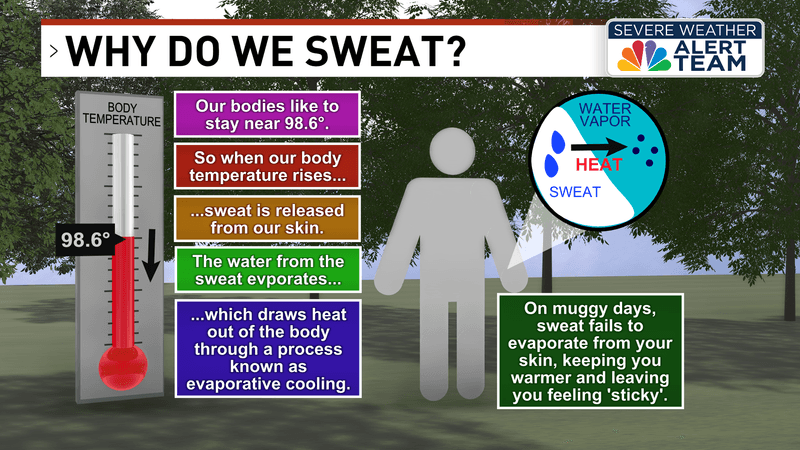
Why do we sweat?
In fact, heat is the deadliest weather hazard in the United States, causing hundreds of deaths each year — often more than tornadoes, hurricanes, and lightning combined
Anyone can be affected, but young children, older adults, people with chronic medical conditions, and pregnant women are among those at the greatest risk
Anyone can be affected by the heat, but young children, older adults, people with chronic medical conditions, and pregnant women are among those at the greatest risk.
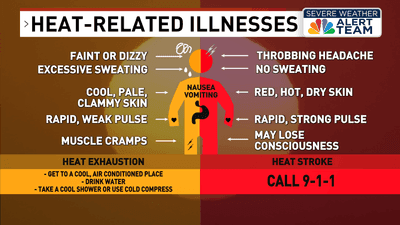
The two main heat-related illnesses are heat exhaustion and heat stroke
Heat exhaustion is often the first warning sign. Symptoms include heavy sweating, dizziness, nausea, muscle cramps, cool, clammy skin, and a rapid, weak pulse
If that happens, move to a cool place, drink plenty of water, and use cool towels or take a cool shower to help lower your body temperature
Heat stroke is much more serious. Warning signs include a severe headache, hot, dry skin, confusion, a rapid, strong pulse, or loss of consciousness
If you suspect someone is experiencing heat stroke, call 911 immediately. It is a medical emergency
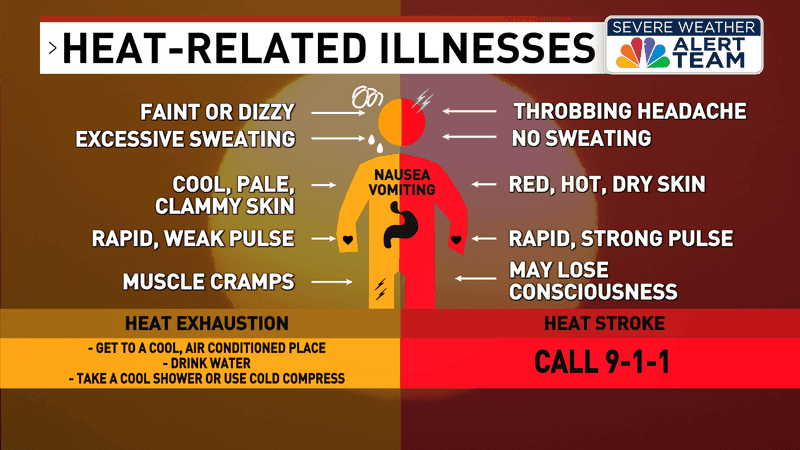
Heat Exhaustion vs. Heat Stroke
As the hottest weeks of summer approach, remember to stay hydrated, take breaks in the shade or air conditioning, and avoid spending too much time outside during the hottest part of the day
Here in western Montana, our hottest temperatures typically arrive in late July and early August. Stay up to date with the latest forecast onnbcmontana.com/weather before heading outdoors
