


Image
This is a summary of a story by Margo Lakin on Trinity College of Arts & Sciences.
For many first-year Duke students, getting started in research can feel overwhelming. Finding a mentor, learning how research groups work and figuring out where to begin are often the biggest hurdles. A new summer program is helping make those first steps easier
The TRInity PATHways to Research Program, or TRI-PATH, was launched by the Undergraduate Research Support Office for rising Trinity College of Arts & Sciences sophomores who want to explore research. The inaugural cohort of 18 students spent the summer taking a research foundations course, working full time with their own faculty mentors, and learning alongside a cohort of peers. Each student also received a $3,000 fellowship stipend
The goal is to give students the confidence and skills to navigate research, no matter the discipline
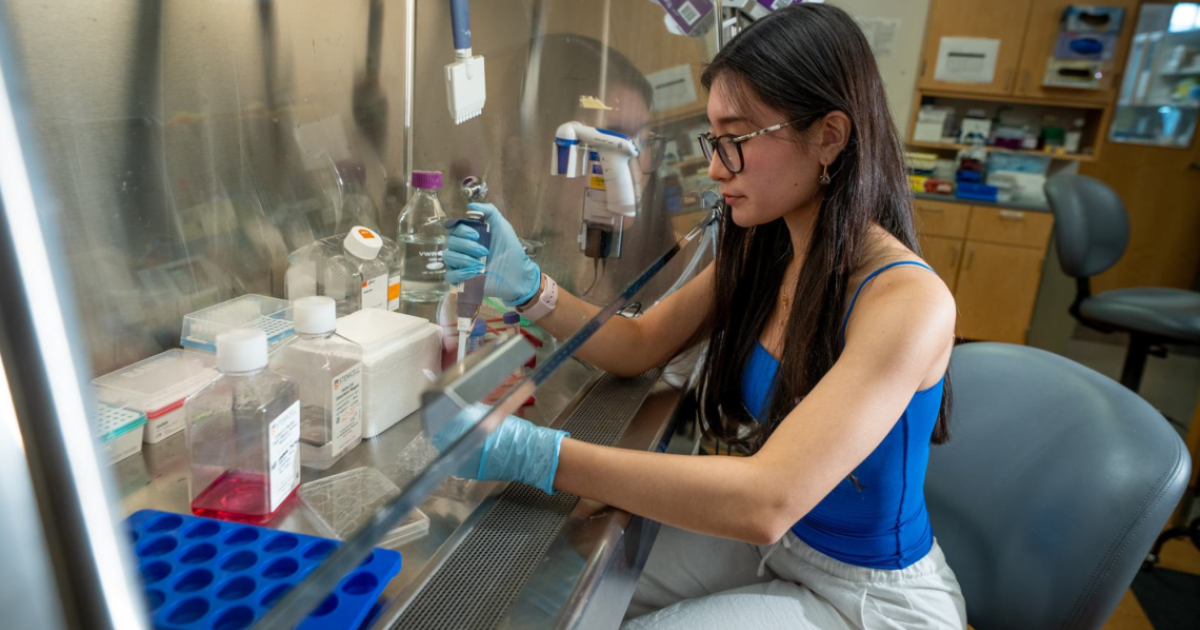
For Evelyn Zhang, a pre-med student interested in reconstructive plastic surgery, the summer program has taught her about the many facets of biomedical research. Working in Dr. Jun Chen’s laboratory, she has been designing studies, reading scientific literature and learning from failed experiments
The experience also showed her she is not expected to figure everything out on her own
“My bench mentors have been amazing and supportive,” Zhang says. “I’ve learned so much and built close relationships.”
Because TRI-PATH allowed her to focus on research full time, Zhang says she has grown more confident
Morgan Augustine explored research outside of a laboratory. She spent the summer working with a global mental health research team studying interventions to support mental health treatment, including in Tanzania. The experience helped her see how research can address real-world challenges and has shaped her own academic interests
“I always knew social science and humanities research existed,” Augustine says. “But it was hard to conceptualize what that looked like until I started working with Dr. Knettel and saw how his team conducts research.”
For more about the students’ projects, go to Trinity College of Arts & Sciences
