


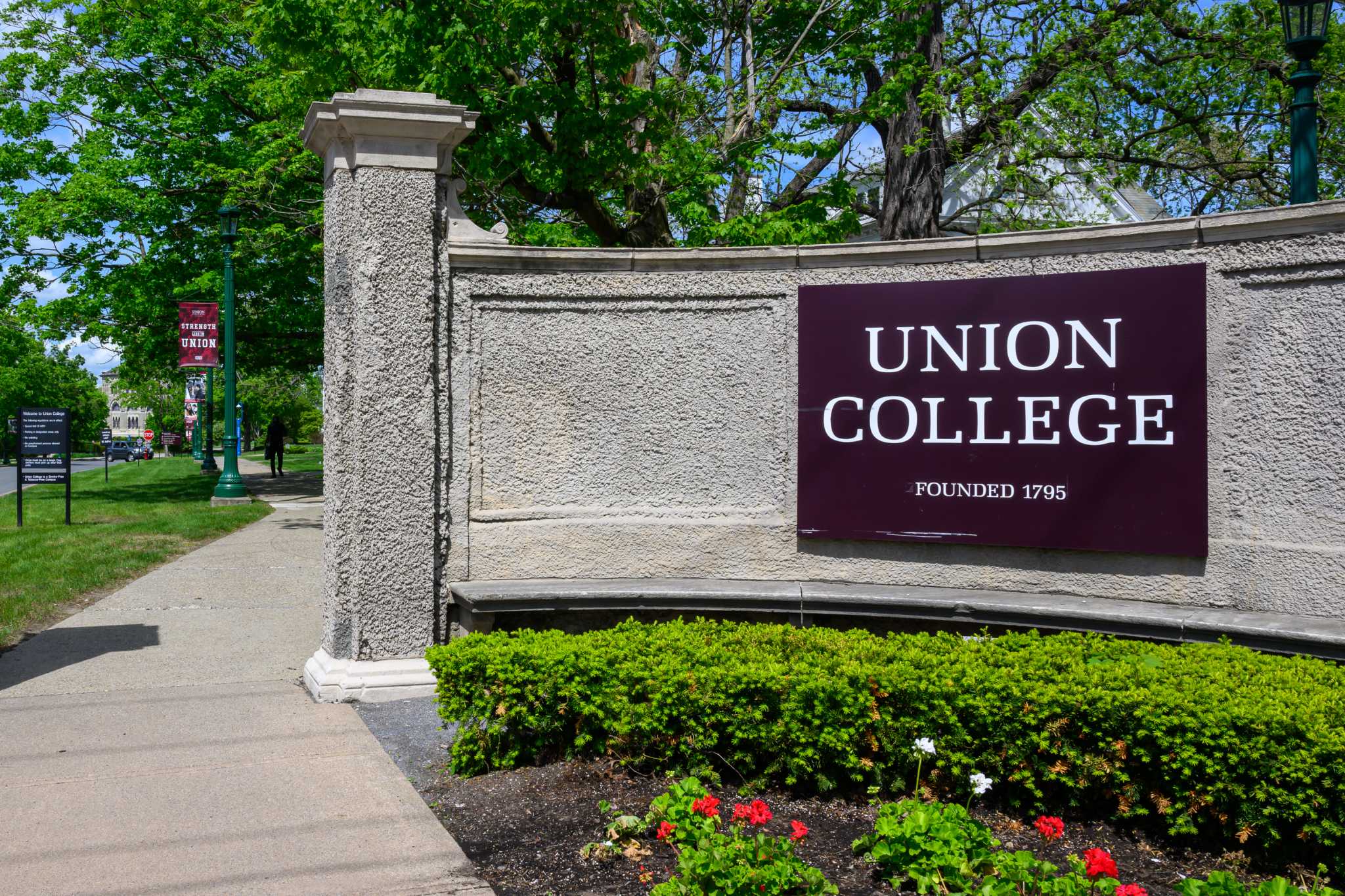
A historic Schenectady college will add a new major next semester amid a nationwide shortage of public health workers
Union College announced on July 29 it will begin offering a Bachelor of Arts in public health this fall, aiming to train students for the growing healthcare field. Brian Cohen, a senior lecturer in biological sciences and co-director of the school’s biochemistry program, will serve as the initial director of the major. He expects the program to start with 10-15 students and grow from there
Article continues below this ad
The program will integrate multiple fields of study to offer a diverse, interdisciplinary curriculum. Students will take 15 courses in social science, science, ethics, data analysis and research methods and further their practical study with an internship, according to a news release from the school
“For our students, studying public health gives them an important perspective on the field of medicine,” Cohen said in the release. “It is easy for them to get lost in the details of the science of health and lose sight of the fact that patients are more than what they see in the chart. This major will help them see how external factors and experiences can influence their patients’ health.”
A program that goes beyond just science
To gain a holistic understanding of health, the program casts a wide net, offering a variety of courses on the subject An elective environmental science class is one example of the comprehensive coursework, he noted
Article continues below this ad
Another practical class, data analysis, is mandatory. It was added to the course list based on feedback from Union alumni, who were asked what class they wish they had taken to prepare for the public health field
“Almost uniformly, they said, ‘We really wish we had a strong data analysis background,’ because being able to analyze large data sets is part of the field in order to get the big picture,” said Cohen, who helped design the curriculum with faculty members Kristin Fox, Michele Angrist and Cara Doyle
As a liberal arts college, the public health program also incorporates social sciences and humanities courses, which Cohen thinks makes the major unique
Article continues below this ad
“That’s a big part of who we are as a college, that we want our students to not just think about science, but to think about how humanities can apply to public health,” he said
Angrist, the school’s dean of faculty and vice president for academic affairs, said the “breadth of training” is the core value of the program
“Whether or not students ultimately work in the field, an interdisciplinary major equips students with critical high cognitive (skills) that employers value,” she told the Times Union. Those skills include learning how to think critically from a variety of perspectives; to take in, synthesize, interpret and communicate about both quantitative and qualitative data, she added
What is public health?
Public health focuses on improving community health by integrating scientific, social, political, economic and other approaches, according to the program website. While the medical field is centered on treating sick or injured individuals, the public health domain aims to lower health risks on a broader communitywide and societal level by studying certain factors such as epidemiology, patterns of disease and cancer clusters
Article continues below this ad
“The program we designed is really strong because it lets students explore different aspects of public health, and if they find something they really connect with, they can go deeper into it,” Cohen said
Growing demand for public health professionals
The college’s addition of the major follows the nationwide trend
“In recent years, public health programs nationally have experienced growing demand, in part likely a result of the COVID pandemic and young people’s experience of that period of time,” Angrist told the Times Union in an email. “Students today also are concerned to prepare for work that will make a positive social impact, which public health training certainly promises.”
Article continues below this ad
The number of U.S. institutions offering undergraduate public health degrees without graduate degrees has increased by more than 300% over the last two decades, according to a report by the University of Minnesota’s School of Public Health.
In the Capital Region, the state Department of Health’s new $1.7 billion public health laboratory, which collaborates with the University at Albany, is underway. UAlbany has also expanded its public health majors, adding a new health sciences college and two nursing degrees in the past few years
Experts predict a nationwide healthcare worker shortage over the next decade
Article continues below this ad
The shortage might intensify with President Trump’s immigration crackdown that terminated work authorization for Haitian and Syrian immigrants with temporary protected status. Many immigrants, including those with temporary protected status, work as caregivers, and home care agencies are losing workers due to their work permit termination. In New York, immigrants represent about 60% of the state’s direct care workforce, according to a 2024 survey by KFF, a health policy research organization.
According to the U.S. Bureau of Labor Statistics data cited in a Union College news release, about 1.9 million healthcare job openings are projected each year from 2024 to 2034. After earning an undergraduate public health degree, students can work in fields such as environmental health, infectious disease control and healthcare management, the press release noted. The degree could open doors in both public and private sectors; students can work as social workers, educators, researchers or policymakers, and employment opportunities will grow with a master’s or doctoral degree.
Public discussion of the labor shortage tends to focus on the lack of physicians and nurses, but Cohen thinks the demand for public health workers is also growing in New York state
“Speaking to some colleagues at the New York state Health Department, they said that they have so many unfilled positions,” he said
Article continues below this ad
He added those vacant positions don’t necessarily require candidates to have a master’s degree in public health, though many attend graduate school after earning an undergraduate degree. The state is looking for employees with a range of skills, from nutrition education to water testing to public policymaking, Cohen said
“Studying public health, because it’s what we call an interdisciplinary studies program, (students) will have a much broader view of the field, instead of just looking through one narrow lens,” he said. “And I think that’s probably one of the most important aspects of the program.”
