


How This Simple Workout Approach Could Also Keep Your Brain Sharp
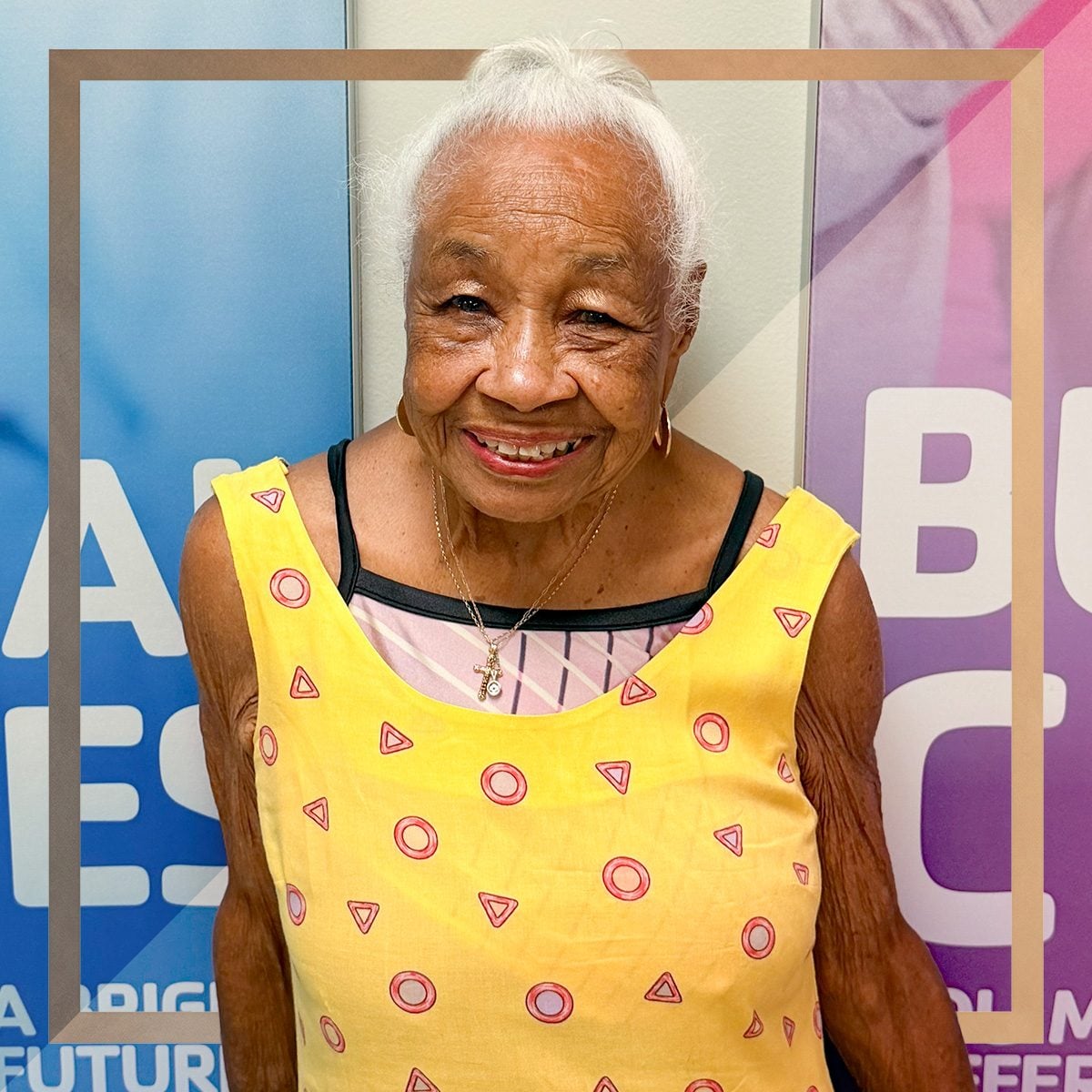
Connie Carr, 93, leads aqua fitness classes. But research suggests the type of brain exercise she does matters just as much for longevity
Highlights
|
The cult of Connie Carr
Popular fitness instructors can earn a cult-like fandom. People follow them for years, scheduling their whole day around a class. They line up 30 minutes early, and ask for advice on everything from heart rate zones to their troubled marriage
There’s something magnetic about someone who can make you sweat, cry, shake, swear, and laugh inside of 30 minutes—and then you want to thank them for the privilege. The second I met Connie Carr, I understood exactly why her thrice-weekly aqua fitness classes at the Butler-Gast YMCA in Omaha, Nebraska, are waitlisted
“Shake it, baby! SHAKE IT!” Connie says as she joyfully greets me with an adorable little shoulder-shimmy
She’s bubbly, funny, and whip-smart, and runs her pool like she’s conducting an orchestra. She counts, she cues, she holds the beat. She calls out anyone leaning too long on the wall (“You strengthen your muscles, don’t hang on there!”). She’s teaching, watching, correcting, and encouraging dozens of people at once
Oh, and did I mentionshe’s 93?
As a fellow fitness instructor (albeit half her age), I want her magic sauce: the thing that’s kept her coming back to her students, and them to her, for 34 years, three times a week. It’s a brutal job and instructors often burn out
So how has Connie not just survived it, but come out the other side incredibly healthy and, by her own account, astonishingly happy?
Do two things at once to keep your brain young
Connie will tell you it’s the water. And she’s not wrong—but watch her for five minutes and it’s clear the water is only half of it. While she moves through the same exercises as her class, she’s counting reps, timing the music, scanning dozens of people for who needs help, and even switching languages mid-set. (She’s learned to count to 20 in five languages, to make everyone in her classes feel welcome.) And she does all of that at the same time
Researchers have a name for this: dual-task training. This is when you complete two actions with different goals at once. This could include recalling how to count to 10 in Mandarin while demonstrating an aqua aerobics movement, or improvising a new set of moves while instructing the class to raise their arms nice and high
What the studies say
In a 2025 trial from the Frontiers in Aging Neuroscience, researchers point out that, “the ability to manage tasks requiring both attentional control and motor-cognitive functions declines with age.” Meaning: It’s increasingly difficult to be coordinated and think clearly at the same time. They set up an experiment to see if dual-task training could help
The trial split 72 adults into two groups: one completing dual-task exercises and the other taking a health education class to improve “cognitive frailty” for 16 weeks. Both groups took tests before and after to assess their cognitive health. The group who only took classes showed no improvements or declines. But the group doing dual-task exercises scored significantly higher on their cognitive assessments after the 16 week program
A second trial, published in Age and Ageing in 2026, followed 300 older adults for 18 months. They found that similar dual-task training improved reaction time and attention within six months, with gains in visual learning and working memory still showing a year later
Want to boost your cognitive health? Do something that is both physically and mentally challenging at the same time. It doesn’t have to be solving algebraic equations while biking (although you do you, if that’s your thing) but a fun activity, like dancing, where you have to memorize choreography incorporates both aspects. And it also helps with creativity; there’s a reason people often get their best ideas on a run
Connie discovered this on her own, by accident, the day she agreed to teach her first class. Her version, with counting, cueing, watching, translating, and demonstrating—is a demanding parallel to the dual-task model researchers are testing in the real world now
How a wrong diagnosis led to the right path
Connie’s path to the gym wasn’t a fitness plan. It was a rescue. As a teenager in Omaha, her entire right side was paralyzed for months. It was the height of the polio epidemic in America, so as she lay in the hospital, everyone assumed it was polio. But it wasn’t. It was rheumatoid arthritis, a diagnosis in the 1940s that came with far fewer options than it does now
With the help of her mother and doctors, she was able to regain some function. But it wasn’t until a few years later, when she was working as an elevator operator downtown, that the real breakthrough came. She watched people in the pool at the Omaha Athletic Club and noticed something. The water let their bodies move in ways gravity on land wouldn’t allow, protecting joints while still building strength. Connie immediately recognized and practiced the principles behind water aerobics, decades before the secret was out and classes became popular across the U.S.
So she found herself a pool. Eventually, her disease went into remission. It also allowed her to get married and have two beautiful children
Leading others by example
Her fitness career didn’t start until 1989, the year she lost her husband, Lacey, at 56. She tells me, “I felt I needed to have something to do to be involved.” So just like the gym had healed her body decades earlier, she returned to the Y to find healing
She had become close friends with one of her fitness instructors over the years, who saw a natural talent in Connie. The friend encouraged her to try teaching, and it was love at first rep. Her excitement was infectious. People loved her class (and her!) so much that eventually her classes outgrew the building. And when construction closed her longtime branch, her students didn’t scatter—they followed her across town and brought friends
“It’s just a miracle that I have such a huge class,” she told me, still sounding surprised by it
She shouldn’t be. Her classes are filled with people from all walks of life who see her as a “If a 90-something-year-old can do this, so can I.”
A well-rounded life equals happiness
But don’t mistake Connie for just a gym rat. Outside the pool, she bowls, gardens, paints, and serves as corresponding secretary for her college sorority, keeping all those women connected to each other over decades. Unpaid service, like her volunteer work with the sorority, is linked to slower biological aging, especially among people who are otherwise retired
She also likes to see the world and has an adventurous spirit. To celebrate her 90th birthday, she and her daughter spent two weeks retracing her great-grandfather’s path to Palermo, Italy, walking most of it. She even made time for an audience with the Pope!
When I ask what makes her so happy, she mentions her classes, friends, and hobbies before pausing and adding with a slight note of surprise in her voice, “I haven’t got time to be sad! I never have.”

The Healthy is producing “The 100 Years Strong Project” in partnership with the YMCA of the USA to celebrate their 175th anniversary and amplify the voices of remarkable men and women sharing their secrets to longer and healthier lives. To learn more about the Y’s history, mission, or 175th anniversary, click here
