


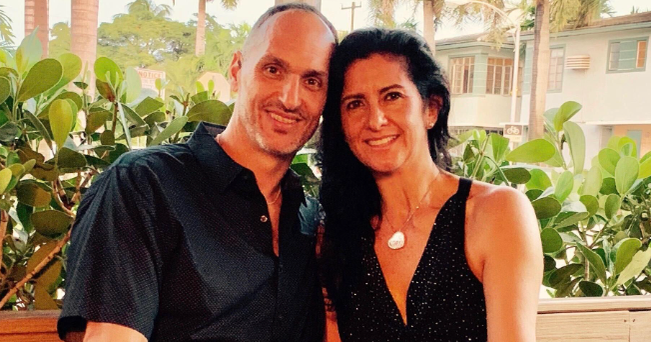
Todd Meiklejohn’s day was off to a normal, albeit early, start on Aug. 8, 2025. The teacher, who works in adult education, had risen around 6 a.m. to attend an early morning meeting. His wife, a nurse, had already left to go to the gym. He was going through the steps of his morning routine when he felt a sudden, squeezing pain.
From there, his memory is blurry. He could only see out of one eye. He couldn’t move his right side. He said he remained conscious but had no idea what was happening.
“I must have exited the bathroom. I went down on the wall, and I just remember the paralysis on my right side,” Meiklejohn said.
Meiklejohn tried to stand, but couldn’t. For the accomplished athlete and biker, he said the weakness was terrifying.
“I just kept falling,” he said. “I just didn’t have enough strength.”
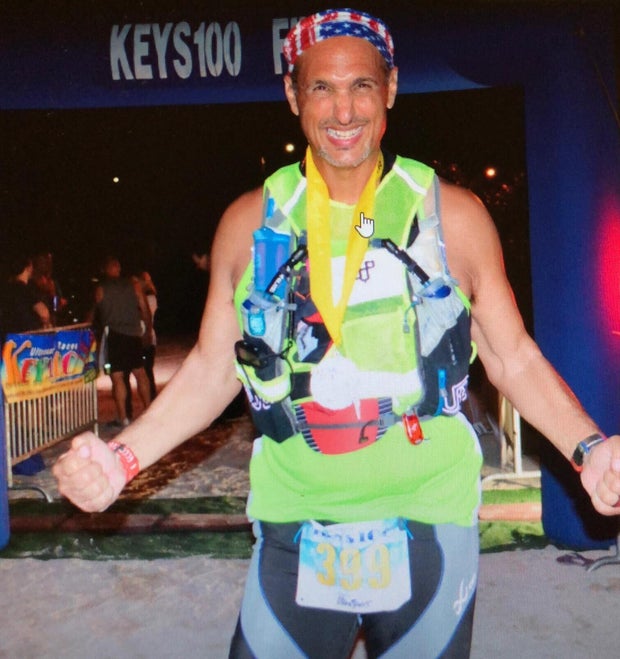
Todd Meiklejohn
“One of the lucky patients”
About 45 minutes after Meiklejohn fell, his wife came home on her way to work and found him on the ground. She called 911 immediately. He was rushed to Miami Neuroscience Institute at Baptist Health, where doctors determined he was having a massive stroke.
When it comes to strokes, “time is brain,” the interventional neuroradiologist who treated Meiklejohn. A stroke occurs when blood flow to the brain is stopped or interrupted, depriving it of oxygen. That lack of oxygen causes brain matter to begin to die. The faster blood flow is restored, the fewer lasting issues a stroke patient will have.
The decision was made to perform a mechanical thrombectomy, where a catheter is used to remove a clot. Dabus said removing a clot allows blood to flow normally again and “basically almost resuscitates” the brain.
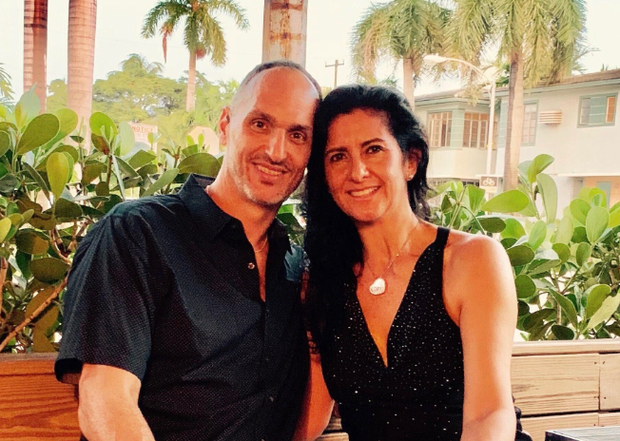
Todd Meiklejohn
Meiklejohn underwent the surgery just 38 minutes after his wife called 911. Because Meiklejohn had been taken into surgery so quickly, he had very little permanent damage, Dabus said.
Meiklejohn was able to speak and move the right side of his body again shortly after his surgery. He was discharged from the hospital less than 48 hours after his stroke. Dabus called the recovery “amazing.”
“I remember (Dr.) Dabus coming in and saying ‘You’re a miracle,'” Meiklejohn said. “I’m one of the lucky patients to say I’m blessed, that I was able to walk out and tell this story.”
A heart defect sent a blood clot to the brain
Once the immediate crisis had been resolved, it was time to figure out how Meiklejohn had had such a severe stroke. He was in his mid-50s, and extremely fit. He had “been very blessed health-wise up until that moment,” and rarely had as much as a cold.
First, Dabus and other doctors thought Meiklejohn had a blood clot that traveled from his leg to his brain. Tests and Meiklejohn’s health history ruled that out. Then they began to consider his cardiac health.
Soon, scans uncovered that Meiklejohn had a heart defect called PFO, or patent foramen ovale, a small opening between the upper chambers of the heart that typically seals shortly after a person is born. When it doesn’t seal, a person is left with a small gap, but the condition is typically harmless, according to Dr. Eihab Ghantous, a cardiologist at NYU Langone’s Adult Congenital Heart Disease Program. Between 20 and 30% of adults have PFOs, and the vast majority “live a long life without having to do anything about it,” Ghantous said.
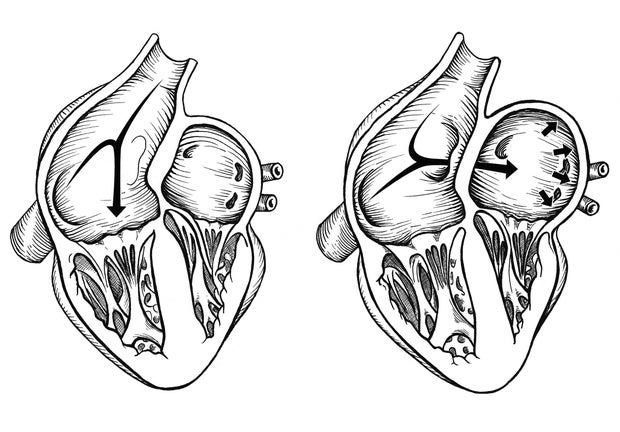
Enid Hajderi/Stocktrek Images
But in extremely rare cases, the existence of the gap can make it easier for a clot to travel to the brain, Ghantous said. It’s normal for people to develop small blood clots in their lower extremities in the course of daily life. Those clots typically go to the lungs, where they are dissolved. But sometimes, a clot can travel through the PFO and cause a stroke. This is so unusual that doctors only consider it when everything else has been ruled out, Ghantous said.
Dabus determined that was indeed what had happened to Meiklejohn. He said the clot had been “almost ejected out” of the heart to travel to Meiklejohn’s brain.
“Until it happens to you, you have no idea”
Once the PFO was discovered, Meiklejohn underwent a minor procedure to close it. Dabus said that the procedure was a success, and that the chances of Meiklejohn having another stroke are “very, very small.”
In the year since his stroke, Meiklejohn has focused on his recovery, including rebuilding his endurance and muscle tone. He was able to return to work four weeks after his surgery. Two months after the stroke, he finished a 100-mile bike ride
Meiklejohn still has scars on his legs from the injuries he sustained during his stroke, and he carefully monitors his blood pressure and heart rate to ensure nothing looks abnormal. Sometimes, he said, it’s hard not to think of how different things could have been, especially if his wife hadn’t returned when she did.
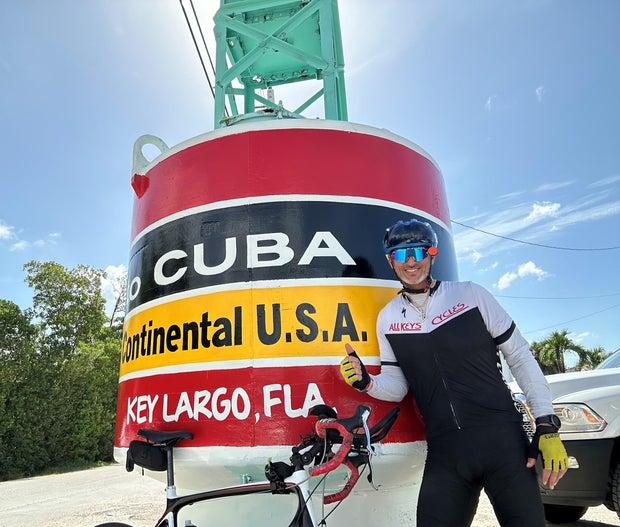
Todd Meiklejohn
“Thank God, she came back,” Meiklejohn said.
Meiklejohn said he wants to raise awareness for stroke treatment and make sure potential patients understand how a fast reaction can make a difference.
“One thing I learned is that, a lot of people are affected, or their mother, father, sister, brother,” Meiklejohn said. “But until it happens to you, you have no idea.”
