




Exercise has a reputation as a body project. Rio Wilson, a counselor with a Master’s in Counseling from Northwestern University, works from a different starting point. She told me, “We tend to think of exercise as something we do for our bodies, but some of its most powerful effects are happening in the brain.”
The distinction matters for timing. Brain effects show up on a much faster clock than the physical changes people usually watch for, which means a workout can be doing its most useful work on a day when nothing visible has happened yet. I talked to Wilson about what movement does to the brain, on what timeline, and how much of it is actually required
About our expert: Rio Wilson is a Northwestern University-trained counselor and the founder of Brain-Body Therapy, a mental health app that pairs targeted exercise with therapeutic guidance for specific emotional health goals
What actually happens in your brain when you exercise

“Exercise affects brain chemicals involved in how we feel and function, including dopamine, which plays a role in motivation and reward; norepinephrine, which supports alertness and attention; and serotonin, which helps regulate mood. Movement also influences glutamate and GABA, two neurotransmitters involved in how the brain communicates and regulates itself. So that clearer, calmer, or more energized feeling after a workout isn’t just in your head; there are real biological changes happening,” Wilson explained.
Advertisement
That list lines up with what researchers have documented for years. A review in Brain Plasticity catalogs the neurochemical and neurophysiological shifts that follow a single bout of physical activity, from prefrontal cortex activity to widespread changes in brain wave patterns. The prefrontal cortex is the region most commonly reported to improve, with exercise-linked gains showing up in attention and other executive functions
Wilson continued, “Exercise increases blood flow, releases physical tension, affects our stress response, and influences the systems that shape our mood, focus, and motivation. And the best part is that you don’t have to be a runner or spend hours in a gym to benefit; even something as simple as a daily walk can do something meaningful for your brain.”
How fast a workout shows up in your mood
“The mood boost is usually what you notice first, but that’s largely because it’s something you can actually feel. Within about 10 to 15 minutes of moderate movement, many people begin to notice a shift in how they feel, and that effect can continue after the workout ends,” Wilson noted
She laid out the machinery underneath it. “There’s a lot happening behind the scenes: exercise influences dopamine, norepinephrine, and serotonin signaling, increases endocannabinoids such as anandamide, boosts blood flow to the brain, and can help dial down the brain’s stress response. Even a brisk 20-minute walk can be enough to improve how you feel in the moment.”
Advertisement
“Physical benefits are happening early, too, but they’re less obvious; you probably won’t notice changes in blood pressure or insulin sensitivity the way you notice feeling calmer or more energized. Those benefits build with consistency, and over weeks and months, regular movement can lead to meaningful improvements in cardiovascular fitness, strength, muscle, and overall physical health,” Wilson added
Exercise and antidepressants don’t take the same route
“There is some overlap in the brain systems involved, but exercise and antidepressants get there in very different ways. SSRIs, for example, work by changing how serotonin is handled in the brain, and while that process begins relatively quickly, improvements in mood can take weeks as the brain gradually adapts. Exercise affects serotonin too, but it also works through pathways a medication may not directly target,” Wilson shared
One of those pathways runs through your muscles. “Contracting muscles help convert kynurenine, a compound associated with stress and inflammation, into a form that is less able to enter the brain. Exercise also increases signals such as BDNF that support the brain’s ability to adapt and form new connections, while helping regulate inflammation and other systems linked to depression.”
That muscle-to-brain conversation was mapped in a landmark study published in Cell. Researchers described how exercise training alters kynurenine metabolism in skeletal muscle, converting kynurenine into a metabolite that can’t cross the blood-brain barrier, and how lowering plasma kynurenine protected animals from stress-induced changes tied to depression
Advertisement
The clinical evidence has kept pace. A network meta-analysis in The BMJ pulled together hundreds of randomized trials on the question. Across 218 studies and more than 14,000 participants, walking or jogging, yoga, and strength training outperformed other exercise types, with effects proportional to the intensity prescribed, and the authors concluded these forms could be considered alongside psychotherapy and antidepressants as core treatments for depression.
Wilson was emphatic about the boundary here. “That doesn’t mean exercise should replace medication. Research supports exercise as a meaningful tool for depression, including alongside other treatments, but anyone taking an antidepressant should talk with their doctor before making changes to their treatment. The exciting part is that movement gives us another way to influence the brain, and its effects go far beyond simply boosting serotonin.”
Does the type of exercise matter for brain benefits?
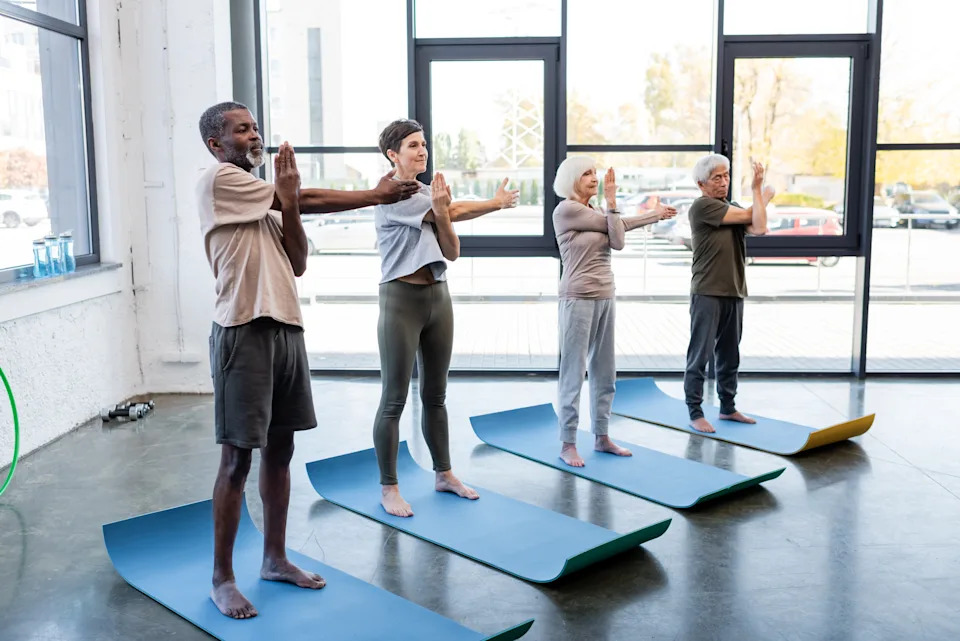
“The type of exercise does matter because different forms of movement can support the brain in different ways. Mind-body practices like yoga and Tai Chi can be especially helpful for attention, stress regulation, and the connection between what we’re thinking and what we’re feeling physically, while aerobic exercise like walking, running, or swimming has been linked to benefits for memory, learning, and mood. Intensity matters, too, but harder isn’t always better; the best movement depends on what you’re trying to support,” Wilson said.
How much exercise you actually need
“It’s probably less than people assume, and I think that’s an important message because exercise can feel like one more thing we’re told we’re not doing enough of,” Wilson pointed out
Advertisement
“What matters is moving consistently and with purpose. Different types, intensities, and durations of exercise can support the brain in different ways, which is why our programs use everything from walking and yoga to strength training and more challenging cardio depending on the mental health goal.”
The federal benchmark gives you a target without demanding heroics. The Physical Activity Guidelines for Americans set the bar at 150 to 300 minutes a week of moderate-intensity activity, or 75 to 150 minutes of vigorous-intensity activity, or a mix of both. According to the American Psychiatric Association, short bouts such as three 10-minute walks a day can deliver mental health benefits comparable to one longer session, and weekend-only activity beats doing nothing at all.
She added, “You don’t have to become a ‘fitness person’ to use movement for your brain. The goal is to find the right kind of movement, do enough to create a meaningful response, and make it something you can actually keep doing. That consistency is where the benefits can really begin to build.”
One workout helps, but consistency builds something bigger

“The benefits are both immediate and cumulative. When you exercise, your brain increases BDNF, a protein I like to think of as fertilizer for the brain because it helps support the growth, health, and connection of brain cells,” Wilson described. “But when you exercise consistently, something even more important happens: your brain begins to adapt. Over time, regular movement can support new blood vessels, strengthen connections between brain cells, and even contribute to structural changes in areas involved in memory and learning.”
Advertisement
A randomized controlled trial published in PNAS captured exactly that kind of structural change. In 120 older adults, aerobic exercise training enlarged the anterior hippocampus by 2 percent, effectively rolling back one to two years of age-related shrinkage, and the volume increase tracked with higher blood levels of BDNF
Wilson offered a metaphor for it. “I think of it almost like making deposits into a bank account. Every time you move, you’re making another deposit toward your brain health. You get to enjoy some of the benefits that day, but with consistency, you’re also building something that can benefit you weeks, months, and even years from now.”
Why you feel calmer and sharper when nothing looks different
“Because some of the most important changes from exercise are happening long before you can see them. You may finish a workout looking exactly the same as when you started, but your brain can already be functioning differently. Movement increases blood flow and oxygen to the brain, influences chemicals involved in mood, attention and motivation, and helps regulate the body’s stress response. It can also give all of that nervous energy we carry around somewhere to go, which is why people often describe feeling calmer, clearer, or more focused afterward,” Wilson said.
Then came the critique of how we’ve all been taught to grade a workout. “I think this is where we’ve gotten exercise wrong for so long; we’ve been taught to judge whether it’s ‘working’ by what we see in the mirror, when some of the most immediate and meaningful benefits are actually the ones we feel.”
Exercise and dementia risk: what the research shows

“There is a real connection between regular exercise and long-term brain health. According to the Alzheimer’s Society, research suggests that people who exercise regularly may be up to 20% less likely to develop dementia than those who don’t,” Wilson stated
Advertisement
That figure comes straight from the Alzheimer’s Society, which drew it from an analysis combining 58 separate studies on exercise and dementia, and notes that the single biggest impact comes from going from inactive to doing some amount of exercise at all.
Newer work suggests the entry point may be lower than most people imagine. Researchers at the Johns Hopkins Bloomberg School of Public Health found that as little as 35 minutes of moderate to vigorous activity per week, compared with none, was associated with a 41 percent lower dementia risk over roughly four years of follow-up, including among frail older adults
Wilson added, “And it doesn’t have to mean intense workouts. Activities like brisk walking, swimming, playing tennis, or even dancing can all count. What I love about this is that movement isn’t only helping your brain feel better today; it may also be one of the ways we can invest in protecting our cognitive health as we age. The way we move our bodies now can have an impact on how we want our brains to function years from now.”
Can exercise sharpen your focus the same day?
“Improvements in focus, attention, and decision-making can happen the same day, often shortly after you exercise. The cognitive benefits of movement tend to follow a timeline much closer to the mood boost than the physical changes we associate with getting stronger or improving cardiovascular fitness,” Wilson said
Advertisement
“But just like those physical benefits, there’s also a cumulative effect. When exercise becomes a regular part of your life, those individual boosts begin to add up, and over weeks and months, consistent movement can support longer-term improvements in areas like memory, attention, concentration, and overall cognitive function.”
The Physical Activity Guidelines for Americans from the U.S. Centers for Disease Control and Prevention makes a similar case for treating movement as cognitive maintenance, noting that exercise can help preserve and improve cognitive function while helping fend off dementia, stroke, depression and anxiety.
Why exercise works so well on anxiety and stress

“I think exercise is especially powerful for anxiety and stress because it works on both the mind and the body at the same time. Anxiety isn’t just a thought; it can show up as a racing heart, tense muscles, restlessness, shallow breathing, or that feeling that you simply can’t shut your brain off,” Wilson observed
“Movement gives some of that built-up physical energy somewhere to go while also changing what’s happening in the brain. It can help regulate the stress response, reduce muscle tension, and influence the brain chemicals involved in mood and emotional regulation.”
Advertisement
Writing for Harvard Health Publishing, Harvard Medical School psychiatrist John J. Ratey lays out a nearly identical two-front mechanism. Moving your body lowers muscle tension and reduces the body’s contribution to anxious feelings, while raising your heart rate shifts brain chemistry toward anti-anxiety neurochemicals including serotonin, GABA, BDNF, and endocannabinoids, and exercise engages frontal brain regions that help keep the amygdala in check. Harvard’s guidance on the stress response adds that a brisk walk taken soon after a stressful moment both deepens breathing and eases muscle tension.
Wilson added, “There’s also something really empowering about using your body to change how you feel rather than waiting to feel better before you move. Other healthy habits absolutely matter, but exercise is unique because it can meet stress in both our brain and our body.”
Is the runner’s high real?

“During sustained aerobic exercise, the body increases endocannabinoids, including anandamide, which can cross into the brain and are associated with feelings of calm, reduced anxiety, and even decreased perception of pain. Exercise also changes activity in areas of the brain involved in stress and emotional regulation, which helps explain why someone can finish a run feeling noticeably different than when they started,” Wilson said
A systematic review in The Neuroscientist explains that endocannabinoids are fat-soluble and pass through the blood-brain barrier easily, which makes them stronger candidates than endorphins for producing the runner’s high. The same review reports that moderate-intensity running triggers endocannabinoid release far more strongly than low-intensity walking
Advertisement
“So that relaxed, clear, sometimes euphoric feeling runners describe isn’t just a myth or the satisfaction of finishing a workout. There are measurable biological changes behind it, and you don’t necessarily have to be a runner to experience them,” Wilson clarified
Your workout still counts if your body never changes
“The value of exercise should be measured against the reason you’re doing it, and that looks different for everyone. Someone who enjoys CrossFit may have completely different goals than someone who loves Pilates, just as someone exercising for their mental health may not care whether their body visibly changes at all,” Wilson said
“If movement helps you manage stress, think more clearly, sleep better, regulate your mood, or simply feel more like yourself, those are real benefits even if the number on the scale never moves and your body looks exactly the same. We’ve become so accustomed to judging exercise only by what we can see on the outside, but movement is doing far more internally than a mirror can show. If your goal is to support your brain and mental health, then feeling and functioning better is progress.”
The most surprising thing about exercise and the brain
“I think the most surprising thing is that your brain starts benefiting long before your body ever changes. We’ve been taught to think of exercise as something that helps us lose weight, build muscle, or improve our appearance, so many people give up when they don’t see those results quickly,” Wilson said
Wilson concluded, “Your brain doesn’t wait weeks to respond. From your very first workout, you’re changing blood flow, influencing brain chemicals involved in mood and motivation, supporting learning and memory, and helping regulate your stress response. In other words, your workout is working even when you can’t see it. Sometimes the most meaningful result of a workout isn’t a change in how you look, but a change in how you feel, think, and move through your day.”
Thank you for reading. I invite you to follow me on Yahoo for more health and wellness reporting
More about our expert:

Rio Wilson is the founder of Brain-Body Therapy, a mental health app that pairs targeted exercise with therapeutic guidance to support emotional well-being. Her path to building it was personal before it was professional. After a series of traumatic events left her contending with anxiety, depression, and C-PTSD, and as a single mother who couldn’t afford therapy at the time, she turned to the one resource within reach: movement. The improvements she noticed in her mood, focus, and resilience sent her back to school. She earned a Bachelor’s degree in Business Administration from Nova Southeastern University and a Master’s in Counseling from Northwestern University, immersing herself in mind-body research along the way and finding an evidence base she felt was strikingly underused in traditional care. She began seeing clients under supervision during graduate school and continued that clinical work for two years. In 2023, after relocating to Florida, she committed to Brain-Body Therapy full time. Each workout plan on the platform is tailored to a specific diagnosis, on the premise that what helps someone with anxiety may not be what helps someone with depression, and every session is paired with a brief counseling dialogue. Wilson also serves as a board member with the St. Louis Fashion Fund. She lives with her husband Rob, daughter Carlin, bonus daughter Hailey, and two French Bulldogs, Biggie and Louie.
Please note: We love sharing what the research says, and we hope this gives you something useful to think about. That said, this article is for general information only and isn’t a substitute for personalized medical or mental health care. Please talk with your doctor or a licensed mental health professional before starting a new exercise routine, and especially before making any changes to prescribed medication. If you’re struggling right now, you don’t have to sort it out alone. In the U.S., you can call or text 988 to reach the Suicide and Crisis Lifeline any time, day or night.
Robin Raven Creator
Robin Raven is a journalist who covers travel, entertainment, health, wellness and more. You can often find her writing songs, flying somewhere she’s never been, reading and listening to Taylor Swift.
Creators are not employed by Yahoo. Views expressed by creators do not reflect the opinions and position of Yahoo.Learn how to become a creator.
