


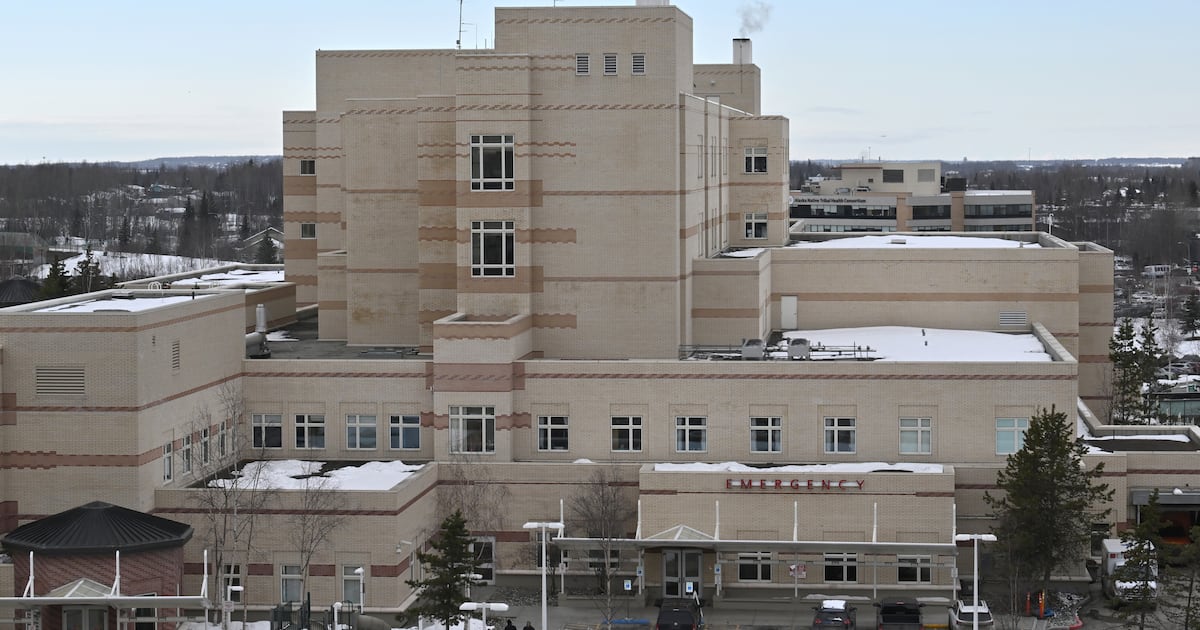
A new partnership between the University of Alaska Anchorage and the Alaska Native Tribal Health Consortium will allow healthcare students to complete their clinical rotations at local ANTHC facilities
The agreement signed by officials with the university and ANTHC on Monday creates a pipeline for UAA students to learn at Alaska Native Medical Center facilities down the street, and potentially get hired there after graduation
Al Montoya, chief operating officer for ANTHC, said partnerships with academic institutions are instrumental for health systems
“Our shared goal is not simply to fill positions, it is to develop a sustainable local workforce that delivers compassionate, culturally relevant care and supports the long term health of Alaska Native and American Indian people and communities,” Montoya told reporters Monday
Students studying healthcare at UAA previously needed approval to do some clinical rotations with ANTHC, but those were approved on a case-by-case basis
Dr. Jay Butler, dean of the College of Health at UAA, said the partnership will keep local students from leaving the state for clinical rotations at medical centers in the Lower 48
“It increases the opportunities for clinical experience in Alaska,” Butler said. “The most exciting thing is that we can have more students completing their training right here in the U-Med District.”
Butler, who has previous experience as the state’s chief medical officer and senior director for community health services for ANTHC, said Alaska hospitals often rely on traveling providers, who typically earn higher wages because they are available when healthcare providers need to hire qualified staff quickly. Butler — also the former deputy director for infectious diseases with the federal Centers for Disease Control and Prevention — said an influx of local healthcare workers would bring down the cost of providing care.
“That really adds to the cost of healthcare,” Butler said. “So being able to begin meeting that need as soon as possible, I think is going to be a driver to help bring the healthcare costs down.”
Expanded training opportunities include the recently completed ANTHC operatorysuite at Sally Monserud Hall on the UAA campus where students can simulate medical procedures. After training on simulations, students seeking medical degrees do clinical rotations at hospitals to get experience interacting with real patients
Work will be complete on a $462 million tower addition to the Alaska Native Medical Center in late 2028. Montoya said once that’s complete, the medical center will house the state’s largest emergency department and become the largest employer in Anchorage, with a need for 400 additional workers. Students can receive a wide variety of on-the-job training in the hospital’s various departments, Montoya said
“Whatever their preference is, they’ll be able to partake in that,” Montoya said. “If I can get an Alaska Native student to want to be a certified nursing assistant, and if I can get them into a UAA program or a UAF program, pay for them to be in there, graduate them and guarantee them a job, that is a pretty good outlook.”
Officials with the university and ANTHC said they anticipate expanding training opportunities to students at the other University of Alaska campuses in the future
The agreement extends training for students seeking degrees outside of the healthcare field. Montoya said students in fields such as marketing, finance, culinary science and others may also have training opportunities. Montoya used the example of engineering students who could learn at one of ANTHC’s many clean water projects in rural Alaska
“Most healthcare systems don’t employ 300 engineering staff, but it’s our responsibility to help deliver that to the villages that need it the most, and so that’s where we’re really taking this partnership,” Montoya said
A report last year by the Alaska Hospital and Healthcare Association said Alaska needs 9,400 new healthcare workers every year. Montoya hopes the partnership between UAA and ANTHC creates a flow of new healthcare workers to fill roles at hospitals and medical facilities across the state
“This is an investment in the Alaska Native people,” Montoya said
