


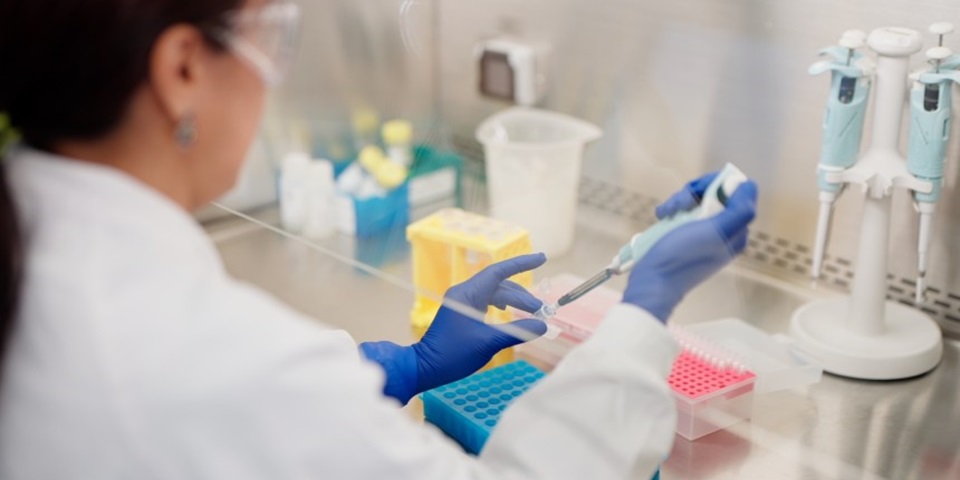
National facility to deliver life-changing medical treatments and research
A national facility to improve patients’ access to life-changing drugs and supercharge the development of biomedical innovations is being established at Murdoch University
With support from the Federal Government’s Medical Research Future Fund (MRFF) and research and industry partners, the Personalised Medicine Centre (PMC) will lead a national effort to accelerate development of cutting-edge antisense oligonucleotides (ASOs)
ASOs are small genetic ‘patches’ that modify how a gene is expressed. They have special importance for rare genetic diseases, which impact millions of people globally, as one of only a handful of potential treatments
The PMC, a joint research centre with the Perron Institute, will substantially scale up its capacity over the next four years to become the national facility for the development of ASOs, backed by a $3.99 million MRFF National Critical Research Infrastructure grant
Dr May Aung-Htut, co-lead of the Molecular Therapy Group at the PMC, said the facility will put Australia at the forefront of biomedical innovation and help find new treatments for diseases
“We want to accelerate the use and availability of ASO therapeutics for genetic and acquired chronic diseases, including bespoke ASOs for rare diseases, to help more people access life-changing treatments,” Dr Aung-Htut said
“At the Personalised Medicine Centre, we have seen first-hand the difference ASOs can make to patients, and we are grateful to the Federal Government and our other partners for supporting us to deliver a national facility.”
PMC Deputy Director Steve Wilton AO and Murdoch University Emeritus Professor Sue Fletcher AO were early pioneers of ASO therapeutics, successfully developing three new treatments for Duchenne muscular dystrophy
Professor Wilton, co-lead of the Molecular Therapy Group at the PMC, said with over three decades of experience, the PMC was ideally positioned to lead a nationwide effort to expand the use of ASO therapeutics to a broader range of diseases
“The PMC has already modulated gene expression for hundreds of diseases, but we know there is more we can do to harness the full potential of this technology,” Professor Wilton said
“With the help of our partners, we want to improve equity of access for patients to treatments for diseases which currently have limited or no treatment options.”
Dr Gareth Baynam, Medical Director, Rare Care Centre said:
“From 0 to 1. Most rare diseases do not have a treatment, this is the tragic situation for the 63,000 children living with the collectively common rare disease in Western Australia, and hundreds of millions of children globally
“We must go from Mila to Millions. Mila was the first child to receive an individualised medicine specifically for the genetic change that caused her rare disease. That treatment was a gene patch, called and Antisense Oligonucleotides
“This new WA-lead national infrastructure is specifically to help unlock the power of the gene patches. This is a giant step forward in the research underpinning the Rare Disease Moonshot. A step on the journey to address a global grand child health challenge.
“We must remember also that there are many other steps required and much to be done to turn discovery and manufacturing into equitable access for the children of our planet that desperately need our help.”
Clinicians and researchers are invited to request help from the PMC,evelopment
Educational and outreach programs will be established to boost awareness about ASOs among healthcare professionals, families, policymakers, and special interest advocacy groups, along with a Consumer Advisory Group that includes people with lived experience
Located at Murdoch University’s Perth campus, the PMC is a joint research centre with the Perron Institute focused on the development of innovative medical treatments
The PMC acknowledges and thanks the following partner organisations:
- Australian Federal Government
- Murdoch Children’s Research Institute
- The Kids Research Institute of Australia (CI Fear)
- The Rare Care Centre (CI Baynam)
- Curtin University (CI Dwyer)
- Murdoch Children Research Institute (CI White)
- Genetic Health Queensland (CI Rodgers)
- University of Sydney (CI Gold)
- OMIX3 (University of Melbourne, CI Stroud)
- Pawsey Supercomputing Research Centre
- Proteomics International (University of Western Australia)
- Therapeutic Innovation Australia
- DUG Technology
- SynGenis
- Western Australian Health Translation Network CCI program
- Rare Voices Australia
- Dr Tim Yu at Boston Children’s Hospital.
News
National facility to deliver life-changing medical treatments and research
Posted on
Monday 17 August 2026
Topics
Community and Partnerships, General, Health, Research, Science, Technology
