


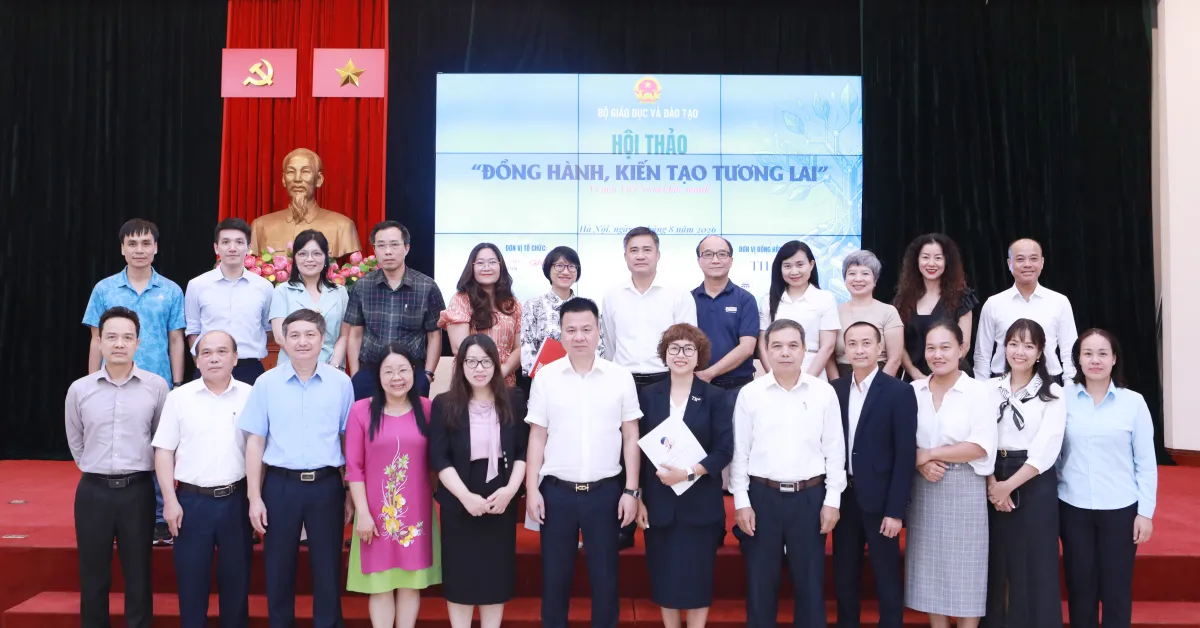
<img src="https://healthylife7.com/wp-content/uploads/2026/08/4H4A5112.webp” alt=”Delegates at the Workshop”>
17 August 2026
At a national workshop in Ha Noi on 11 August 2026, UNESCO shared international evidence and policy experience on school health and nutrition as Viet Nam begins implementing its School Health Programme for 2026–2035
Speaking at the workshop “Partnerships, Shaping the Future for a Healthy Viet Nam”, Jenelle Babb, Regional Advisor on Education for Health and Well-being at the UNESCO Regional Office in Bangkok and Office for UN Coordination in Asia and the Pacific, highlighted a central lesson from international experience: learners’ health, nutrition and well-being are closely linked to their ability to participate in and benefit from education
The workshop, organized by the Ministry of Education and Training, brought together government representatives, education stakeholders, experts and partners to discuss school health, nutrition, communication and the mobilization of reme
Health and learning are closely connected
Global evidence presented by UNESCO shows measurable links between school health interventions and education outcomes. School feeding programmes can increase enrolment by up to 9 per cent and attendance by up to 8 per cent. In low-income countries, handwashing infrastructure has been associated with reductions in student absenteeism of more than 61 per cent
- Jenelle Babb speaking at the Workshop. Photo: Education & Times Newspaper
- Mr. Hoang Duc Minh – Director of the Department of Students’ Affairs (Ministry of Education and Training). Photo: Education & Times Newspaper
1/
These programmes can also represent an efficient public investment. According to evidence presented at the workshop, school feeding can generate an estimated US$9 in returns for every US$1 invested, while school-based programmes addressing mental health may generate considerably higher long-term returns
A central theme of UNESCO’s presentation was the Health-Promoting Schools approach, developed and promoted internationally by WHO, UNESCO and UNICEF
A health-promoting school makes sustained efforts to create a safe and healthy environment for teaching, learning and working. In practice, this requires health and well-being to be incorporated into the way education systems and schools operate. This includes leadership, financing, curriculum and teaching methods, teacher preparation, school management and the measures used to assess institutional performance
UNESCO therefore highlighted the importance of a whole-school and whole-system approach. Under this model, what students learn in the classroom is reinforced through school policies, relationships, extracurricular activities, school leadership and cooperation with families and communities
Opportunities for Viet Nam
UNESCO identified several areas that could support Viet Nam as it moves from policy commitments towards implementation
One priority is to establish or strengthen intersectoral governance with clear roles and accountability. Babb also stressed that schools should not be treated simply as delivery points for isolated health interventions or as extensions of the health workforce. School health and nutrition programmes should support the core purpose of education and be designed in ways that strengthen teaching, learning and learner development

UNESCO supports recovery and resilience for schools in Viet Nam, with a focus on mental health. Photo: UNESCO
UNESCO also proposed considering how the Global Standards for Health-Promoting Schools could be adapted to the Vietnamese context, building on existing policies, programmes and institutional structures rather than creating parallel systems
Implementation capacity will be equally important. This includes education planners, provincial education officials, school leaders, teachers and other personnel responsible for translating policy into daily practice. International experience suggests that training alone is insufficient without practical tools, technical support, clear responsibilities and opportunities for peer learning
Financing and monitoring should also be planned from the outset. The experience of early adopter countries shows that national commitments are more likely to translate into sustained implementation when responsibilities, budgets, implementation tools and accountability mechanisms are established clearly
As Viet Nam begins implementing its School Health Programme for 2026–2035, the international evidence points towards a broader objective: embedding health and well-being within the education system so that every learner has the conditions to participate, learn and develop to their full potential
Related items
- Education
- Mobilize Education to Transform Lives
- Country page: Viet Nam
- Region: Asia and the Pacific
- UNESCO Office in Hanoi
- SDG: SDG 4 – Ensure inclusive and equitable quality education and promote lifelong learning opportunities for all
- See moreadd
This article is related to the United Nation’s Sustainable Development Goals
SDG 4 – Ensure inclusive and equitable quality education and promote lifelong learning opportunities for all
