


- Related
- health
- health care
- Lyme disease
- outdoors
- western NC
- research
By Grace Hayba, WRAL Health Reporter
North Carolina is facing an emerging threat from something so small, its bite can easily go unnoticed.
Newly publishedUNC-led research found the ticks that most commonly spread Lyme disease are gaining ground in North Carolina. Researchers found infection rates in western North Carolina comparable to those seen in parts of the Northeast historically associated with tickborne illness.
“If you were to do a similar study like this in New York or Pennsylvania, you might find 30% or 40% of the ticks are infected, but to see that here in western North Carolina is really striking,” said Dr. Ross Boyce, a UNC Health infectious diseases specialist and researcher with UNC School of Medicine
Boyce has been studying ticks in western North Carolina as the region has undergone what he describes as significant change over the past decade.
The latest research focused on Biltmore Forest, a residential community in Buncombe County just south of Asheville. Reports from people living there prompted Boyce’s team to investigate
Researchers identified 19 adults who reported having a tickborne illness while living in the community. Of those, 17 self-reported having Lyme disease.
“That’s really what sort of perked our ears up and started this whole process, was hearing from community members that they had been having some exposures and getting sick,” Boyce said.
From November 2024 through August 2025, researchers conducted tick surveillance at 25 residential properties in Biltmore Forest. They dragged pieces of cloth across vegetation, collected the ticks that attached, and then tested them for bacteria capable of causing disease in humans
373 ticks were collected. About 75% were blacklegged ticks, the primary species responsible for transmitting Lyme disease
Among the adult blacklegged ticks tested, 40% carried Borrelia burgdorferi, the bacteria that causes Lyme disease. Researchers also detected the bacteria in three of seven blacklegged tick nymphs tested
“We did this in a residential community. That’s actually representative of the risk that people more likely face, than if we had gone out into the middle of the national forest,” Boyce said. “Realizing that it can be this high risk within a community is really important.”
Boyce continued, “Especially for folks who live with some woods in the backyard, there’s deer, there’s small animals, and not as much of a clean divide between what we say is wildlife and yards in a way that maybe there used to be.”
The findings add to evidence that blacklegged ticks and the diseases they carry are expanding southward. Researchers described Biltmore Forest as potentially being near the leading edge of the southward expansion of northern blacklegged tick populations
Lyme disease was also not the only potential health risk researchers detected
The ticks tested positive for two additional disease-causing bacteria, including one associated with anaplasmosis and another that causes hard tick relapsing fever. They were found at much lower rates than the bacteria responsible for Lyme disease, but Boyce said CDC surveillance maps indicate the findings could represent the farthest south the two pathogens have been detected in ticks
“As much as we’re trying to raise awareness about people around Lyme disease, now we’ve suddenly got these other two tick-borne diseases that can cause important disease,” Boyce said. “Now they’re suddenly down here as well.”
The growing infectious disease threat warrants extra caution by people exploring the outdoors and physicians
“I did my medical school here in Chapel Hill, and the teaching at that point was there’s not much, if any, Lyme disease in North Carolina,” Boyce said. “What we’ve really been trying to do is sort of raise up the red flag and say hey, this is something you really need to pay attention to and be ready for.”
To reduce the risk of getting a tick, particularly when traveling in the Winston-Salem or Hickory areas of the state, Boyce recommends wearing a repellent such as DEET, doing frequent tick checks after being outdoors, and keeping grass mowed short.
“Lyme disease, unlike some of the other tickborne illness diseases, it does take the tick a while to actually transmit the bacteria to the person,” Boyce advised. “That’s where tick checks can make a difference.”
The physician shared that it takes around 24-36 hours for most infected ticks to transmit the bacteria to a human.
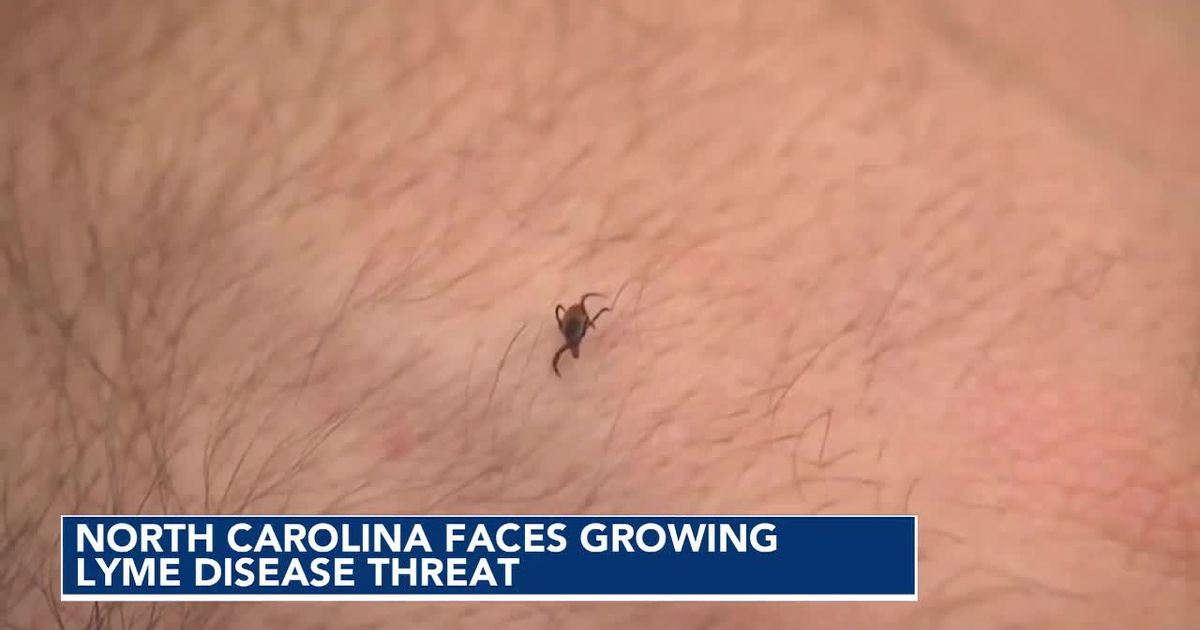
“If you find a tick pretty quick and get it off, you’re probably safe. The problem, especially in the spring, is the ticks are really small. They’re sesame seed size, and not as easy to find,” Boyce said.
Rising disease prevalence has prompted ten western North Carolina counties to now recommend a single dose of antibiotics within 72 hours of spotting a tick on you. Boyce said there has also been a greater push from veterinarians to have more animals receive vaccination to protect against Lyme disease
