


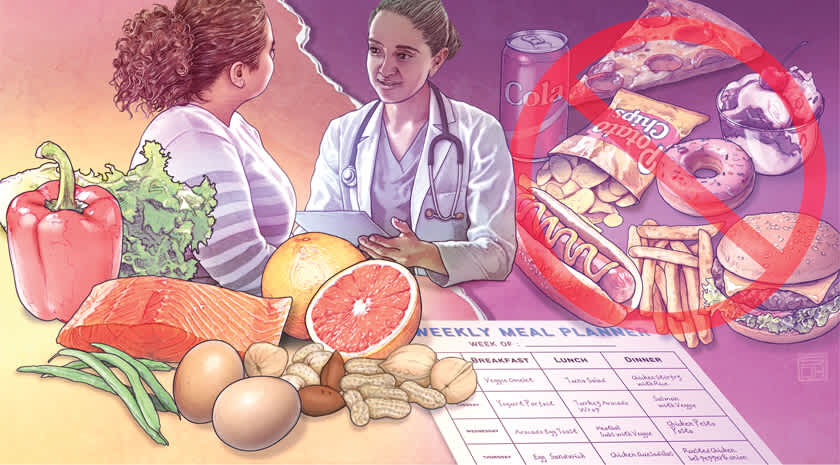
Many conditions that family physicians manage relate to diet, but connections between specific dietary intakes and health outcomes are often uncertain.1 Generally, controlled dietary <a href="https://healthylife7.com/jet-lag-could-be-prevented-through-cell-therapy-research-suggests/” title=”Jet lag could be prevented through cell therapy, research suggests”>research lacks blinding and has poor adherence. Many observational studies of diets face significant confounders and various exposure outliers that change over time
| Clinical recommendation | Evidence rating | Comments |
|---|---|---|
| Emphasize minimally processed plant-focused diets to reduce risk of chronic disease and mortality.4,5 | B | Consistent evidence from prospective cohort studies and meta-analyses showing associations with reduced all-cause and cardiovascular mortality |
| Counsel patients to reduce intake of ultra-processed food to improve cardiovascular health and weight management.11,12,17,19,20 | B | Small randomized controlled trials demonstrating changes in calorie intake and weight, as well as systematic reviews of observational data linking intake to chronic disease |
| Use culturally responsive dietary counseling that incorporates traditional food staples to improve adherence.21,22,24 | C | Expert consensus and narrative reviews |
| Refer patients with cardiovascular risk factors to moderate- or high-intensity dietary intervention (≥ 6 contact hours) programs with a registered dietitian nutritionist to reduce cardiovascular events and improve lipid levels and blood pressure.26 | B | US Preventive Services Task Force systematic review with moderate-quality evidence that interventions of ≥ 6 hours improved patient- and disease-oriented outcomes |
Family physicians can help patients by emphasizing three key themes for healthy eating: prioritizing whole foods that are primarily made from plants; limiting ultra-processed products; and promoting flexible, culturally adapted dietary patterns (Table 12). When patients need more in-depth education, collaboration with dietitians can improve outcomes
| Advice | Counseling tip | Example counseling prompts |
|---|---|---|
| Favor foods from plants and foods that are no more than minimally processed | Propose striving to eat a green salad every day or a vegetable with every mealSuggest regularly incorporating beans, lentils, and peas into favorite dishesFor patients who snack, encourage nuts, seeds, whole fruit, or sliced vegetablesEncourage use of herbs and spices | “Rather than focusing on specific vitamins or macronutrients, let’s work toward filling more of your plate with fruits and vegetables.”“Would you be open to trying a new bean recipe, or maybe blending lentils into a dish you already love?” |
| Reduce intake of ultra-processed products | Point out that some of the healthiest foods have labels with only one or two ingredients—or no labels at allAvoid buying ready-to-heat, ready-to-eat, prepackaged items with long lists of nonfood ingredientsFor thirst, suggest plain water or unflavored seltzer; if desired, fresh fruit (eg, a citrus wedge) or frozen fruit (eg, dark berries) can add healthy color and flavor | “If the ingredient list is long and sounds like a chemistry experiment, it’s probably ultra-processed and a food you want to limit or avoid.”“Eat things your grandmother would recognize as food.” |
| Promote flexible, culturally adapted diet patterns | Avoid prescribing specific macronutrient ratios or various named dietsIncorporate culturally familiar foods and embrace cherished food traditions | “Tell me about the foods you grew up eating.”“What foods do you consider an important part of your heritage?”“Are there comfort foods you just couldn’t imagine going without?” |
