


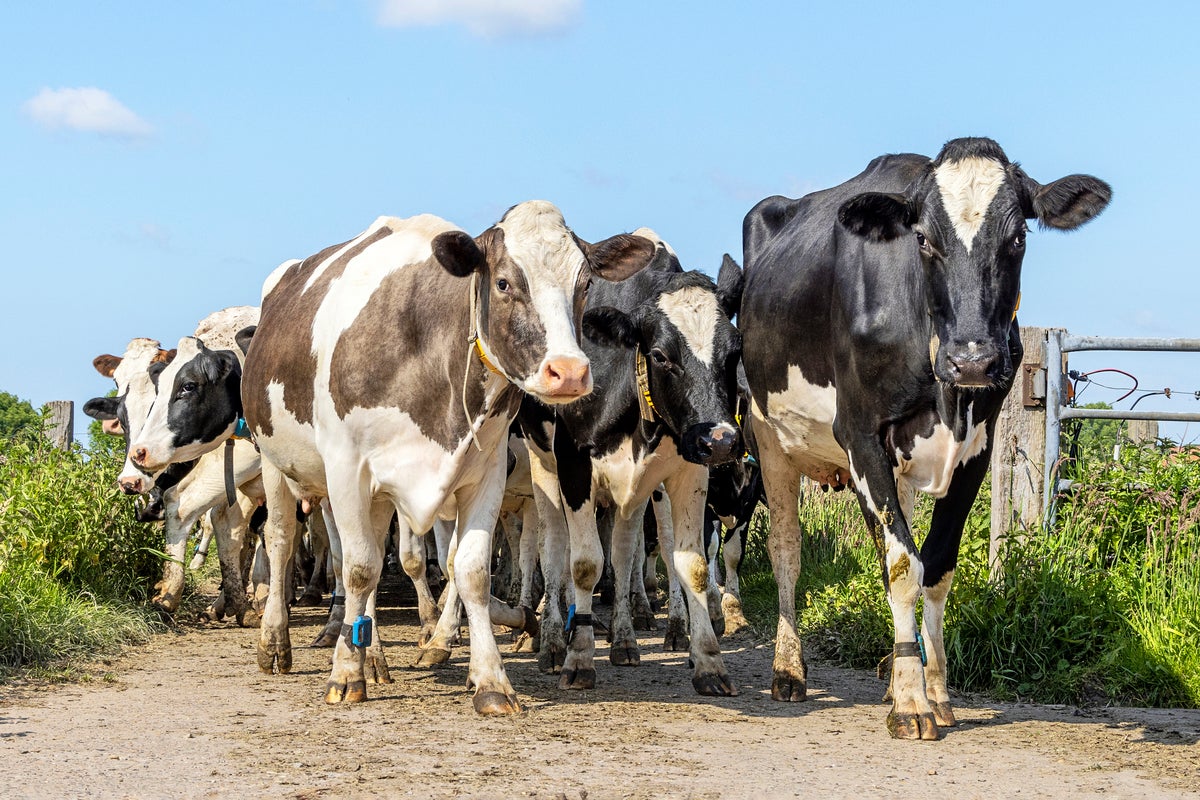
Officials have confirmed a case of mad cow diseaseon a farm in Dumfries and Galloway
According to the Scottish Government, precautionary movement controls are now in effect for the affected cow’s offspring and its “cohort” on the property
The Scottish Government said the “classical” bovine spongiform encephalopathy (BSE)case was identified as a result of its routine surveillance and stringent control measures that are in place
The animal did not enter the human food chain and Food Standards Scotland has confirmed there is no risk to human health as a result of the case
Scotland’s agriculture minister Jim Fairlie said: “Following confirmation of a case of classical BSE in Dumfries and Galloway, the Scottish Government and other agencies acted swiftly and decisively to protect the agriculture sector
“The fact we identified this isolated case so quickly is clear proof that our surveillance system for detecting this type of disease is working effectively
“I want to thank the animal’s owner for their diligence. Their swift action allowed us to identify and isolate the case immediately, minimising its impact on the wider industry.”
The owners of the affected animals are working with authorities on next steps
The Animal Plant and Health Agency (APHA) is investigating the
Under Scotland’s surveillance system all animals more than four years of age that die on farms are routinely tested for BSE
Authorities said that while the disease is not directly transmitted from animal to animal, the cow’s cohorts including offspring have been traced and isolated, and will be destroyed in line with legal requirements
Last May, a single case of atypical BSE was confirmed on a farm in Essex. The case was uncovered after the animal showed some symptoms, and was humanely culled and tested for the disease, the Animal and Plant Health Agency (APHA) said
Atypical BSE is a non-contagious disease in cows which is different from “classical” BSE, which is linked to contaminated feed
It is a naturally occurring and non-contagious brain disease and occurs spontaneously, but rarely, in cattle, officials said
