


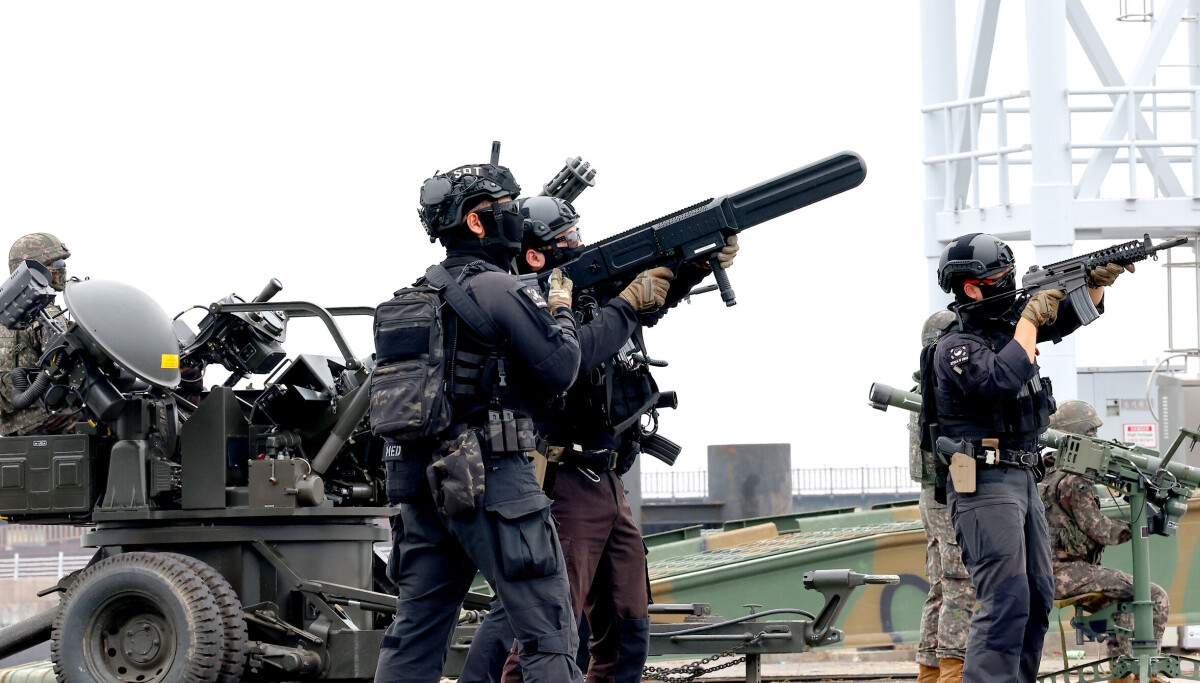
The annual Ulchi Freedom Shield (UFS) combined military exercise between Korea and the United States, designed to prepare for the defense of the Korean Peninsula in a contingency, will end early Friday. Originally scheduled to run for 11 days, the exercise will conclude after just five days following an order from U.S. President Donald Trump to cut it short
The UFS exercise began Monday and was originally scheduled to continue through Thursday. But after Trump ordered a sharp reduction in the scale of the exercise, Korean and U.S. military authorities decided to shorten its duration and reduce its scope
The UFS command post exercise, held every August, is divided into two phases: the first focused on defense and the second on counterattack operations. This year, only the first phase has been conducted and the second phase scrapped. Field training exercises held in conjunction with UFS have also reportedly been scaled back significantly
Related Article
Kim Yo-jong mocks Seoul over Trump-ordered scale-back of joint military drills
Pyongyang fires missiles as Trump offers talks, Seoul seeks Beijing’s help to revive North Korea diplomacy
North Korea fires suspected ballistic missile
Seoul, Washington cut drills short as Trump pursues another Kim summit
Of the 14 battalion-level or larger combined field training exercises originally scheduled, a substantial number have reportedly been changed to exercises conducted either solely by the Korean military or separately by the Korean and U.S. militaries. Some exercises will be postponed to a later date. Certain field training exercises could continue even after the UFS command post exercise ends
UFS, along with Freedom Shield, which is held in the first half of the year, is a theater-level combined exercise designed to prepare Korea and the United States for a full-scale war on the Korean Peninsula. This marks the first time that the duration and scale of an ongoing theater-level combined exercise between the two countries have been reduced midway through the drills
Trump’s decision is being interpreted as an effort to create conditions for the resumption of dialogue between the United States and North Korea as he seeks a meeting with Kim Jong-un within the year. Analysts say scaling back the combined exercises, to which North Korea has long reacted sensitively, sends Pyongyang a conciliatory signal aimed at restarting talks
